It’s wild how much a clean edge changes everything.
Same plants, same soil, same garden — but add a defined border and suddenly it looks intentional, polished, like someone who actually knows what they’re doing lives there.
Edging is the trim work of landscaping and most people skip it entirely.
Big mistake.
Whether you’re going natural, modern, rustic, or somewhere in between — there’s an edging style that’s going to make your beds look sharper than they ever have.
Go find yours.
Ornamental Grasses Said “Edging Who?”
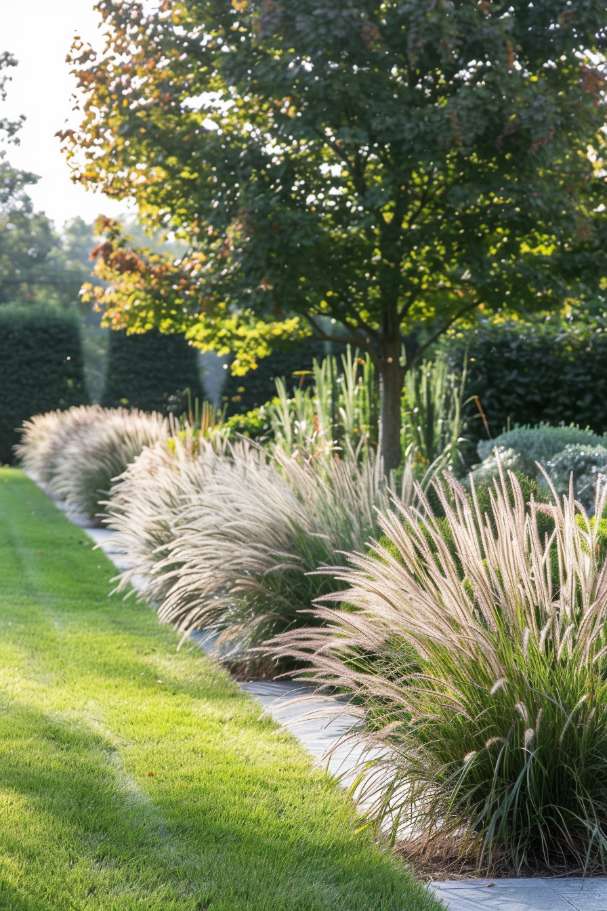
Forget rigid borders for a second because this is the soft, flowing alternative everyone overlooks.
Masses of fountain grass planted in repeating clusters along a stone path create a living edge that moves, catches light, and honestly looks better in autumn than most borders do in peak summer.
Plant them thirty to forty centimetres back from the path edge so the arching plumes spill forward without blocking access.
Low maintenance and genuinely beautiful year round.
River Rocks Are Working Harder Than You Think
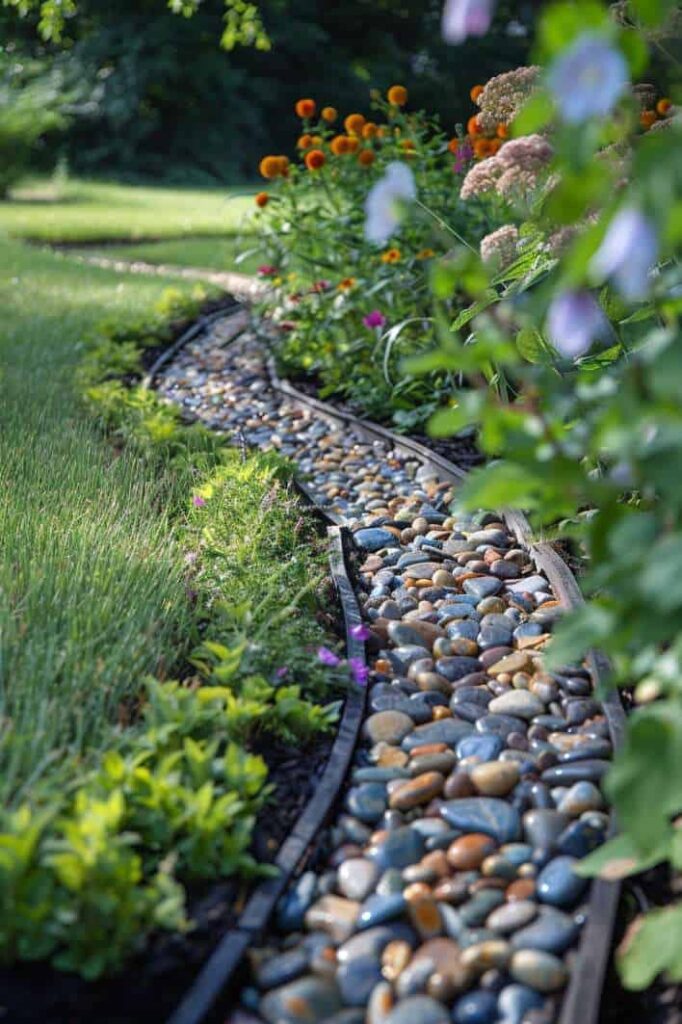
That curved ribbon of mixed pebbles contained between two slim metal rails is such a clever detail.
It creates a clear boundary between lawn and planting bed, suppresses weeds along the edge, and improves drainage right where soil meets turf.
Use darker slate pebbles for a more contemporary feel or mixed river stones like these for a relaxed natural look.
Honestly it is the edging idea that does three jobs at once without asking for anything in return.
Scalloped Edging for the Cottagecore Era
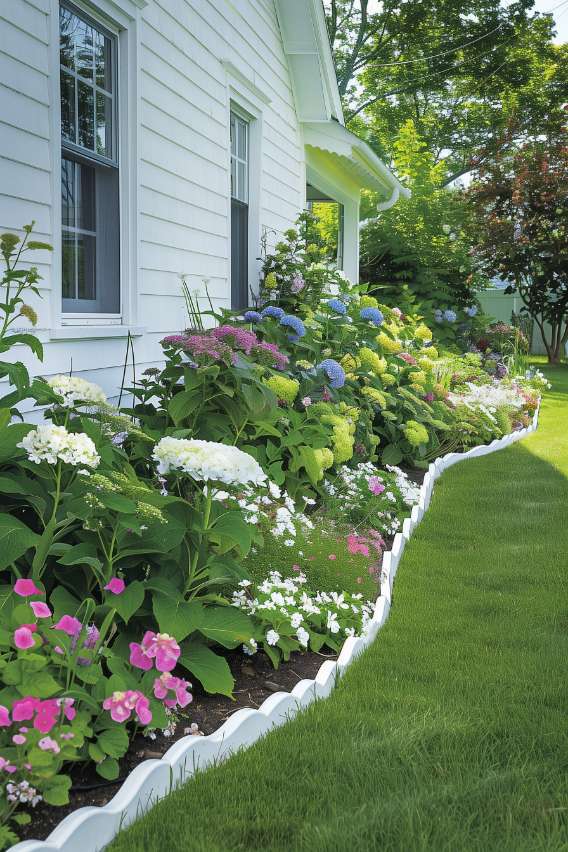
This is for anyone whose front garden is basically their personality.
White scalloped edging along a lush hydrangea border gives the whole thing a sweet, slightly nostalgic charm that totally works against a classic white timber house.
The trick is keeping the lawn side immaculately mown so the neat edging reads as intentional rather than fussy.
Pack the bed behind it with layers of hydrangeas, impatiens, and low white annuals for that full generous look.
Terracotta Log Rounds Are Having a Moment
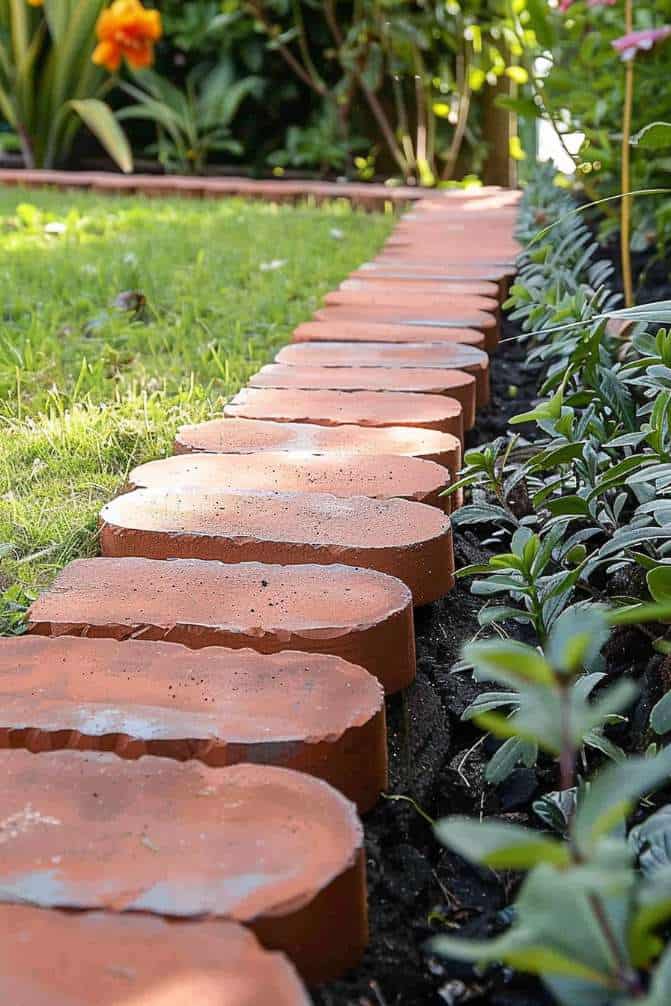
Chunky terracotta cylinders lined up like little soldiers along a dark mulched border are so satisfying, so simple.
This material brings warmth and a handmade quality that plastic or metal edging just cannot replicate.
They work best in Mediterranean or cottage style gardens where the earthy terracotta echoes the pots and structures already in the space.
Bury each piece about a third of the way into the ground so they stay put through seasonal soil movement.
Reclaimed Brick Does What No One Else Can
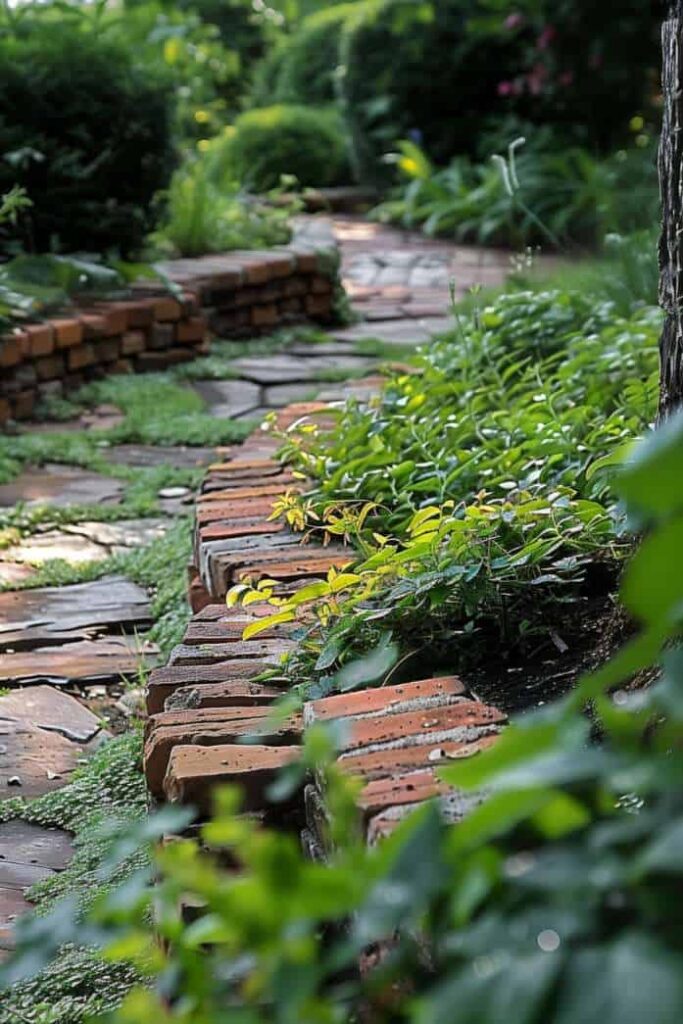
There is something so quietly brilliant about old bricks set on their side along a winding path in a lush green garden.
The worn edges and slight unevenness are the whole point here, I mean that patina is what makes it feel rooted and real rather than just installed.
Source reclaimed bricks from a local demolition yard and set them in a shallow sand bed so you can adjust the line as plants grow and paths shift.
Low cost, high character.
Every time.
Woven Willow Edging and That View Though
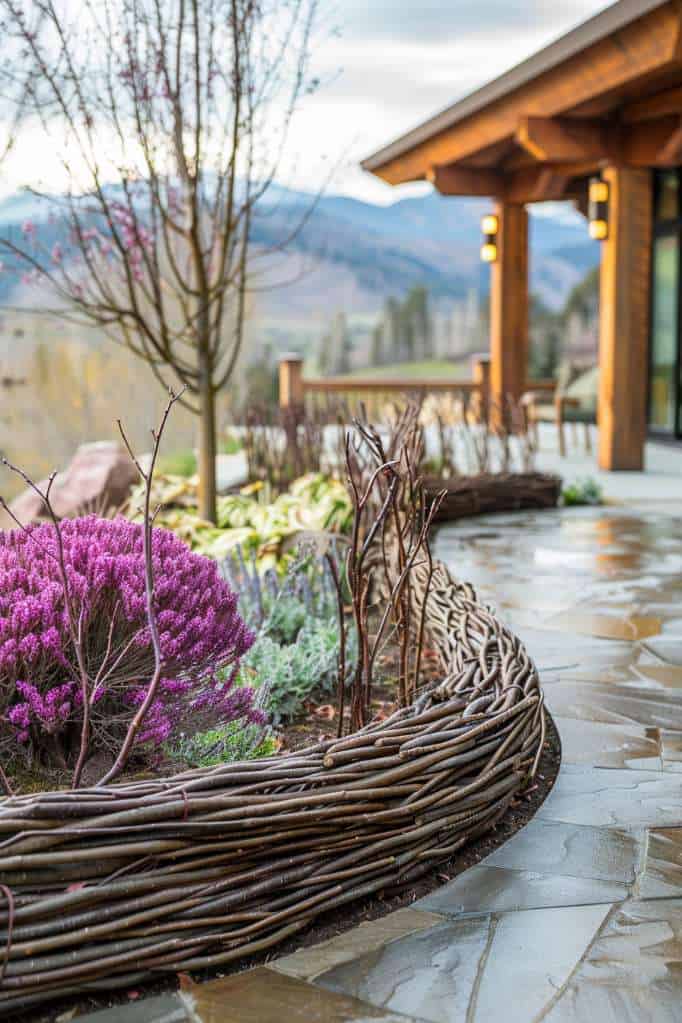
Okayyy so the mountain backdrop is doing a lot, but so is that beautifully crafted woven willow border curving around a planting bed of purple heather and silvery herbs.
This natural edging style feels genuinely artisan and works especially well in gardens that lean into organic materials and seasonal planting.
Buy pre woven willow rolls from a garden supplier and peg them into place, or learn the basic weave technique and make your own from coppiced willow shoots.
So worth the effort.
Mosaic Edging Because You Are Literally an Artist
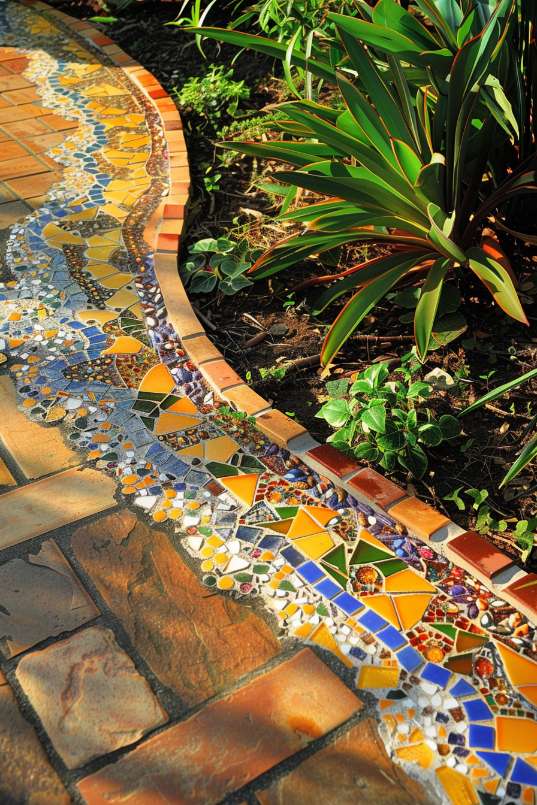
Usually garden edging is the thing nobody notices, but not this.
A hand set mosaic border using broken tiles and glazed ceramic pieces in amber, blue, and terracotta turns the edge of a bed into a genuine focal point.
Set your pieces into mortar on a thin concrete base and work in flowing wave shapes that echo the curves of the border itself.
This suits bold, maximalist gardens where every detail is meant to be seen.
The Steel Edge and Dark Gravel Combo That Architects Love
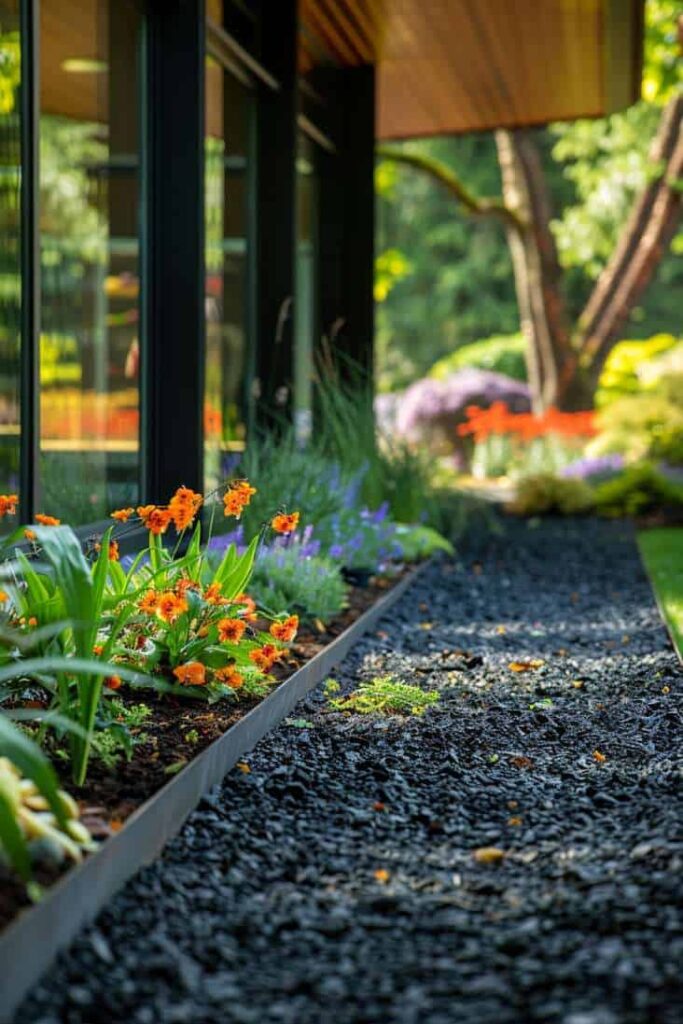
Clean, minimal, and effortlessly cool, this pairing is basically the edging choice of anyone who also has a very nice coffee table.
A thin steel strip holds the line between a planted bed and a sweep of dark crushed gravel, creating a razor sharp boundary that makes orange heleniums and purple salvia absolutely pop against the dark ground.
Use Corten steel for a warmer, more textured look that develops a rust patina over time.
So sharp it kind of makes you want to redesign your whole garden.
Wrought Iron Edging That Thinks It Is Jewellery
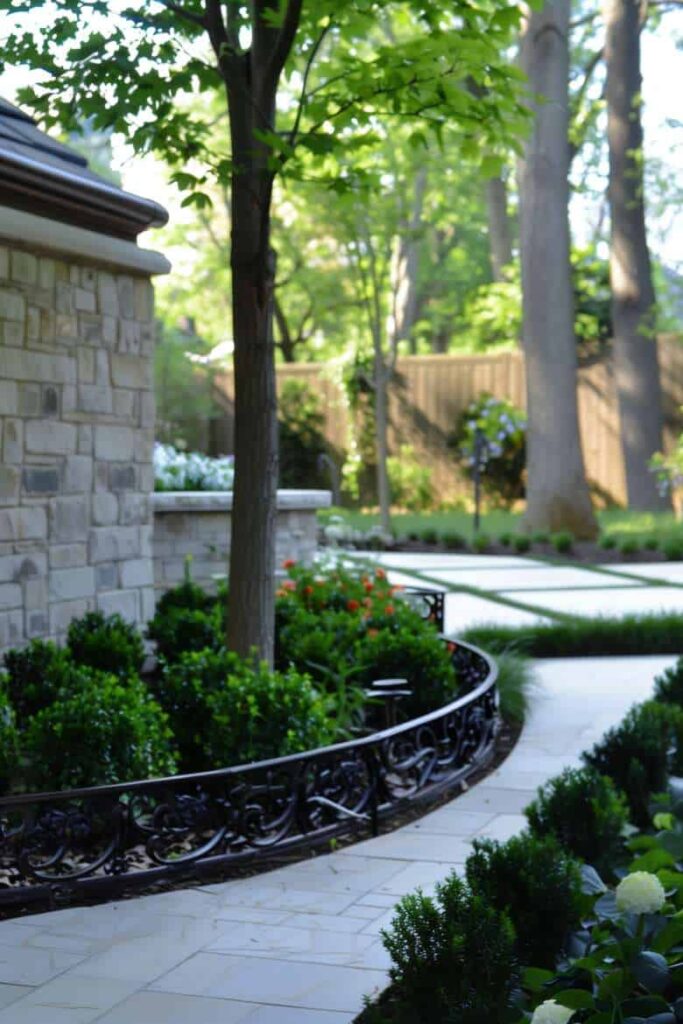
For a formal garden with a bit of old world drama, this scrolled wrought iron border curving around clipped box balls is genuinely stunning.
It elevates what is essentially a structural element into something decorative without being over the top, which is honestly a hard balance to strike.
Pair it with limestone paving and tightly clipped evergreens so the ornate detailing has a calm backdrop to stand out against.
This is the edging choice for people who take their garden seriously.
When Topiary Is the Edging
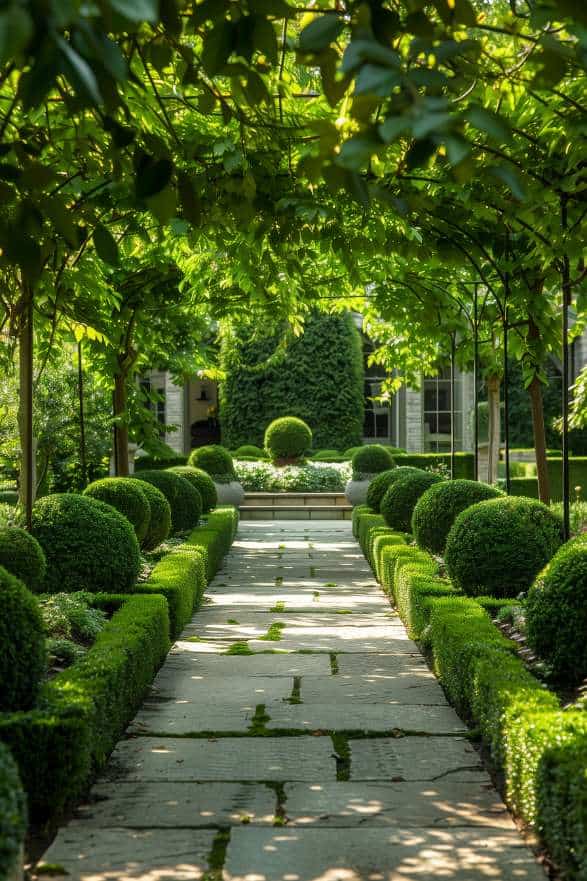
So what if you made the plants themselves do the boundary work?
Tightly clipped box hedges in alternating square and round forms flanking a formal stone path are essentially living edging that doubles as architecture.
Keep them clipped twice a year, in late spring and early autumn, to maintain that crisp defined shape.
This works best in a symmetrical garden layout where the formality is consistent throughout rather than just appearing in one section.
Tree Stumps Are Free Edging and Nobody Told You
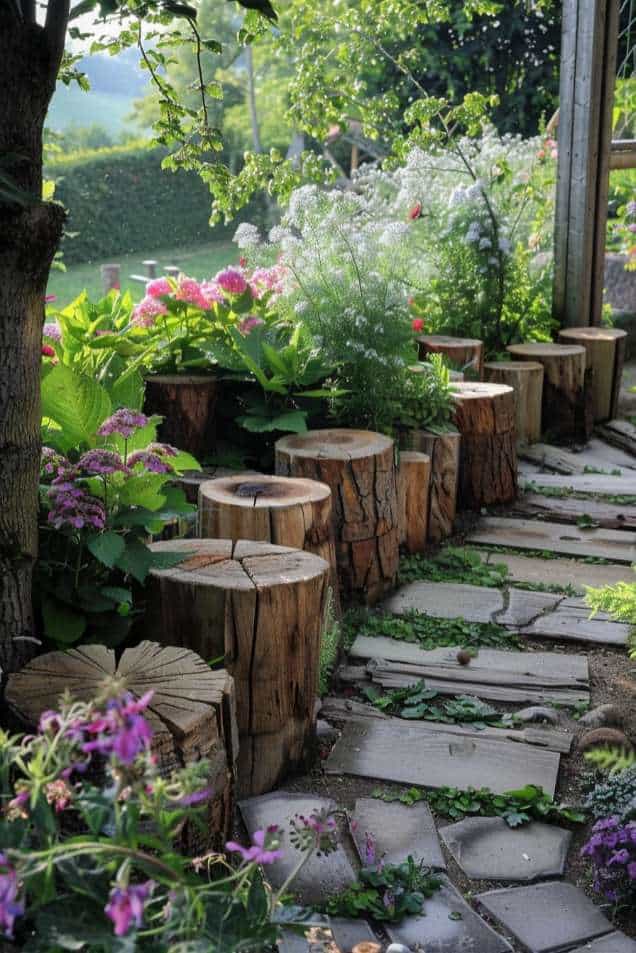
If you have had a tree removed recently, those rounds are literally sitting there waiting to become the most charming rustic edging in the neighbourhood.
Varying heights add visual rhythm along a stone slab path, while the natural wood textures bring incredible warmth against a lush mixed planting of hydrangeas and cottage flowers.
Treat the cut surfaces with a wood preservative to slow decay, or let them moss over naturally if you love that layered forest floor aesthetic.
Free, beautiful, and deeply satisfying.
Blue Bottles Are the Edging Idea You Never Knew You Needed
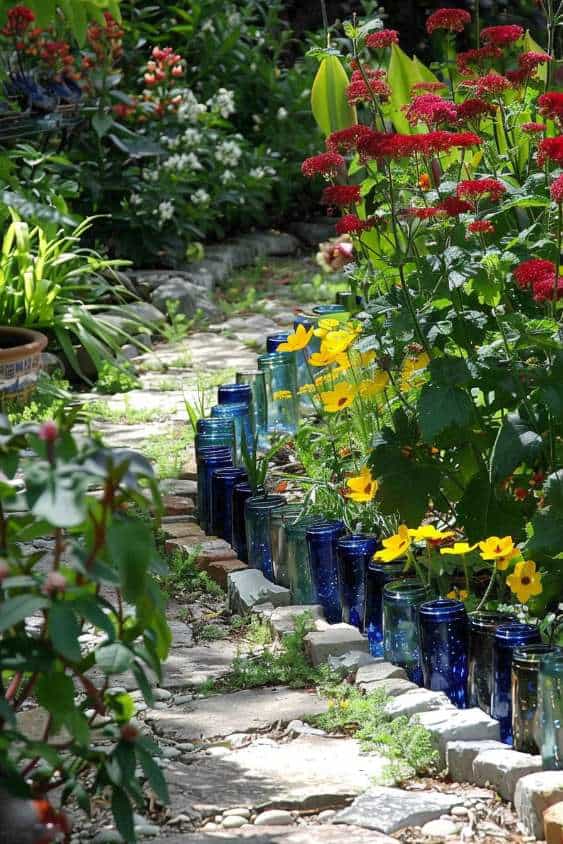
Cobalt and teal glass bottles sunk neck down into the soil along a stone path are genuinely one of the most creative reuse ideas in garden edging.
The blue catches light beautifully and adds a pop of unexpected colour that works brilliantly against warm brick paths and bright flower borders.
Collect bottles over time or source them from secondhand shops, and vary the heights slightly so the line has rhythm rather than rigidity.
Zero cost, maximum personality.
Gabion Walls Are Low Key Spectacular
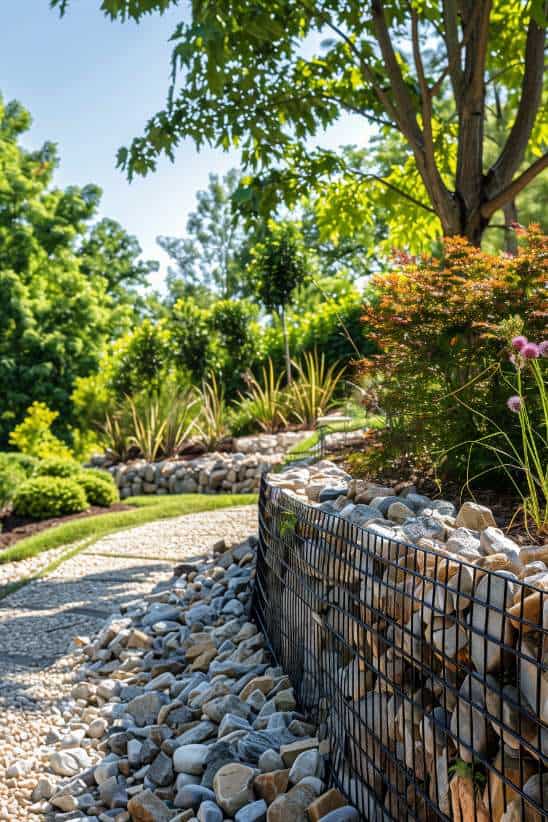
Bold, structural, and surprisingly versatile, a curved gabion wall filled with mixed white and grey stones makes the most confident garden edge I have seen in a long time.
It retains soil on sloped sites, creates a defined raised border, and honestly looks like something a landscape architect charged a fortune for.
Use a mix of stone sizes inside the wire cage for a more natural look, and plant Japanese maples or ornamental grasses immediately behind the wall so the planting scale matches the structure.
Concrete Edging Is Having a Glow Up, Honestly
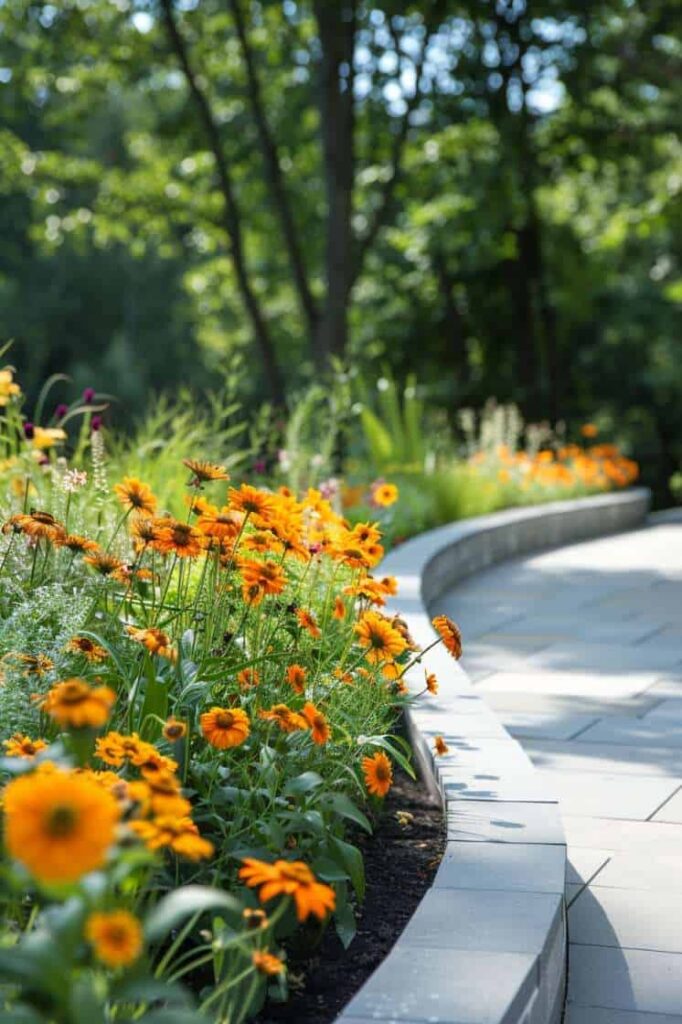
Smooth curved concrete curbing hugging a wild drift of orange heleniums is the kind of low key design decision that makes a whole garden look put together.
The pale clean line of the concrete makes the warm amber flowers absolutely sing, which is the whole point of a well chosen edging material.
Poured in place concrete edging gives you complete control over the curve and height, so you ought to hire a landscaper for this one rather than attempting it yourself.
The results are really worth it.
Brick on Brick Is the Classic That Never Embarrasses You
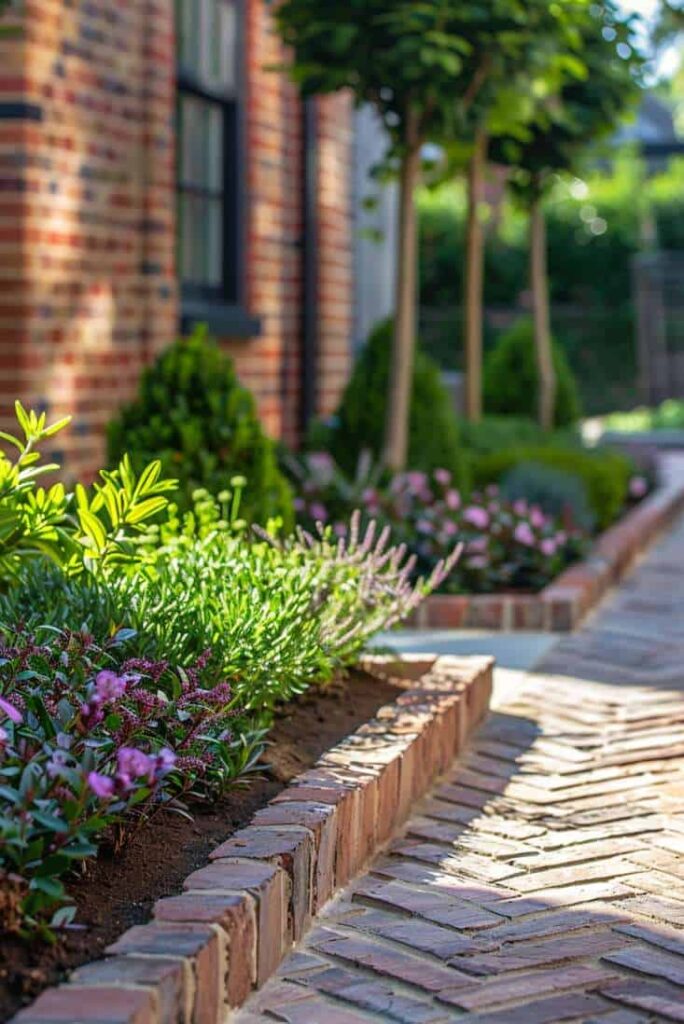
A herringbone brick path edged with a neat single row of matching bricks set on their side along a planted border is so timelessly right that it basically works with every house style.
The warm red tones complement pink flowering shrubs, lavender, and clipped evergreens equally well, which makes this the most versatile edging choice on this entire list.
Use engineering bricks rather than soft commons along the actual path edge since they handle foot traffic and moisture far better over time.
Simple, strong, and genuinely lovely.