Wildflower gardens are having a moment — and honestly, it’s long overdue.
There’s something genuinely magical about a patch of land that just blooms on its own terms.
No fussy pruning schedules. No expensive upkeep. Just colour, life, and bees absolutely losing their minds over it.
Whether you’ve got a sprawling backyard or a sad little corner that needs a glow-up, wildflowers work.
This one’s packed with ideas to help you plan, plant, and make your outdoor space look like it belongs on a countryside postcard.
Go ahead and dig in.
That Door Deserves Its Own Postcard
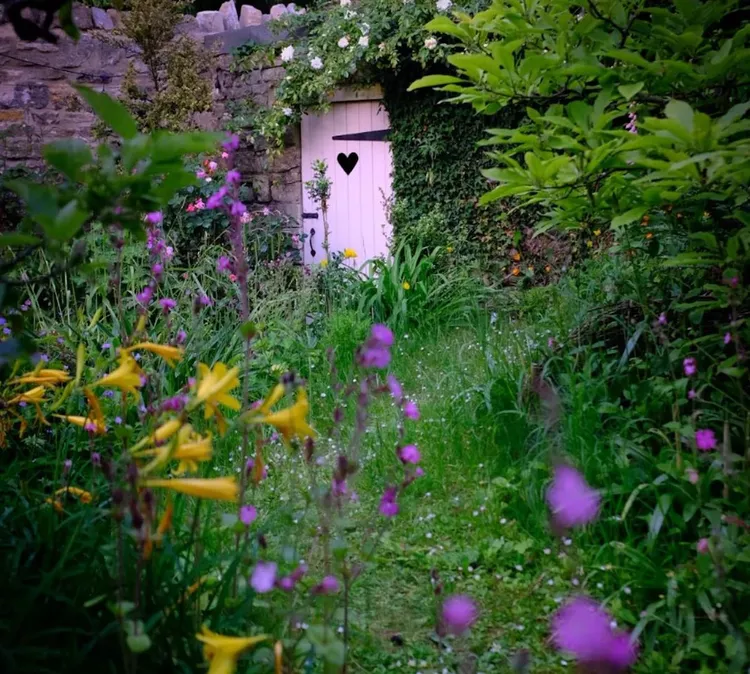
That little white door with the heart cutout barely visible through yellow daylilies, purple cranesbill and climbing roses is genuinely one of the most romantic garden images you will ever see.
The secret to this look is deliberate wildness, so plant daylilies and hardy geraniums densely along the path and then just let them do whatever they want.
Resist tidying the edges.
That soft untamed quality is literally the whole point.
California Poppies and a Very Good Dog
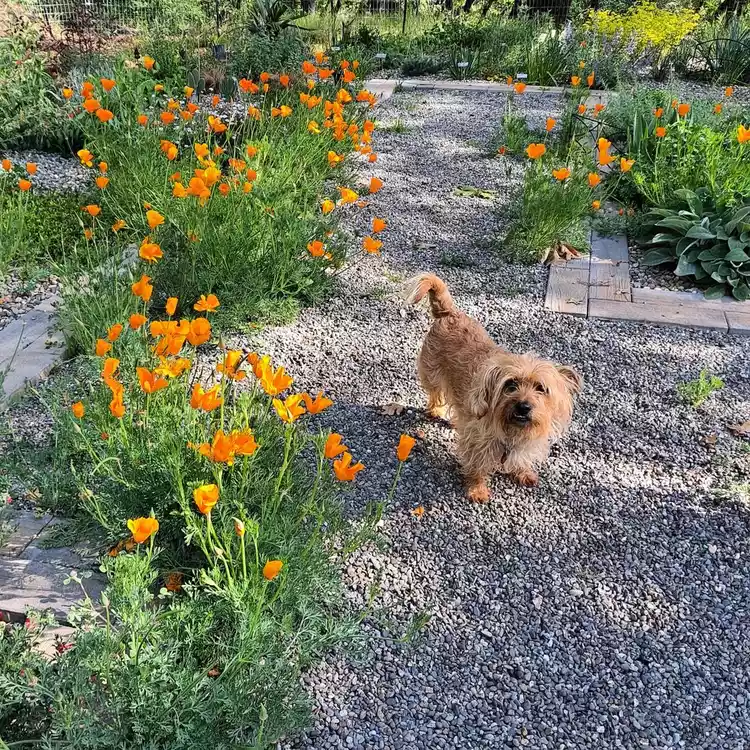
Eschscholzia californica self seeds so freely once established that you basically just scatter it once and it comes back forever.
The gravel path threading through this orange drift is such a clever low maintenance move because the poppies naturalise into the gravel gaps and it looks completely intentional.
So you know, this is the wildflower garden for people who want maximum impact for minimal effort and also possibly a terrier.
The Silver and White Border That Feels Like Mist
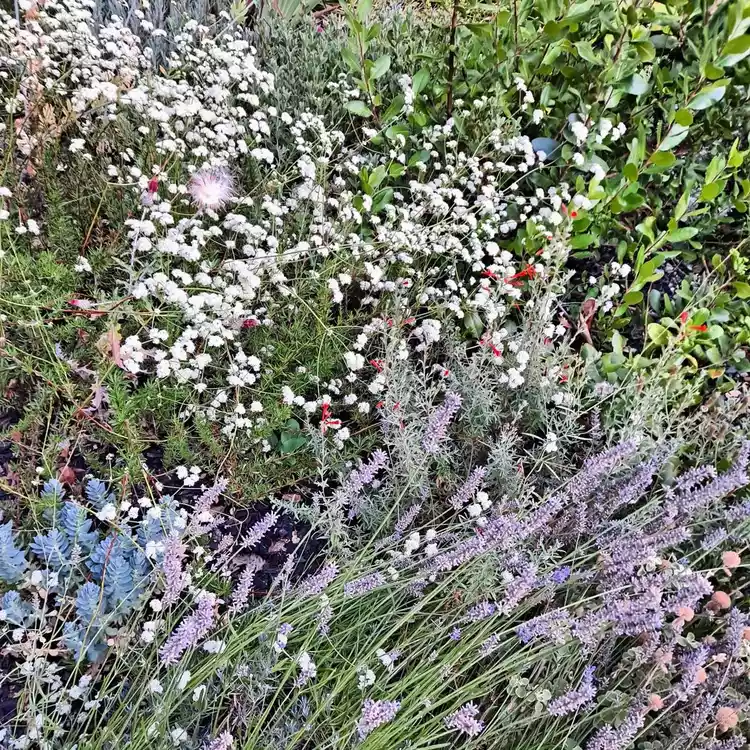
This combination of gypsophila, lavender and blue fescue woven together into a low drifting planting is honestly one of the most sophisticated takes on wildflower gardening around.
It works because the colour palette is kept to three things: white, soft purple and silver.
For a similar effect, combine Gypsophila paniculata with Lavandula angustifolia and Festuca glauca and just let them blur into each other.
Mown a Circle, Called It a Dining Room
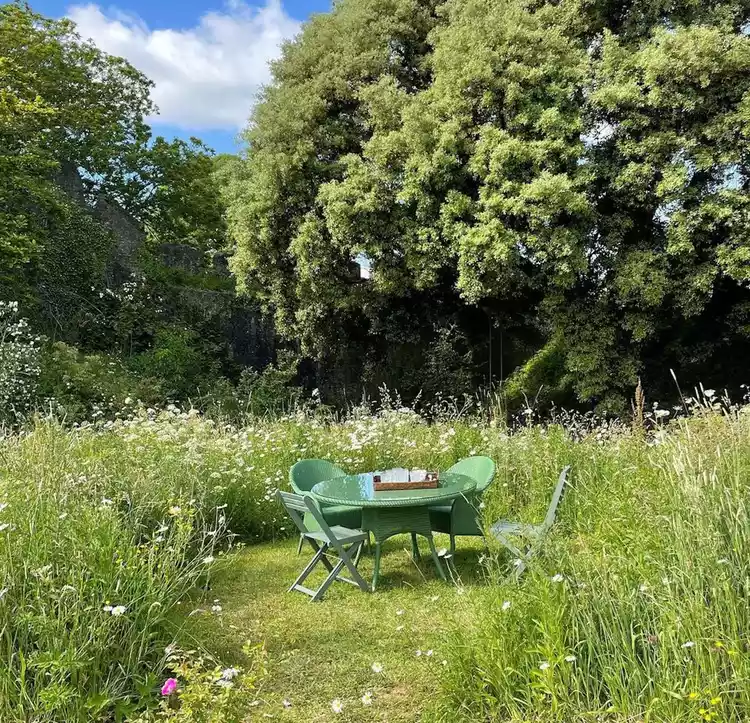
This is genuinely brilliant.
Mow a single flat circle out of a meadow lawn and place a painted bistro table in the middle of it and you have the most magical outdoor dining situation imaginable.
The surrounding ox-eye daisies, Queen Anne’s lace and meadow grasses do all the decorating.
Basically the less you do to the garden around that mown circle the better it gets.
The Border That Got Completely Out of Hand and Won
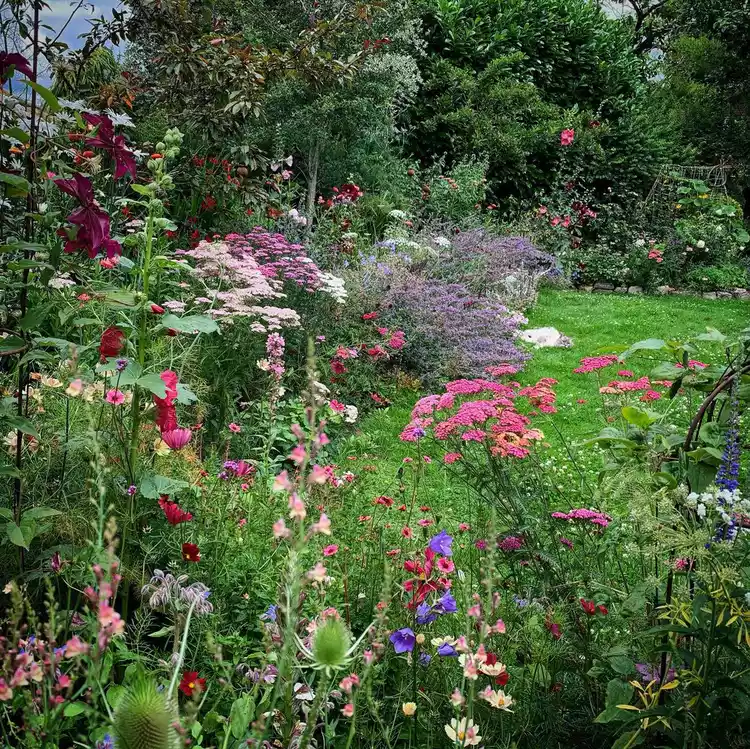
Hollyhocks, dark dahlias, pink achillea, delphiniums, cosmos and purple catmint all growing in one long exuberant border is the kind of planting that looks accidental but is actually the result of years of collecting and layering.
Honestly the key is to plant tall things at the back and let everything else find its own level rather than trying to arrange it neatly.
Just keep adding and never edit anything out.
The Morning Light Knows What It’s Doing
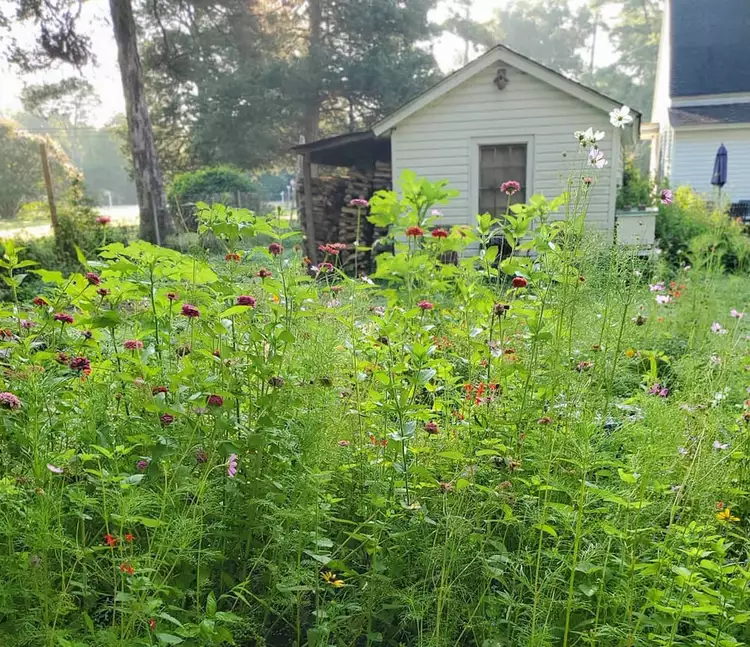
Zinnias and cosmos and echinacea growing completely unchecked in that golden early morning haze with a white clapboard outbuilding behind is pure summer joy.
For this to work you need to direct sow a mixed wildflower and cottage annual seed mix in spring and then resist the urge to intervene.
The less you manage it the more beautiful it gets, so this is basically the permission you needed to do absolutely nothing.
Cosmos Is Always the Answer
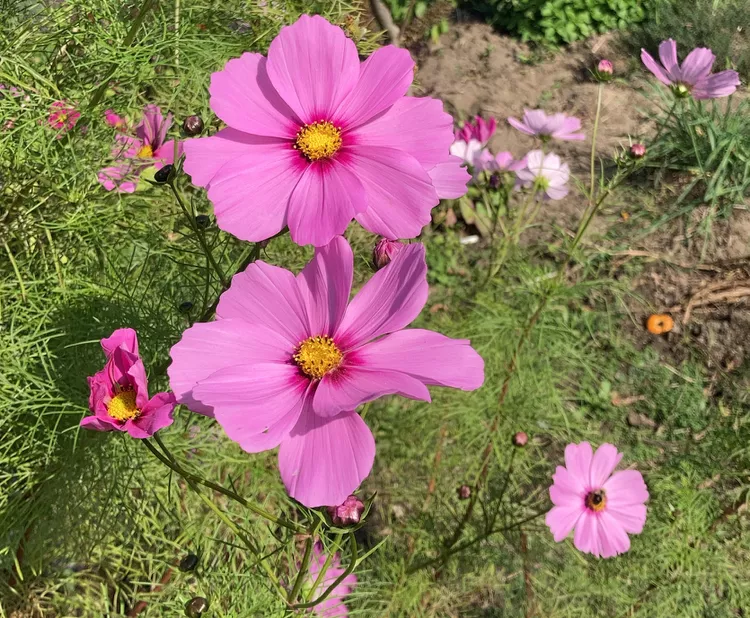
Hot pink cosmos bipinnatus with its feathery foliage catching the light is one of those plants that makes everything around it look better.
Direct sow it thickly in late spring and deadhead every few days and it will flower from July until the first hard frost without a single complaint.
Plant it in drifts rather than single stems and the effect goes from pretty to genuinely breathtaking.
The Dandelions Were Right All Along
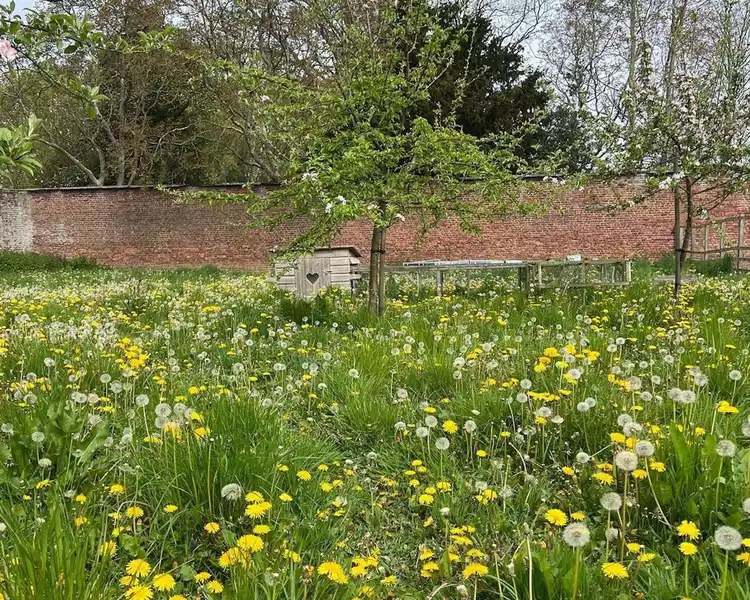
Okayyy so letting dandelions flower across an orchard meadow under apple trees in blossom with a red brick walled garden behind is a genuinely radical act of gardening confidence and it pays off completely.
Dandelions are one of the earliest nectar sources for bees in spring and a meadow full of them is biologically far more valuable than a mown lawn.
Leave your grass uncut from March until July and watch what moves in.
Pink Evening Primrose With an Excellent Supervisor
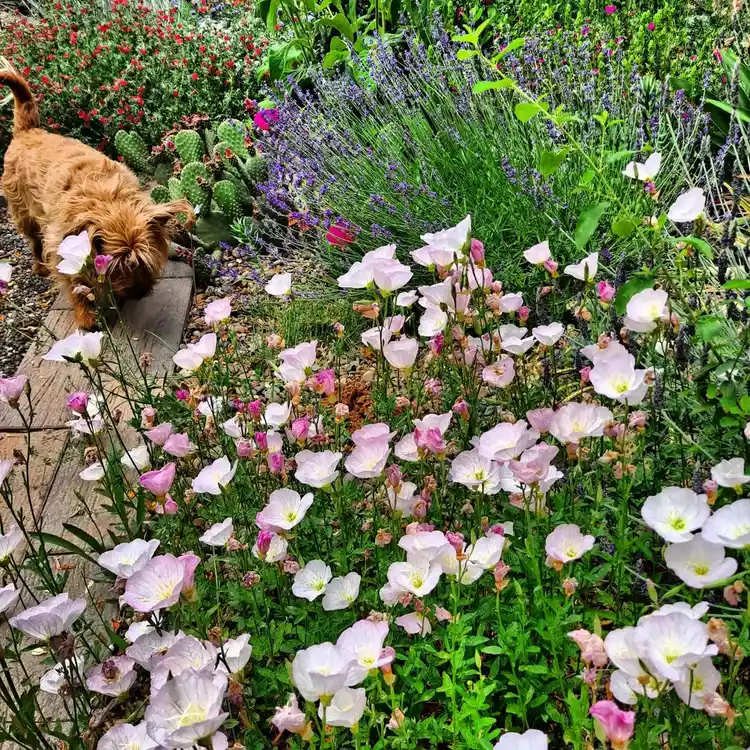
Oenothera speciosa spreading in great soft drifts of blush pink alongside lavender and cactus with that little terrier sniffing through it is the kind of planting combination you honestly could not plan if you tried.
Evening primrose self seeds freely and combines beautifully with any drought tolerant Mediterranean planting.
Let it spill over path edges rather than keeping it contained in borders.
That is where the magic actually happens.
When the Light Hits a Teasel Just Right
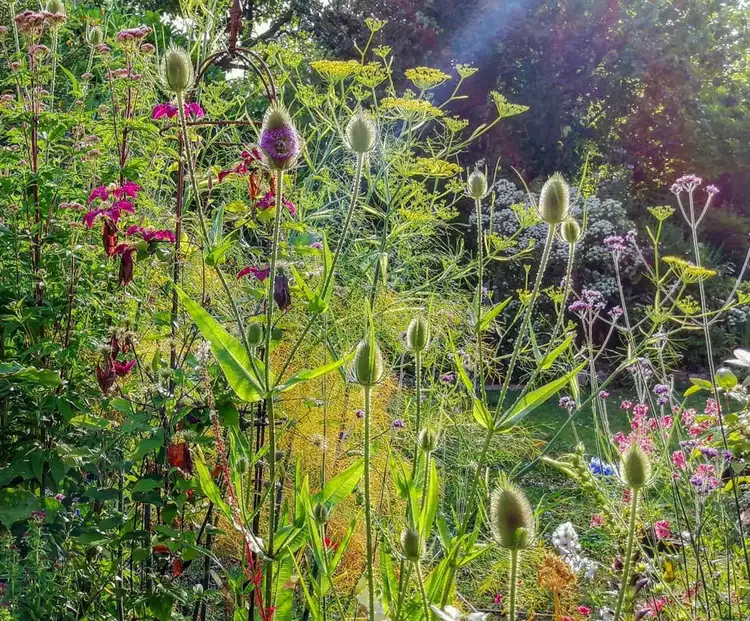
Teasel is the most criminally underused wildflower in gardens and this image proves exactly why you ought to be growing it.
The spiky architectural seedheads of Dipsacus fullonum catching the evening light alongside fennel, phlox and verbena bonariensis creates a layered wildflower scene that looks like something from a botanical illustration.
Let it self seed and in two or three years you will have a colony that goldfinches visit every single autumn.
Agastache Doing Absolutely Everything
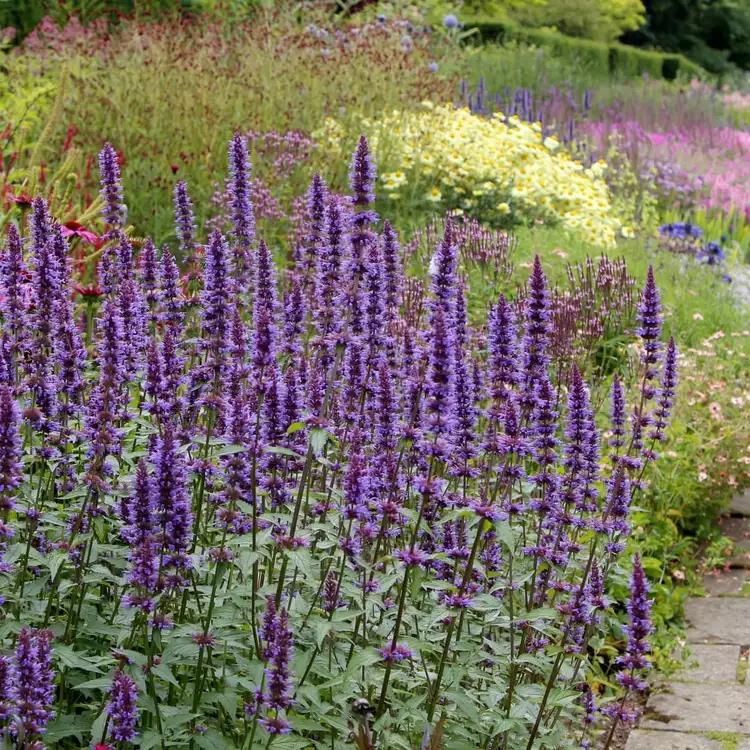
For sheer pollinator value and longevity in a border, agastache is basically unbeatable.
Those deep purple spires of Agastache foeniculum keep flowering from June right through to September and the bees are on it literally from the moment it opens.
Plant it in bold groups of five or seven alongside yellow rudbeckia and pale echinacea for that layered prairie planting look that feels both wild and completely considered.
Rudbeckia and Verbena Bonariensis for the Win
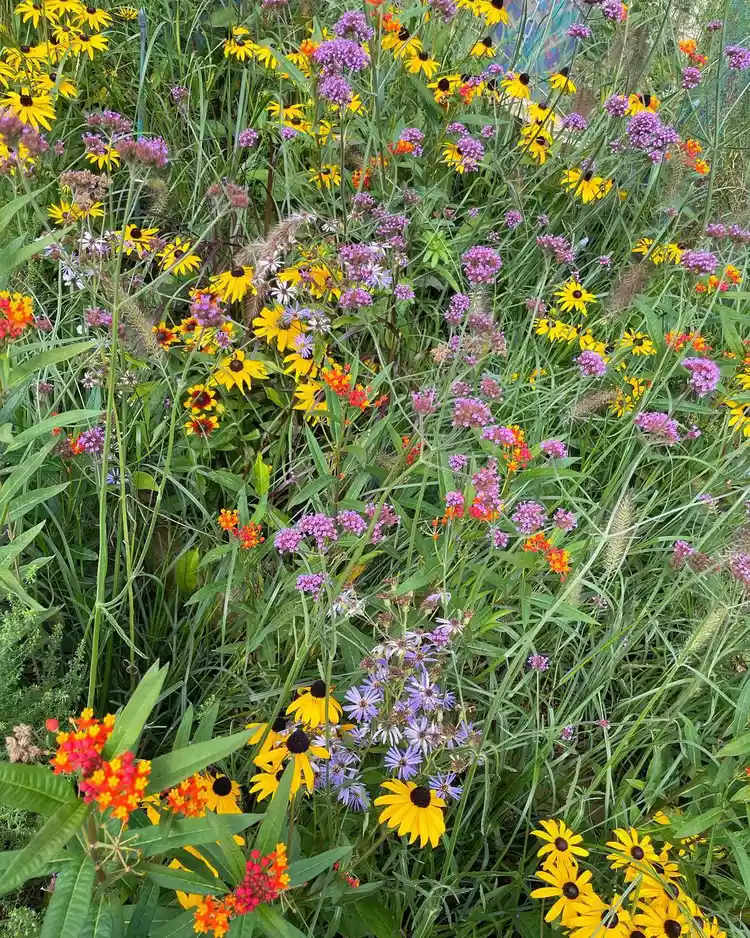
This combination of black eyed susan, tall verbena bonariensis, orange asclepias and ornamental grasses is the late summer wildflower border at its very best.
I mean verbena bonariensis basically holds the whole thing together because those tall airy purple stems let everything behind them show through rather than blocking the view.
Plant it generously and let it self seed every year and your border will keep improving all on its own.
A Bluebell Wood Is the Original Wildflower Garden
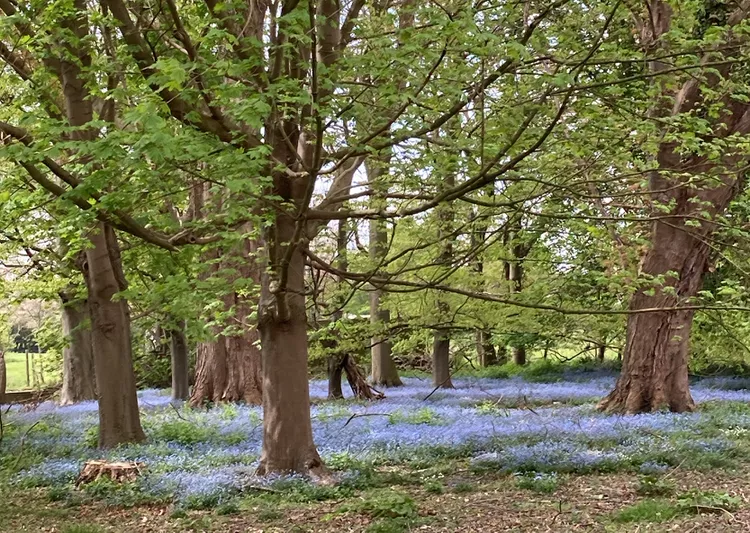
There is genuinely nothing like the sight of Hyacinthoides non-scripta carpeting a deciduous woodland floor in May.
If you have mature trees with dappled shade, scatter native bluebell seeds in autumn and top dress with leafmould and you will have your own small bluebell wood within three to four years.
Never buy Spanish bluebells: they hybridise with the native species and the results are less beautiful and ecologically meaningless.
Bachelor’s Buttons Look Better When You Mix the Colours
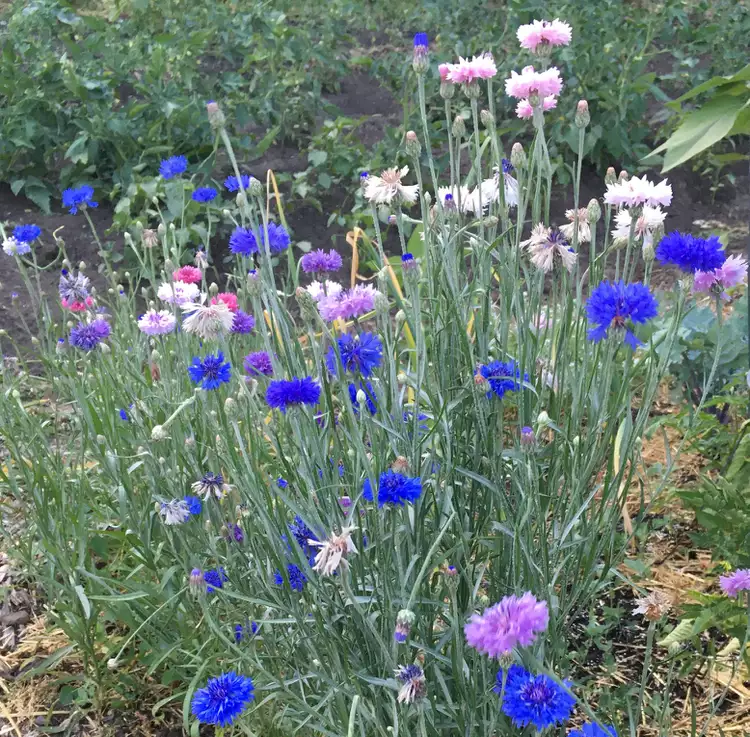
Centaurea cyanus in the mixed colour variety rather than straight blue gives you that gorgeous jumble of cobalt, violet, pale pink and white all in one plant.
So sow it directly into bare soil in September for earlier flowers, or March for summer blooms, and basically never bother with it again because it reseeds so freely.
It looks particularly brilliant scattered through a vegetable garden where the colour contrast with the foliage is completely unexpected.
Yellow and Pink and Purple Having the Best Summer
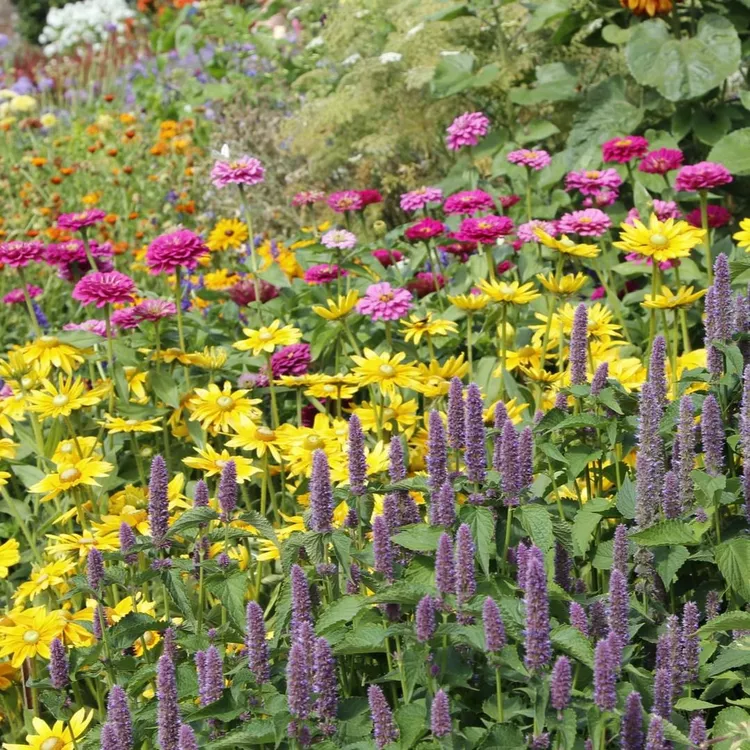
Agastache paired with yellow rudbeckia and hot pink zinnias is the combination that just works no matter what, and this border is the proof.
The vertical spikes of the agastache give it structure while the daisy forms of the rudbeckia and zinnia keep everything feeling abundant and generous.
Plant rudbeckia hirta, zinnia elegans and agastache foeniculum together in a sunny spot and honestly just stand back.