Your backyard is basically begging for an upgrade.
Raised garden boxes are having a moment right now, and honestly? It makes total sense.
They’re cheap-ish, ridiculously easy to build, and they turn even the saddest patch of dirt into something that actually grows food.
No more fighting weeds. No more bad soil excuses.
We rounded up the ideas that are actually worth copying from tiny balcony builds to full-on backyard showstoppers.
Grab a coffee, this one’s fun.
Let’s get your hands dirty
Okayyy These Boxes Are Basically Furniture
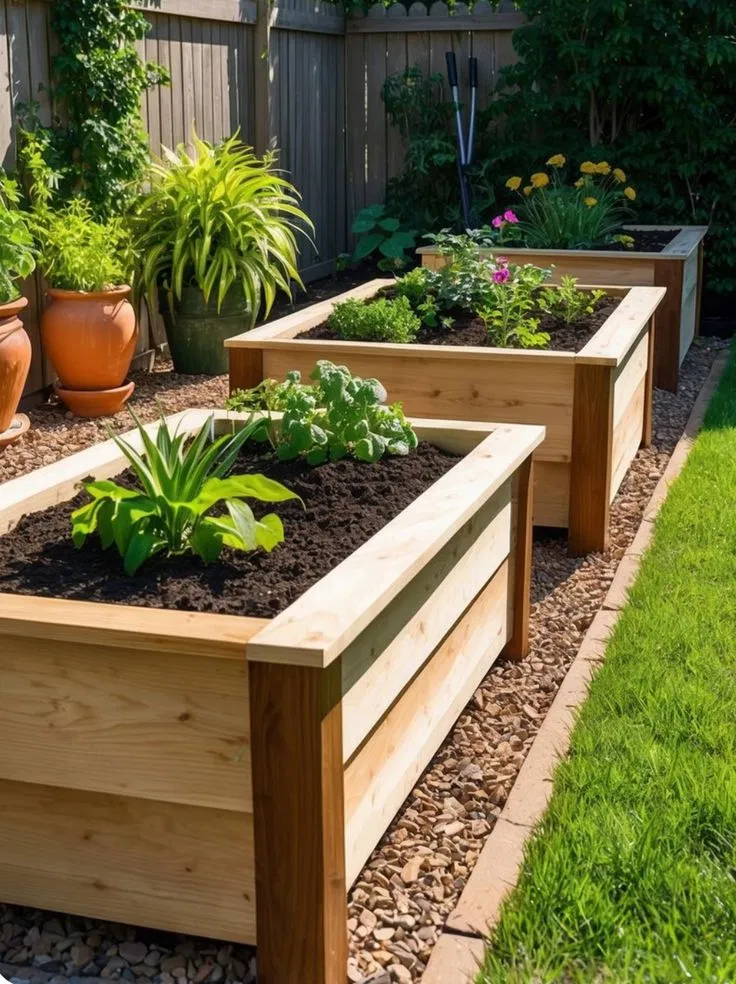
Three chunky cedar boxes lined up against a gravel bed prove raised beds do not have to look like an afterthought.
Two toned wood paneling gives each box some visual interest, while the crisp edging between gravel and lawn keeps the whole layout looking sharp.
Honestly if you are gardening on a budget, building your own boxes like this beats buying anything prefab, both in cost and in personality.
The Shed That Ties the Whole Garden Together
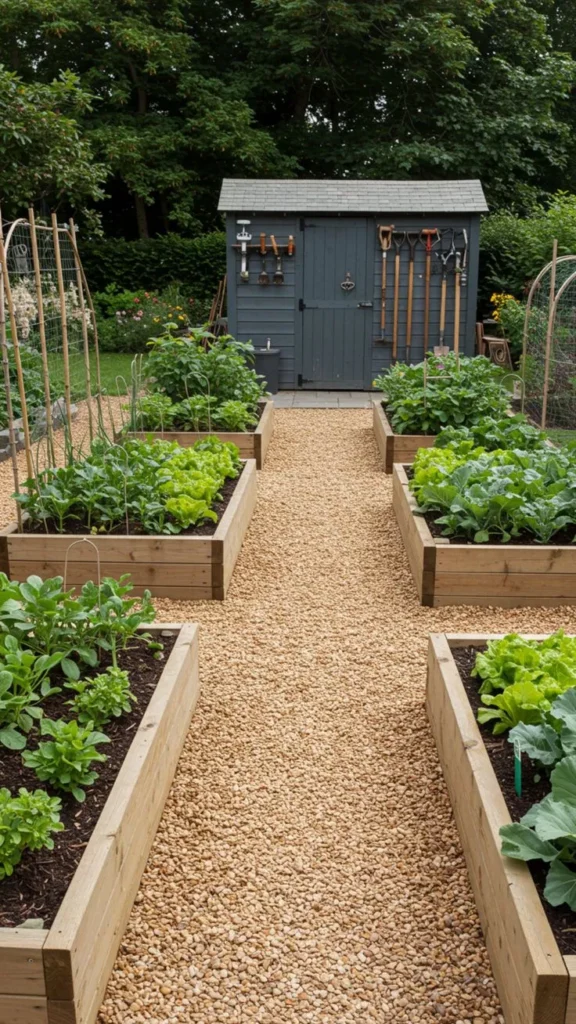
You know a garden is serious business when the tool shed gets its own color scheme.
Six matching boxes flank a gravel path leading straight to a slate blue shed, and the symmetry alone makes this feel like a proper kitchen garden rather than a backyard experiment.
Nonetheless the real lesson here is pathing, a defined gravel walkway between beds keeps everything accessible without ever stepping on your soil.
Sleek, Dark, and Surprisingly Low Maintenance
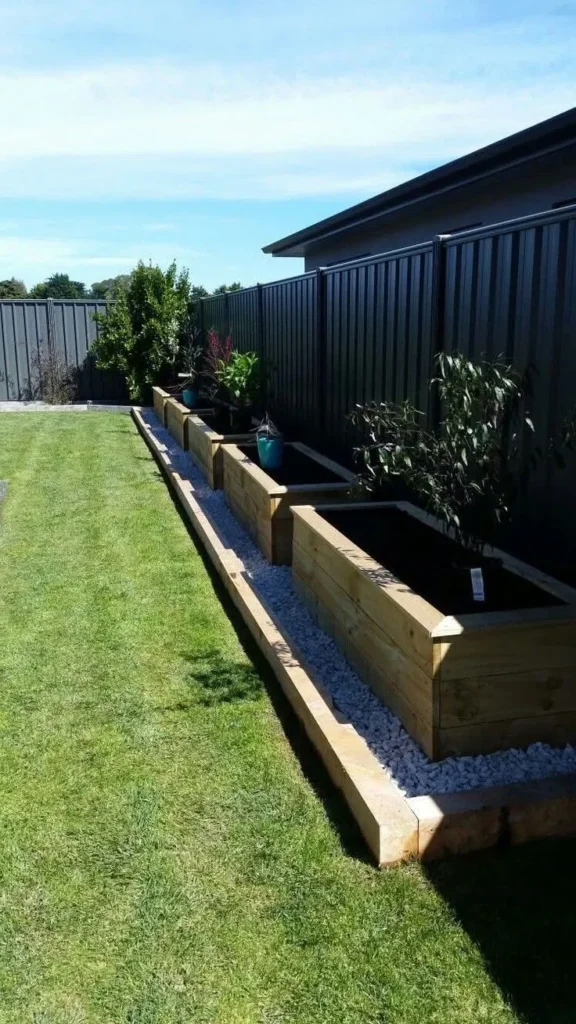
Who says raised beds need to look rustic.
These sit low against a charcoal metal fence, framed in pale timber with crisp white gravel underneath, so the whole thing reads more architectural than agricultural.
If your yard leans modern already, matching your bed material to a dark fence line like this keeps the vegetable patch from feeling out of place.
Vertical Beds for When Floor Space Runs Out
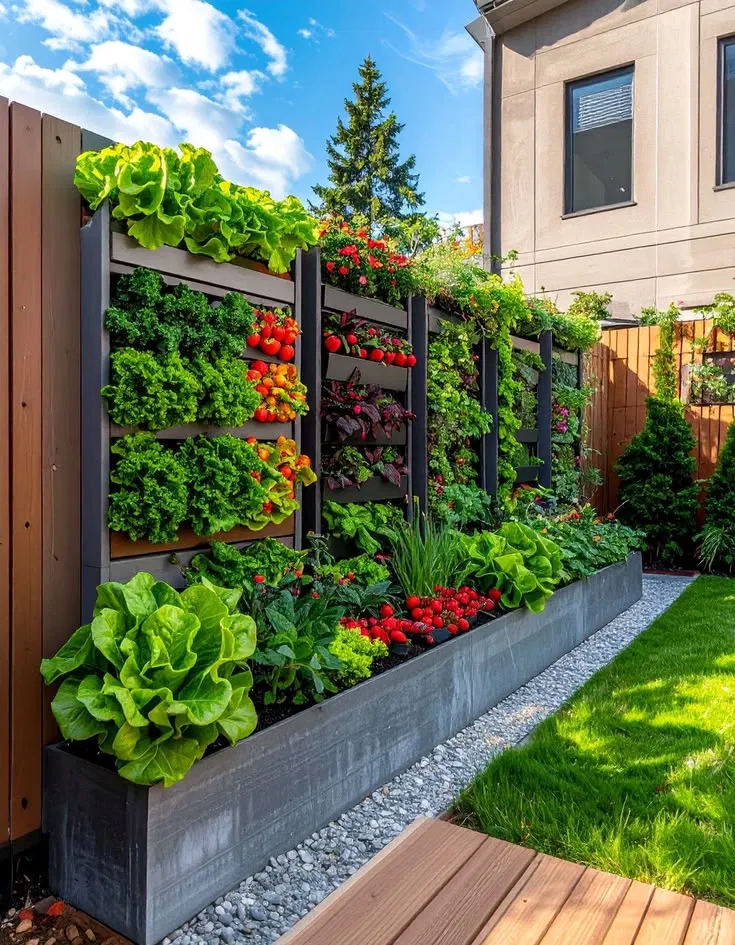
This one basically flips the raised bed concept on its side.
Tiered wall mounted planters stack lettuce, tomatoes, and herbs in vertical rows, so you get serious growing capacity out of a footprint that would normally fit one narrow strip.
Although irrigation takes more planning going vertical, the payoff is a living wall that produces dinner instead of just decoration.
Rustic Wood, City Backyard
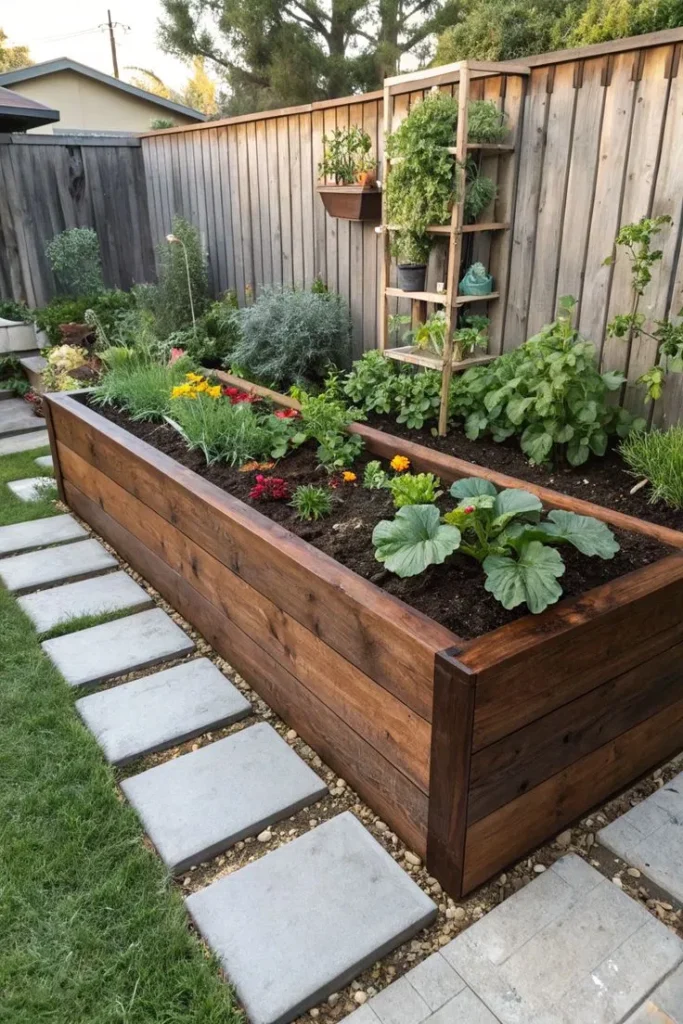
Deep stained cedar against a stepping stone path gives this bed a warmly worn in look, even brand new.
Marigolds and squash tumble over the edges while a scrappy wooden trellis leans against the fence nearby for climbing herbs.
You ought to try darker stain if you want that lived in farmhouse look without waiting years for the wood to weather naturally.
Layered Beds for Serious Harvest Goals
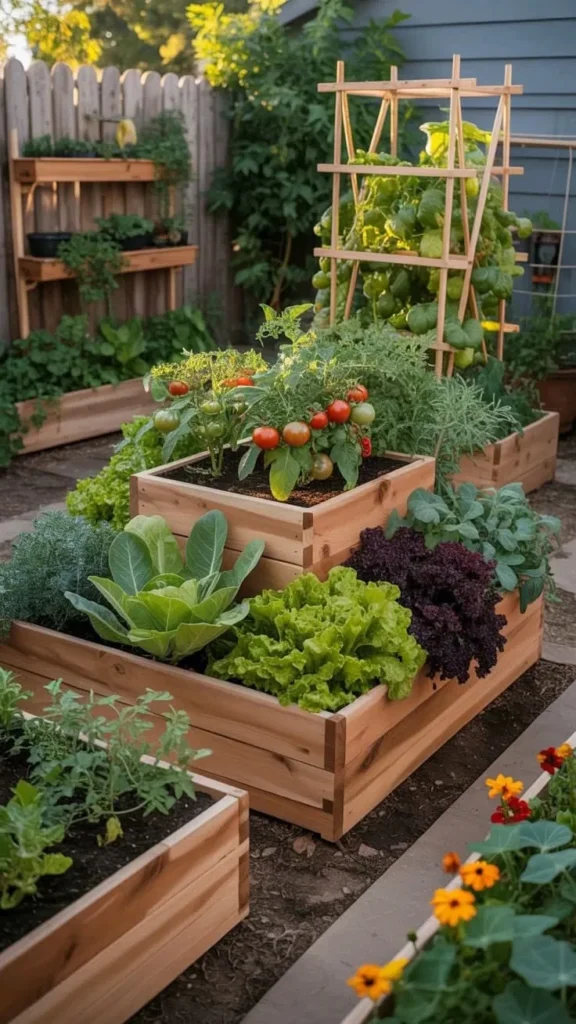
This is not one box, it is basically a whole tiered ecosystem.
Tomatoes climb up top while lettuce and kale fill the lower tiers, and the staggered heights mean every plant gets its share of sun without shading its neighbors out.
I mean, if you are the type who wants a real harvest and not just a decorative herb pot, stacking your beds by height like this maximizes every inch.
The Kitchen Garden You See in Magazines
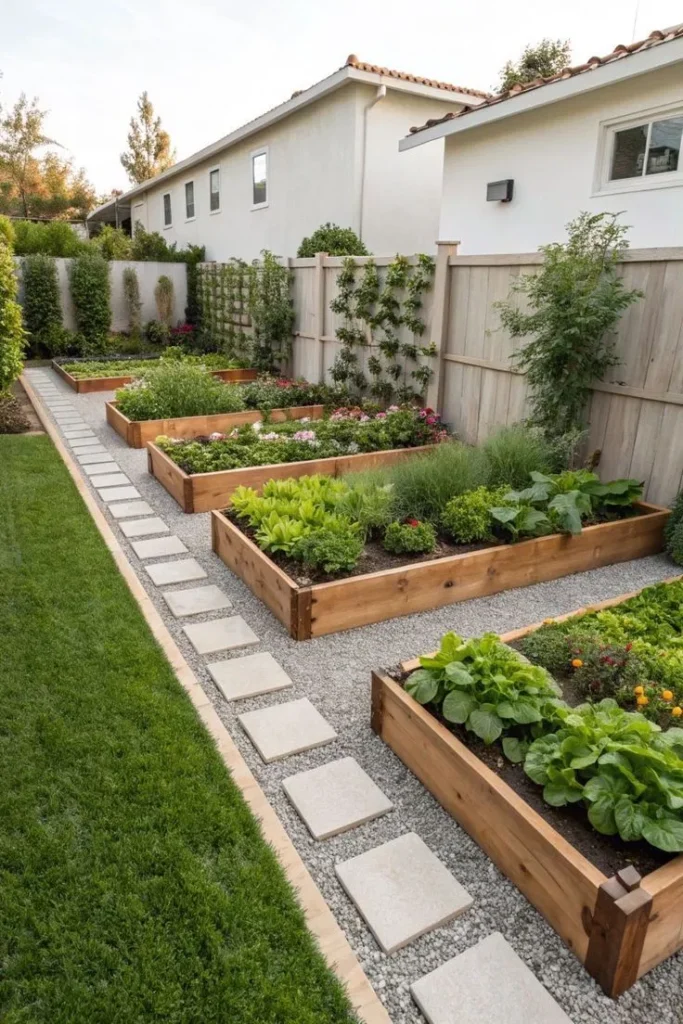
Honestly this layout could not look more intentional if it tried.
Matching wood boxes march down a gravel path toward the house, each one packed with lettuce, herbs, and flowers, while trellises along the fence handle the climbers.
Usually a garden this productive looks messy, but keeping every bed the same size and material is what makes it read as designed rather than chaotic.
Marigolds Are Doing More Than You Think
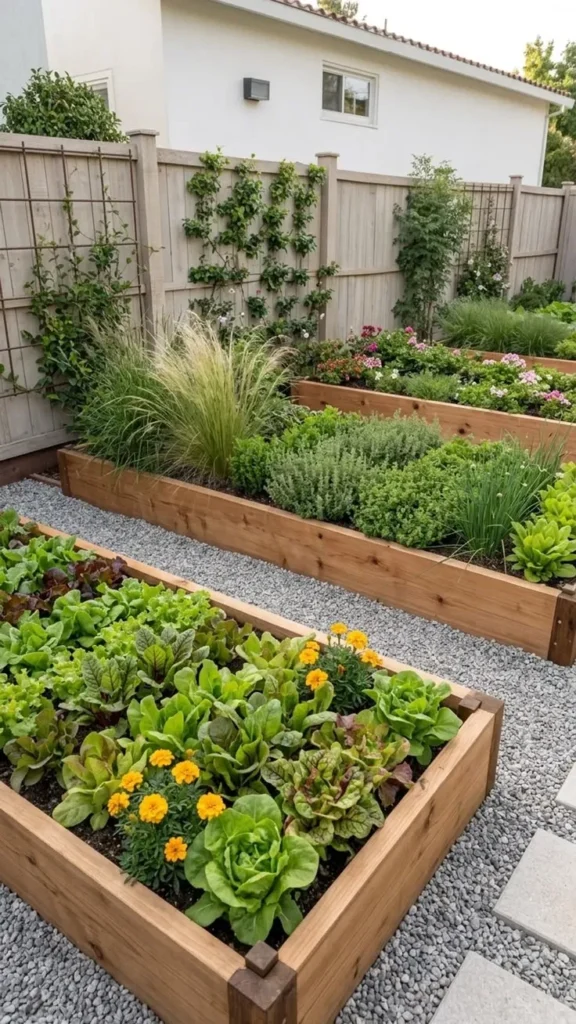
Do not skip the flowers in your vegetable bed, they are working overtime.
Bright orange marigolds tucked between lettuce varieties are not just pretty, they help deter pests naturally, so this bed is basically productive and protective at once.
Pale gravel underfoot keeps mud from splashing up onto the leaves, which is a small detail that makes a genuinely big difference after rain.
Trellises Take the Guesswork Out of Climbing Plants
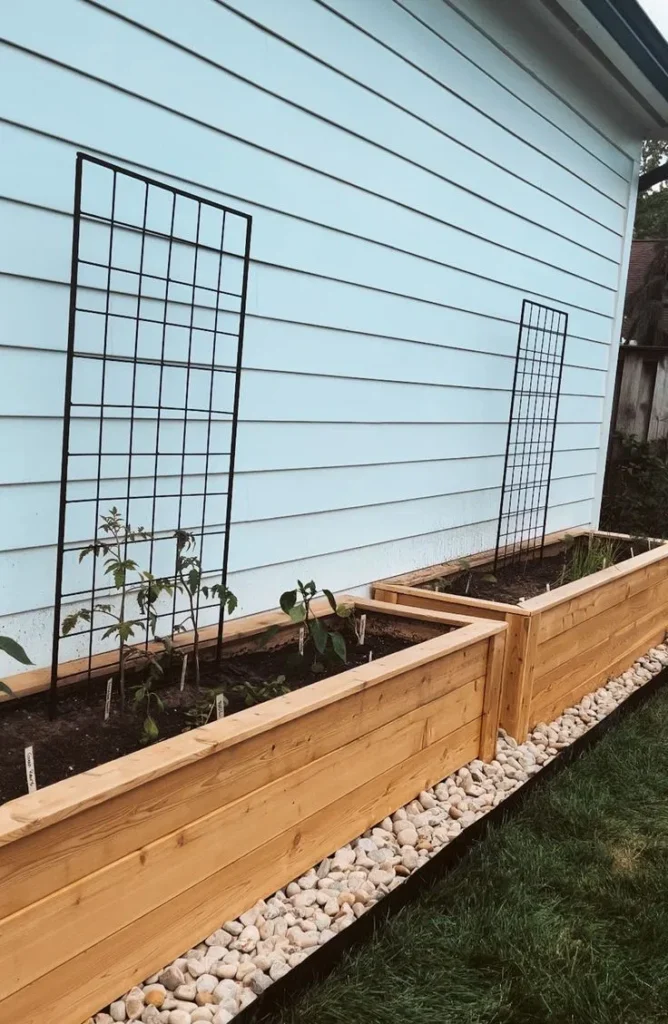
Simple black wire panels leaned against pale siding give tomatoes and peppers somewhere to climb without needing a single power tool.
The boxes themselves stay basic, honey toned wood, clean lines, so all the visual interest comes from what is actually growing.
This is the move if you want function over flash, since a plain trellis panel costs next to nothing and saves your plants from sprawling across the ground.
Flowers Get the Raised Bed Treatment Too
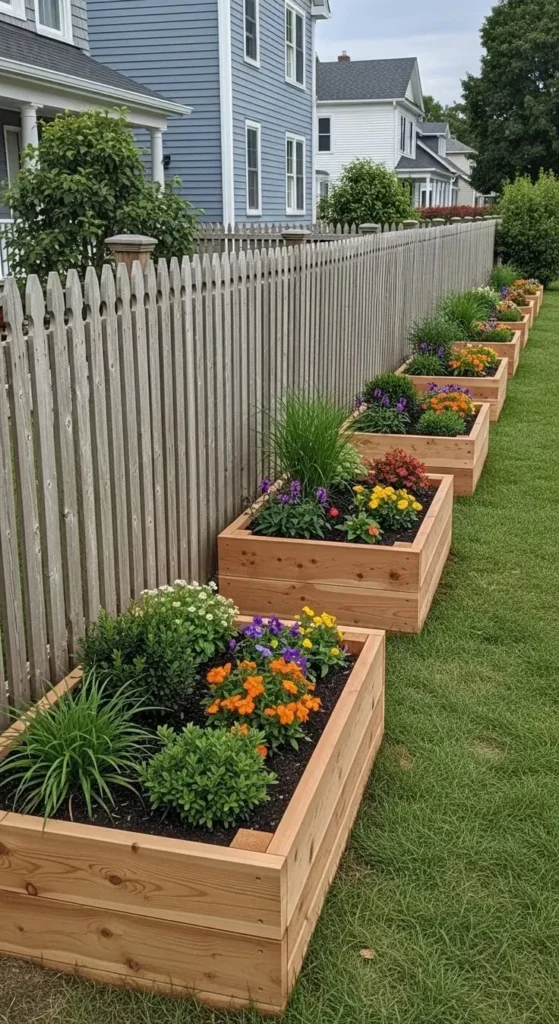
Who said raised beds are just for vegetables.
This row of cedar boxes running along a picket fence is packed entirely with flowering plants, ornamental grass, petunias, and marigolds in a rainbow of color.
Basically if you want curb appeal over a harvest, the same raised bed logic applies, better drainage, tidier edges, and a whole lot less bending down to weed.
Symmetry Makes Everything Look Bigger
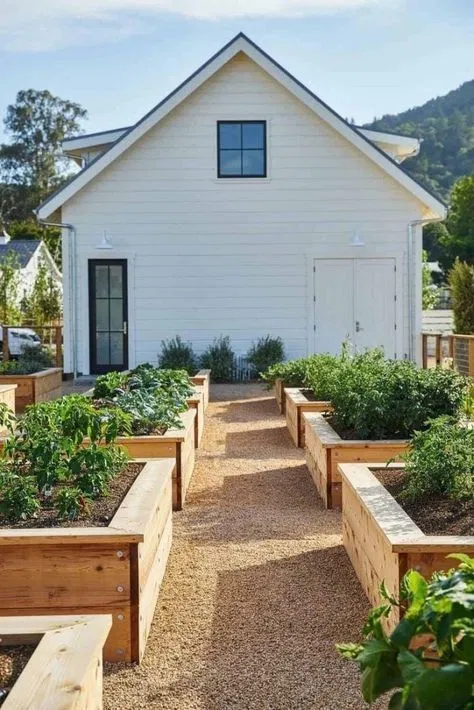
Matching cedar beds flanking a gravel path toward a farmhouse style barn basically turn a working garden into a destination.
Peppers and herbs fill each box evenly, and the wide central path means there is plenty of room to wheel a barrow through without crushing anything.
Although symmetry takes more planning upfront, it pays off by making even a modest garden feel expansive and organized.
Simple Boxes, Zero Fuss
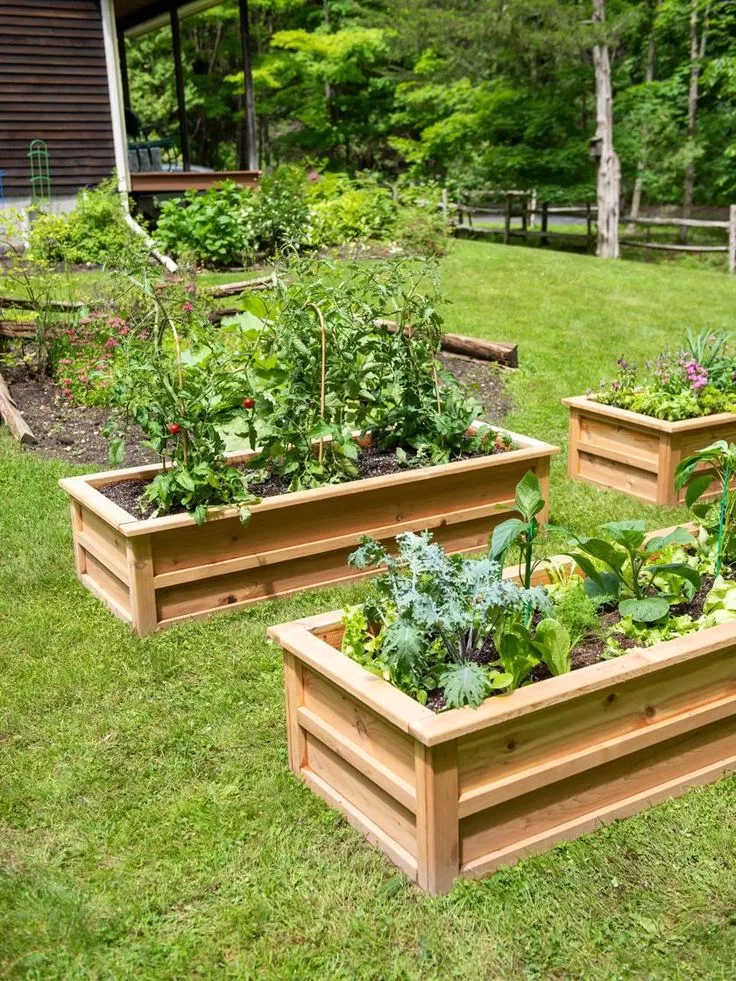
Sometimes you just need a box that works, no trellis, no fancy trim, just solid cedar planks holding tomatoes and kale on an open lawn.
The natural wood tone blends into any yard without demanding attention, which honestly makes it one of the easiest styles to replicate this weekend.
If you are building your first bed ever, start here, simple rectangular boxes are basically foolproof.
The Downspout Problem, Solved
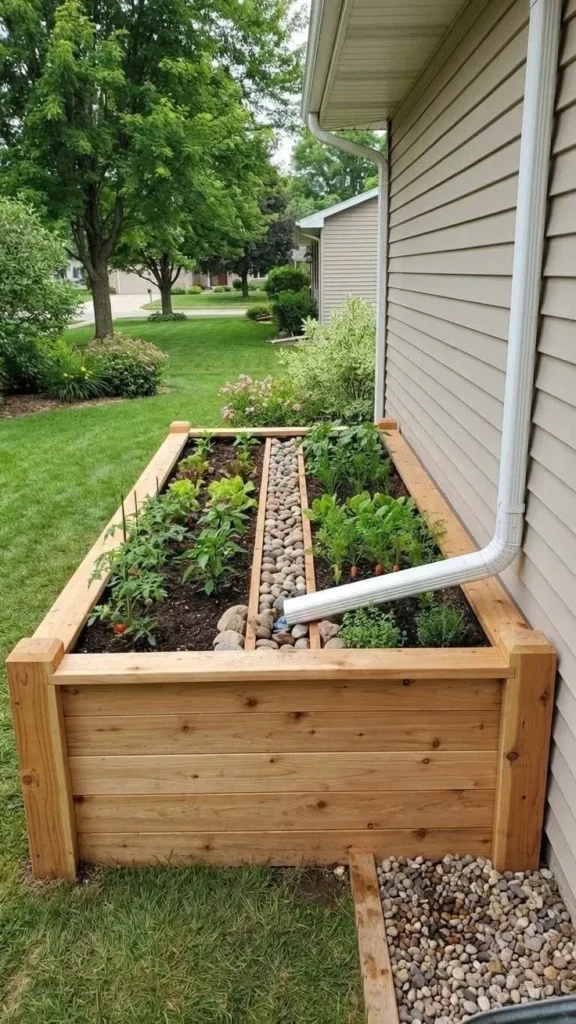
Building your bed right where your gutter drains sounds risky until you see how this one handles it.
A river rock channel runs straight down the center, catching runoff and directing it away from the roots while still keeping tomatoes and herbs happy on either side.
This is a genuinely clever fix if you have got a tricky drainage spot nobody else knows what to do with.
Same Trick, Wider Yard
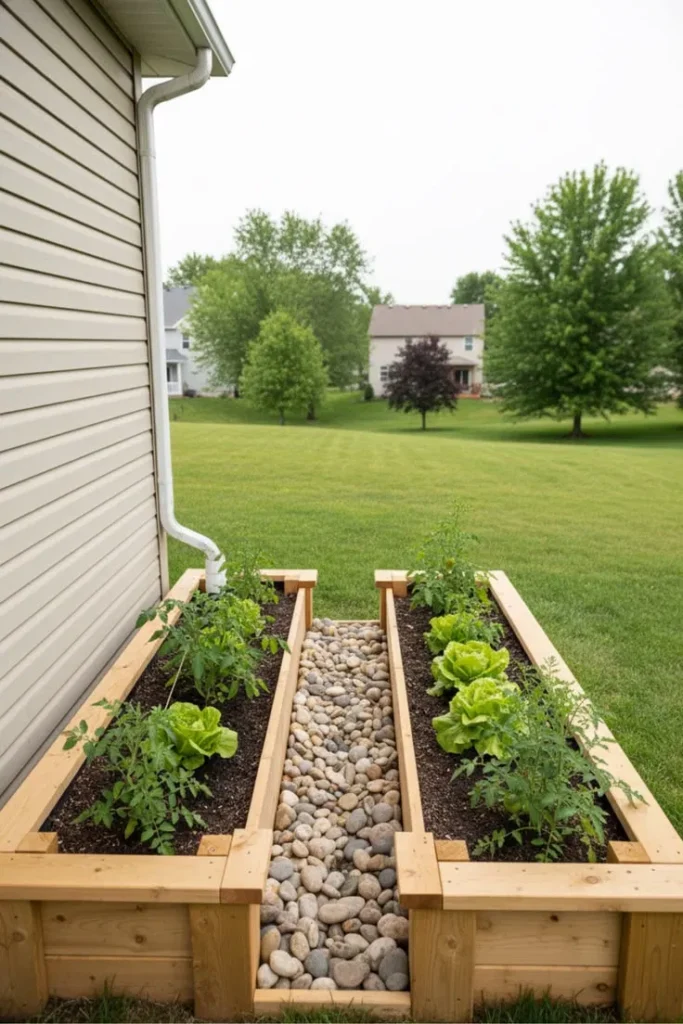
This bed uses that same center rock channel, but stretched across open lawn instead of tucked against the house.
Tomatoes and lettuce grow on either side of the stone divider, which handles drainage while also making the whole bed easier to walk down the middle of for watering and harvesting.
Basically once you learn this trick, you can adapt it to beds of pretty much any length.
Small Yard, Big Garden Energy
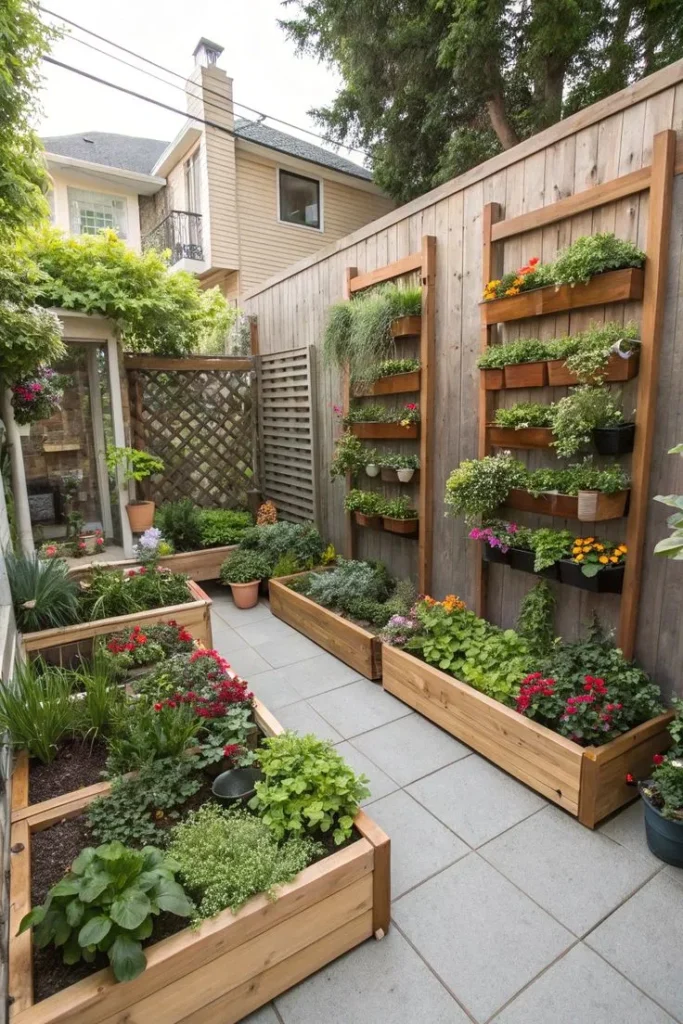
This tiny courtyard proves size is never really the limiting factor.
Wall mounted plant boxes stack vertically along the fence while ground level beds fill every remaining inch with flowers and herbs, so nothing gets wasted, not even the walls.
Although it takes some layering to pull off, combining vertical and ground level beds like this is honestly the smartest way to squeeze a real garden into a small footprint.