Summer’s garden is winding down, but yours doesn’t have to.
Fall is honestly the sleeper season for growing food.
Cooler air, fewer bugs, less watering stress plants love it just as much as you will.
Kale gets sweeter after a frost.
Carrots too.
Garlic goes in now for a summer payoff later.
Below, you’ll find the exact vegetables that thrive when the temps drop, plus timing tips so you’re not planting too late.
Grab your gloves, let’s get digging.
Okayyy, Let’s Talk Coneflowers as Bodyguards
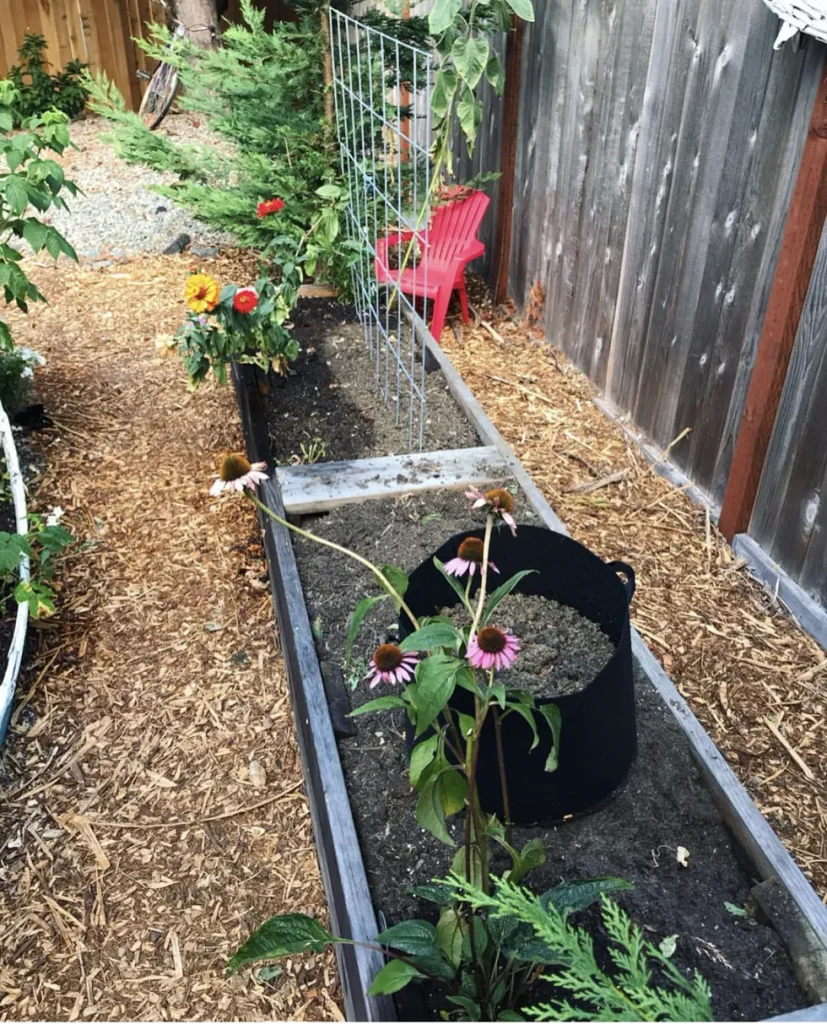
Tucking echinacea along the edge of a veggie row does more than look pretty.
Honestly, those blooms pull in pollinators that your late beans and squash still need before frost shows up.
They handle full sun and so-so soil without fussing, which matters when your good compost went to the tomatoes.
Fall upkeep is basically zero, you know, just let the seed heads stand for the birds.
Greenhouses Are Cheating, and I’m Fine With That
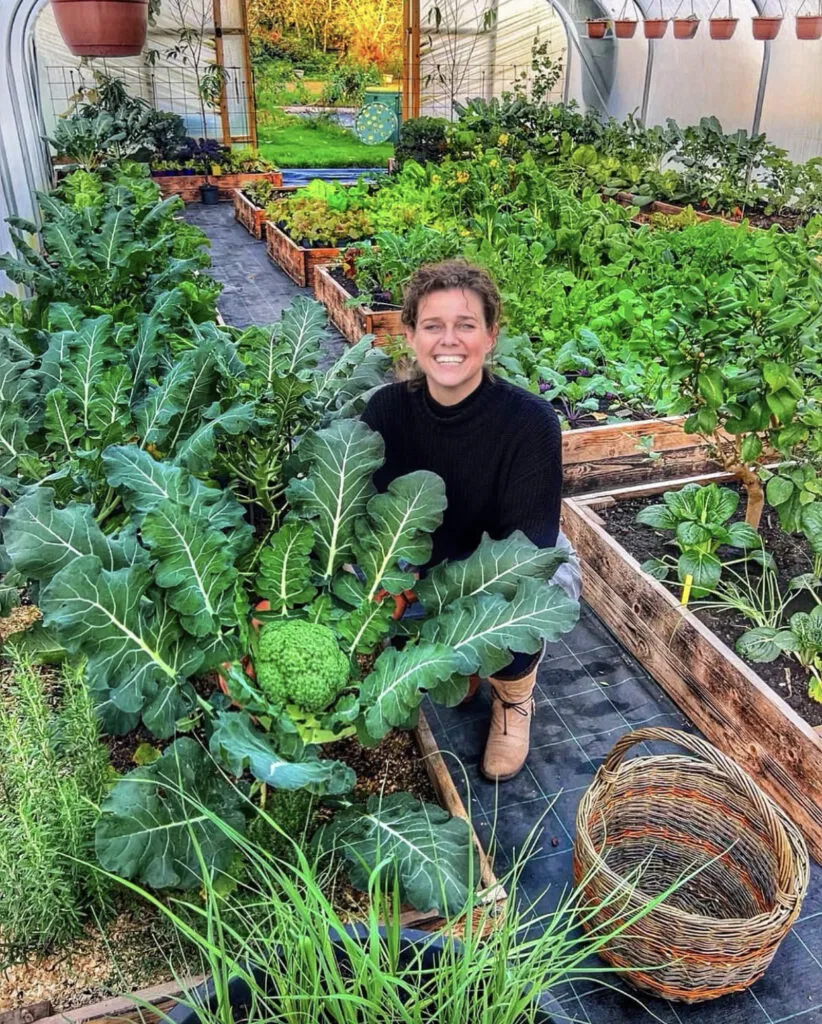
A hoop house or poly tunnel basically buys you an extra two months of growing season.
I mean, that’s huge once nights start dipping into the 40s.
Broccoli and kale keep pushing out heavy heads long after outdoor beds would’ve quit, so the payoff is real.
Upkeep means venting on warm days and watching soil moisture, since covered beds dry out slower but still need eyes on them.
Bulbs Go In Before the Ground Gets Grumpy
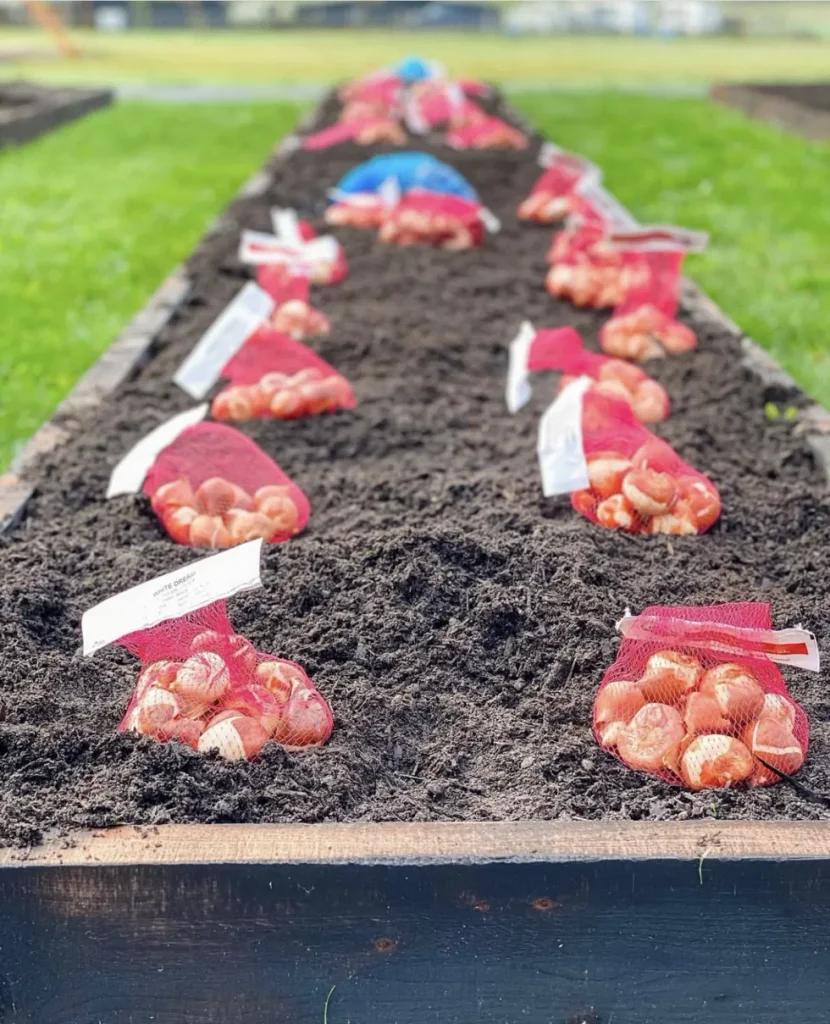
So this is the part nobody loves, but fall is bulb-planting season, not just harvest season.
Tulips and daffodils go into loose, well-drained soil now so they’re ready to pop come spring.
Basically, treat your veggie bed like a two-for-one deal.
Full sun keeps stems strong later, and once they’re tucked in at proper depth, you genuinely just walk away and let winter do its thing.
Small Beds, Big Personality
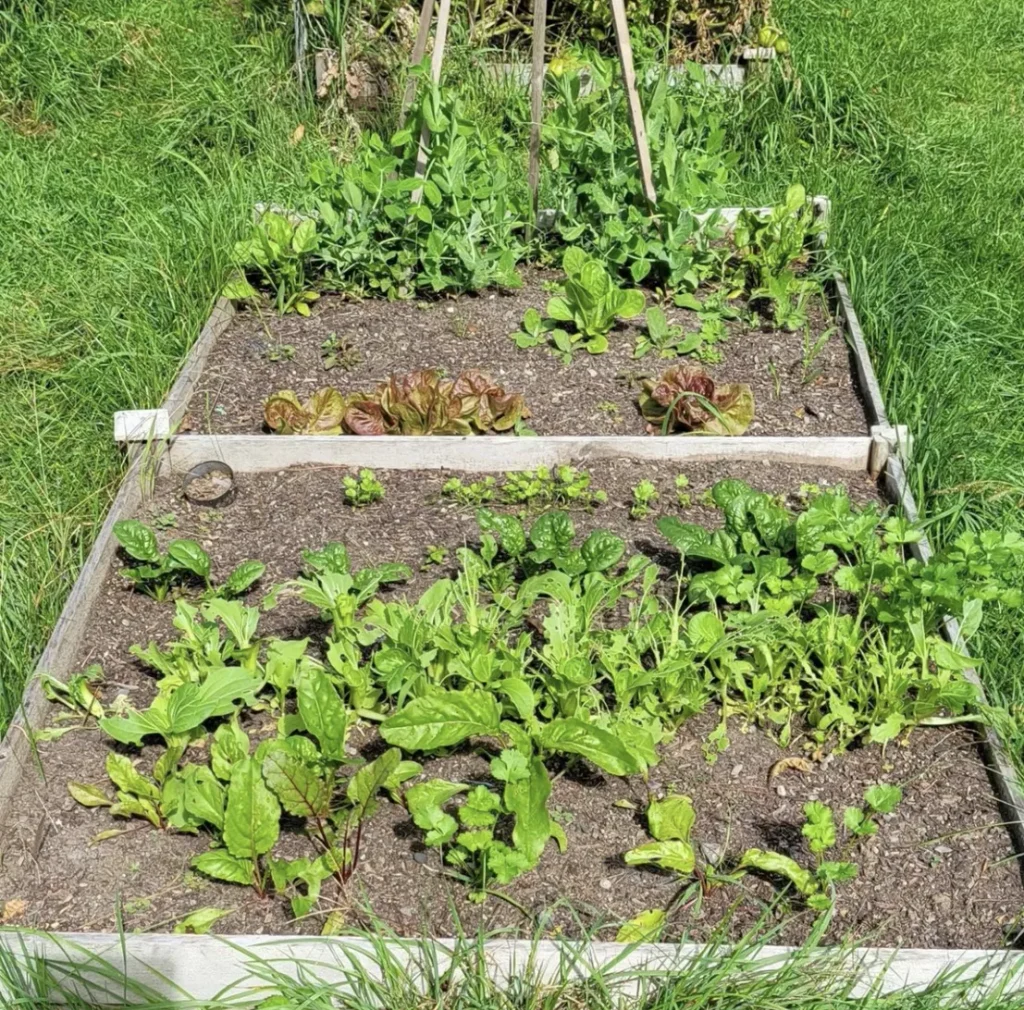
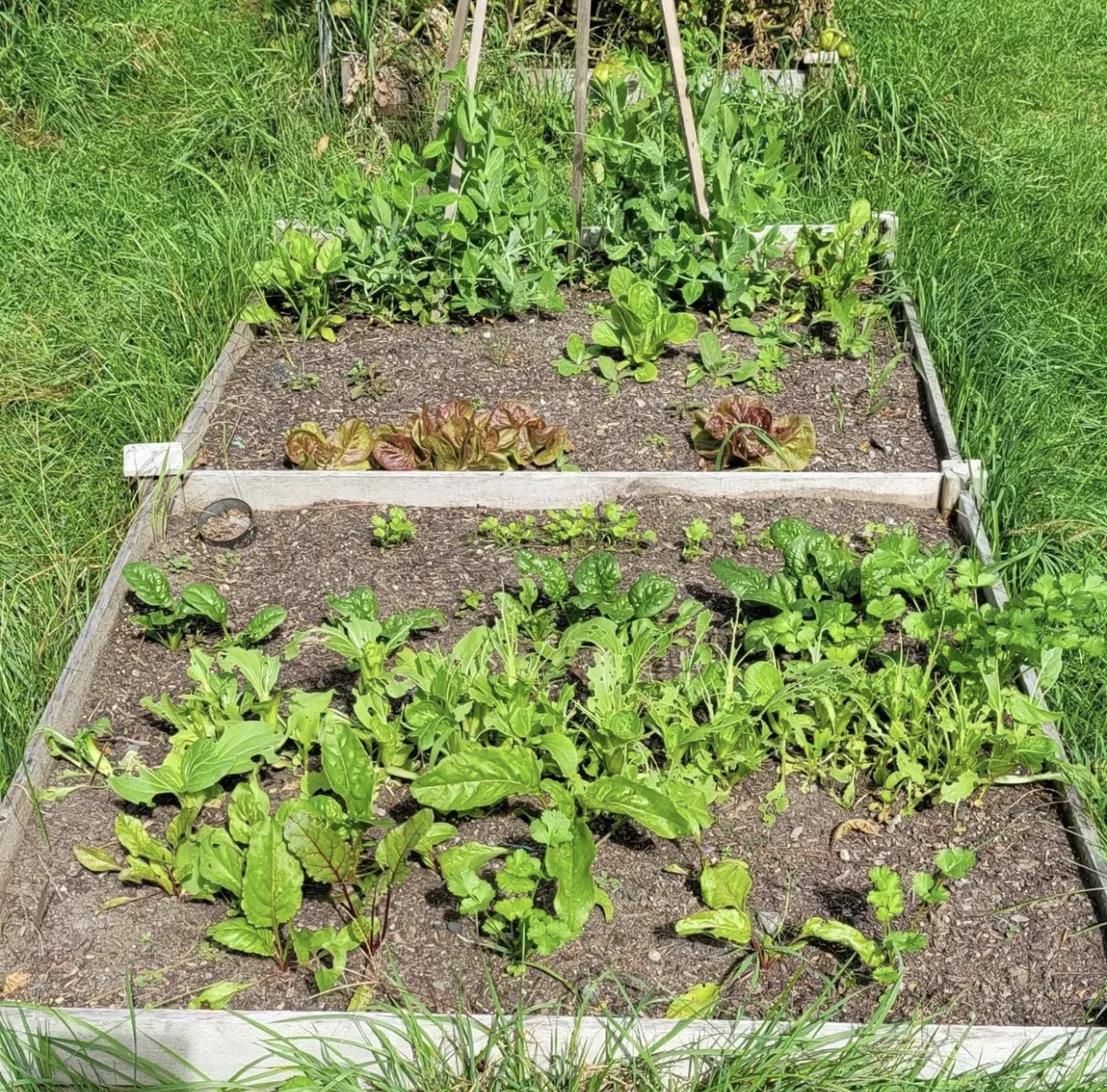
A tight little raised bed crammed with lettuce, peas, and beet greens proves you don’t need acreage for a real fall harvest.
Cool weather actually sweetens greens and beets, so this timing works in your favor.
Partial shade from nearby grass or trees won’t hurt these guys one bit.
Upkeep stays light, just regular water and the occasional thinning, since crowded roots get cranky fast.
Metal Beds Don’t Care About Your Drama
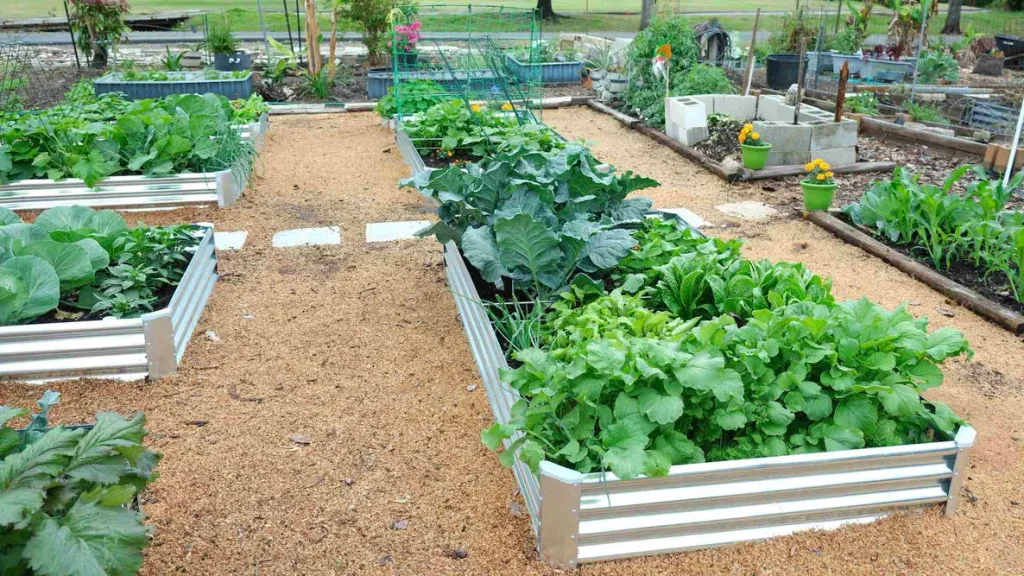
Galvanized raised beds heat up fast in fall sun, which honestly gives cabbage and kale roots a cozy little boost as air temps drop.
Gravel paths between them keep mud out of the picture entirely.
I’d say pack these beds tight, cool crops like company and shade each other’s roots.
Watering stays simple with metal sides holding moisture longer than you’d expect.
Wheelbarrows Deserve a Second Career
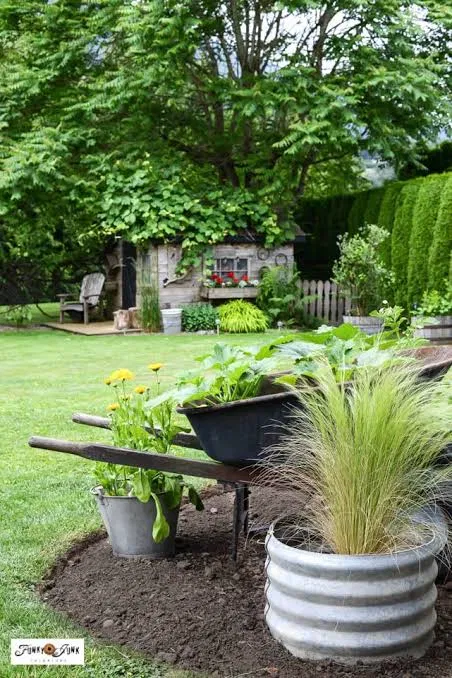
An old galvanized tub or wheelbarrow makes a genuinely great mobile planter for squash or late marigolds.
You know, mobility is the whole point here, chase the sun as it gets lower and weaker through fall.
Drainage is already built in thanks to all those dents and gaps, so root rot isn’t much of a worry.
Ornamental grasses nearby add movement without asking for a thing.
Carrots Reward Patience, Not Perfection
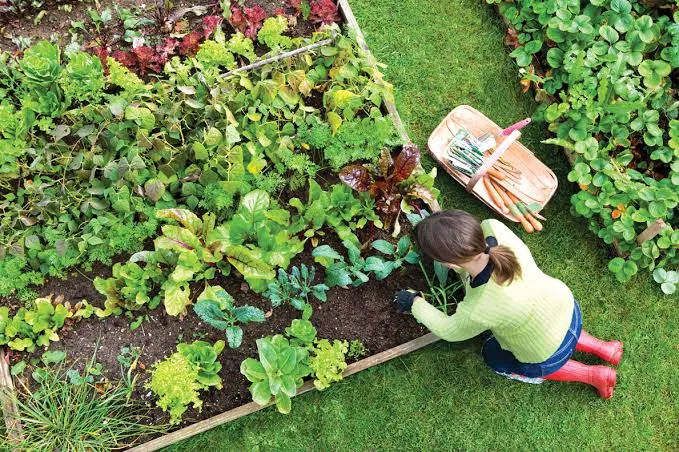
Pulling carrots from a loose, sandy bed in fall gives you the sweetest roots of the whole year, cold weather does that magic conversion thing to their starches.
Basically, don’t rush the harvest.
Mixed in with lettuce and beets, this bed stays productive right up until real frost.
Light, well-worked soil is non-negotiable here, compacted dirt just makes forked, grumpy carrots.
Cottage Chaos Has a Method
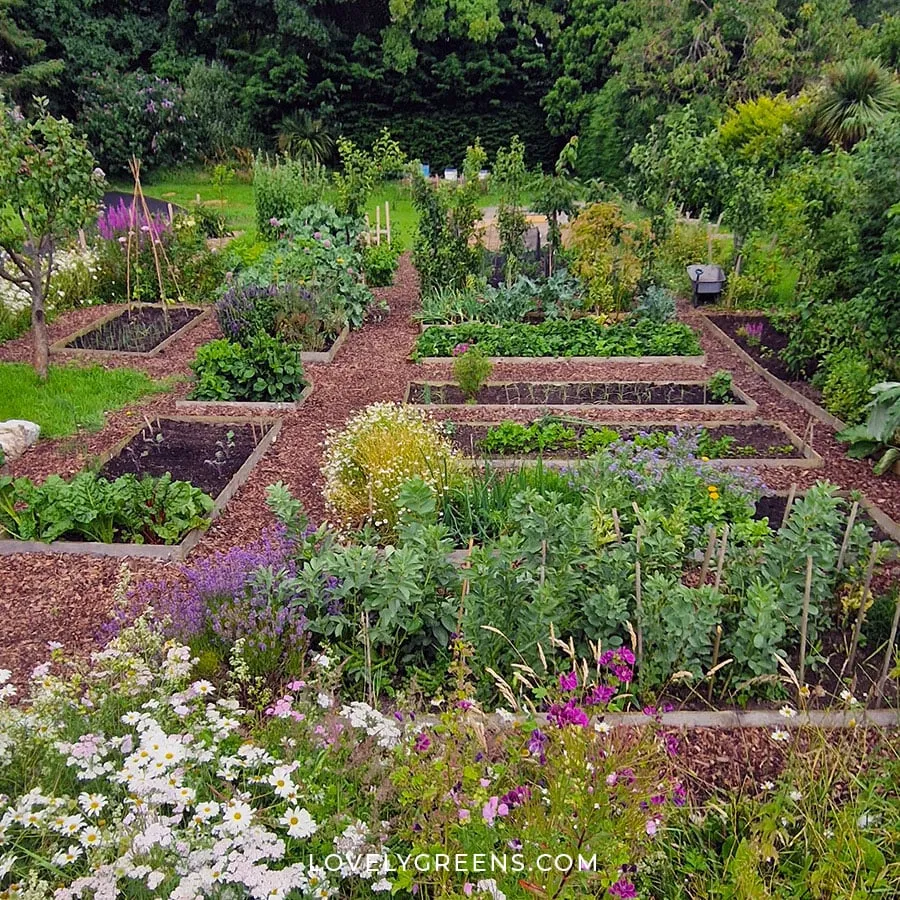
Wildflowers crowding right up against raised beds isn’t messy, it’s strategic.
Daisies and self-seeded blooms keep beneficial insects around late into the season, which helps whatever brassicas are still filling out nearby.
Gravel paths handle fall rain without turning into swamp.
Upkeep is honestly forgiving, let things get a little wild and just deadhead here and there.
Tomatoes Are Living on Borrowed Time
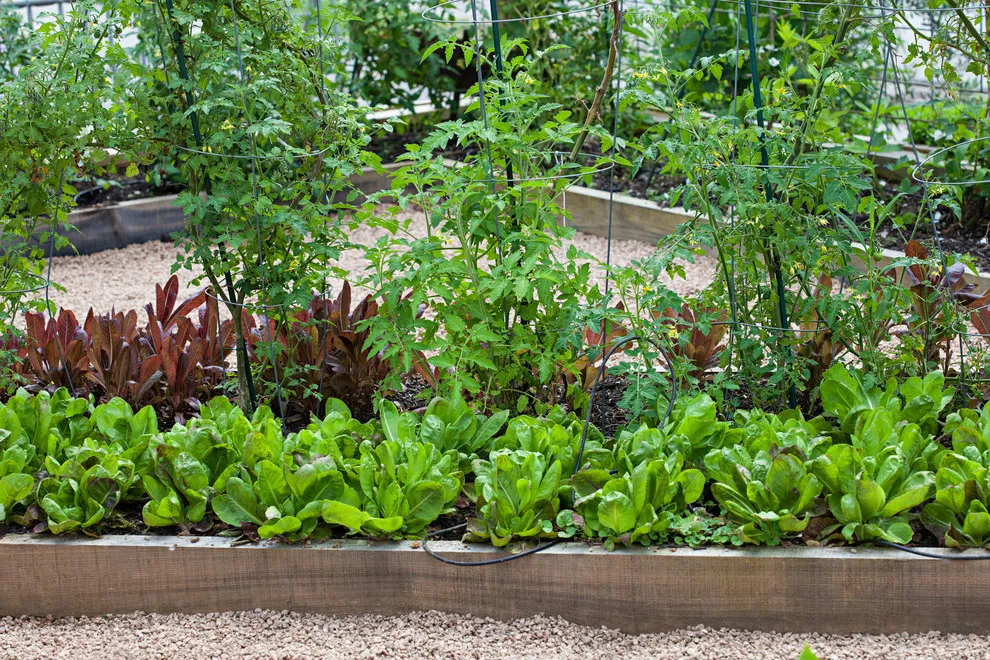
By fall, caged tomatoes are basically racing the calendar, so give them full sun and don’t stress the yellowing lower leaves.
Red lettuce planted right at their feet uses the shade those tall vines throw.
Drip irrigation keeps water off the leaves, which cuts down on late-season fungal drama.
Pull green tomatoes before the first hard frost, ripen them inside on a sunny sill.
Brick Paths Make Everything Feel Official
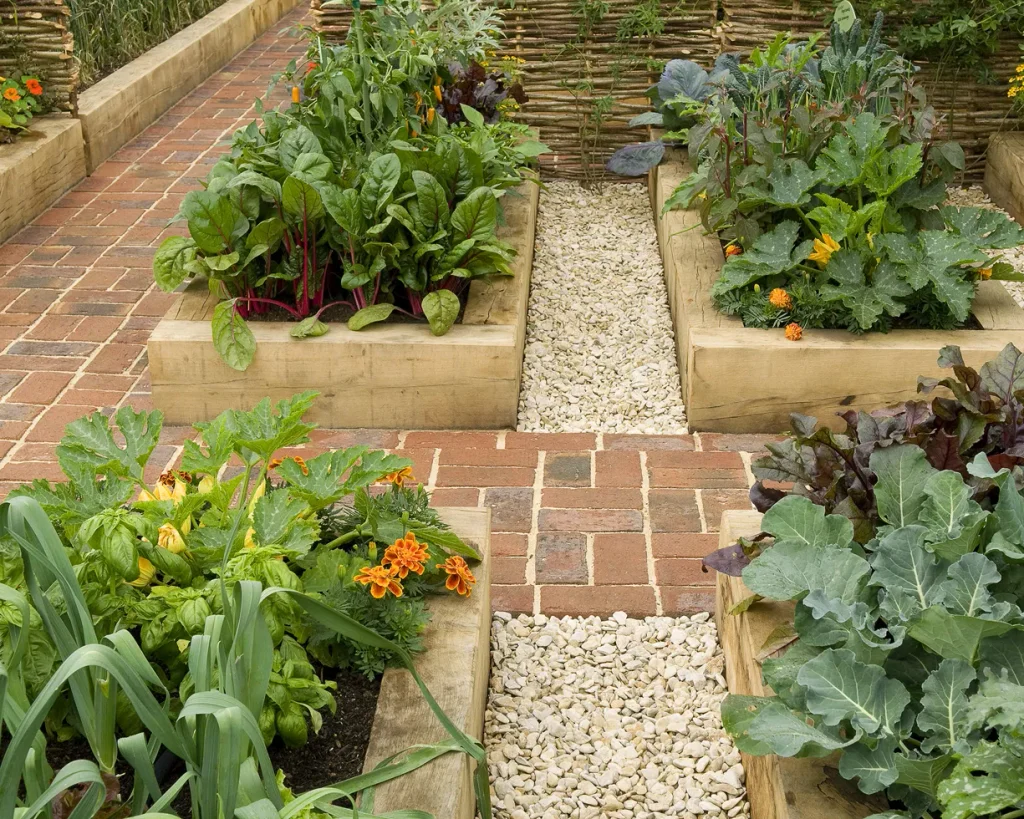
A potager laid out with brick and gravel channels isn’t just fancy, it drains beautifully during fall’s heavier rains.
Chard and kale in the raised beds barely notice the season shifting, they actually get better with a light frost kissing the leaves.
Marigolds tucked in edges keep pests confused.
Upkeep is mostly about topping off mulch as it settles.
The Golden Hour Harvest You’ll Actually Want
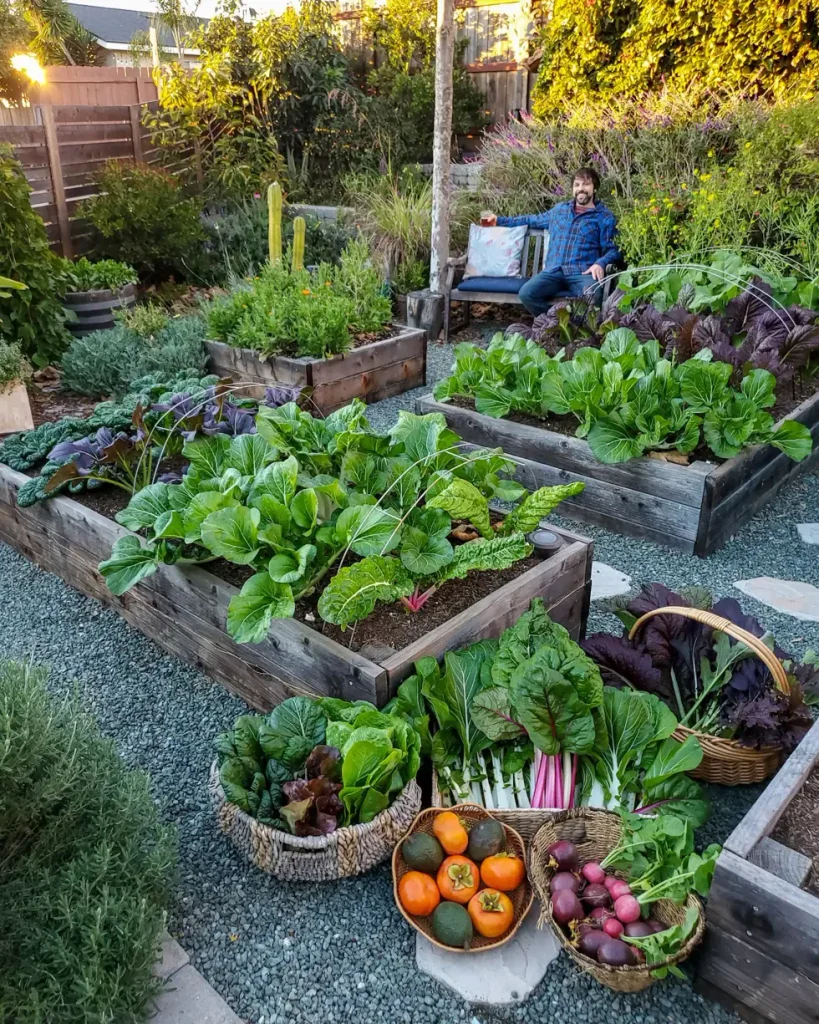
Evening light hitting a garden full of bok choy, cabbage, and citrus baskets is basically the whole reason people garden, I mean, look at that payoff.
These crops love the cooler fall air, it slows bolting and deepens flavor.
Wood-framed beds hold heat a bit longer into the night too.
Keep harvesting outer leaves regularly so plants keep producing instead of bolting.
Pumpkins on Parade
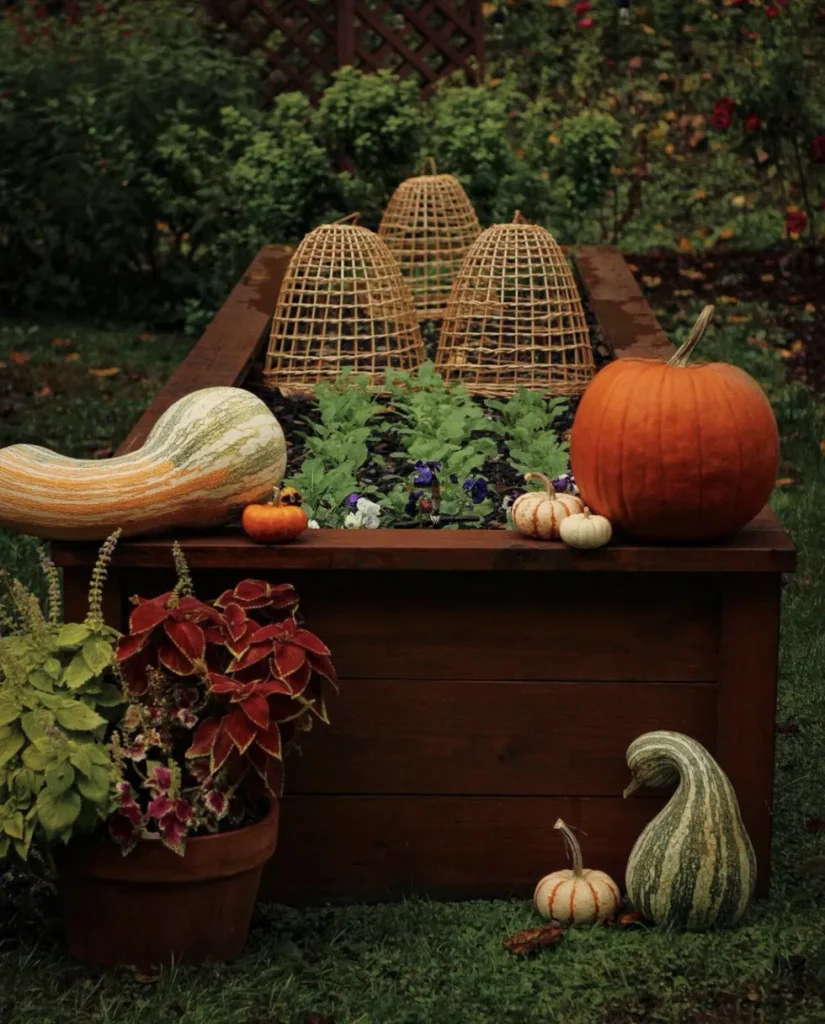
Okay, this one’s just pure fall theater, wicker cloches protecting seedlings while gourds and pumpkins pile up on the ledge like trophies.
Squash family plants want rich, well-drained soil and full sun to size up properly before frost hits.
Coleus nearby adds color once flowers fade elsewhere.
Upkeep is mostly patience, let those gourds cure on the vine as long as weather allows.
Beans Climbing Like They Own the Place
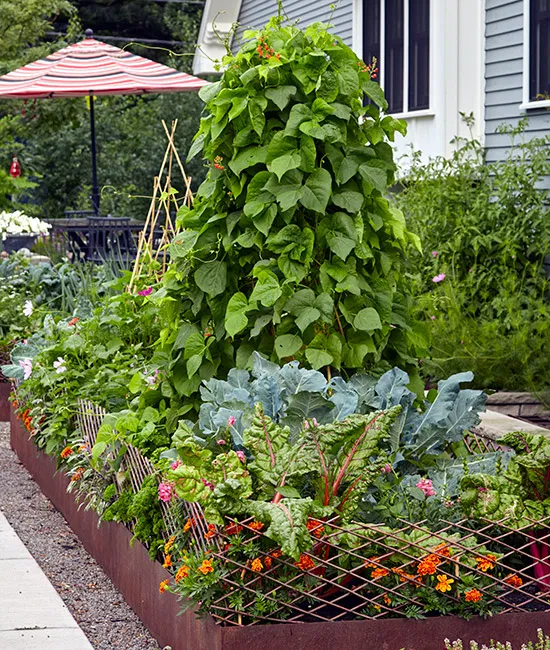
Pole beans piled onto a trellis are still cranking out pods well into fall if you keep picking.
Corten steel beds hold warmth into the soil longer than wood, which stretches your harvest window a bit.
Chard and marigolds at the base fill in gaps and deter pests.
Regular picking is basically the only rule, beans left too long turn tough and stop producing.
Greenhouse Glow, Cottage Soul
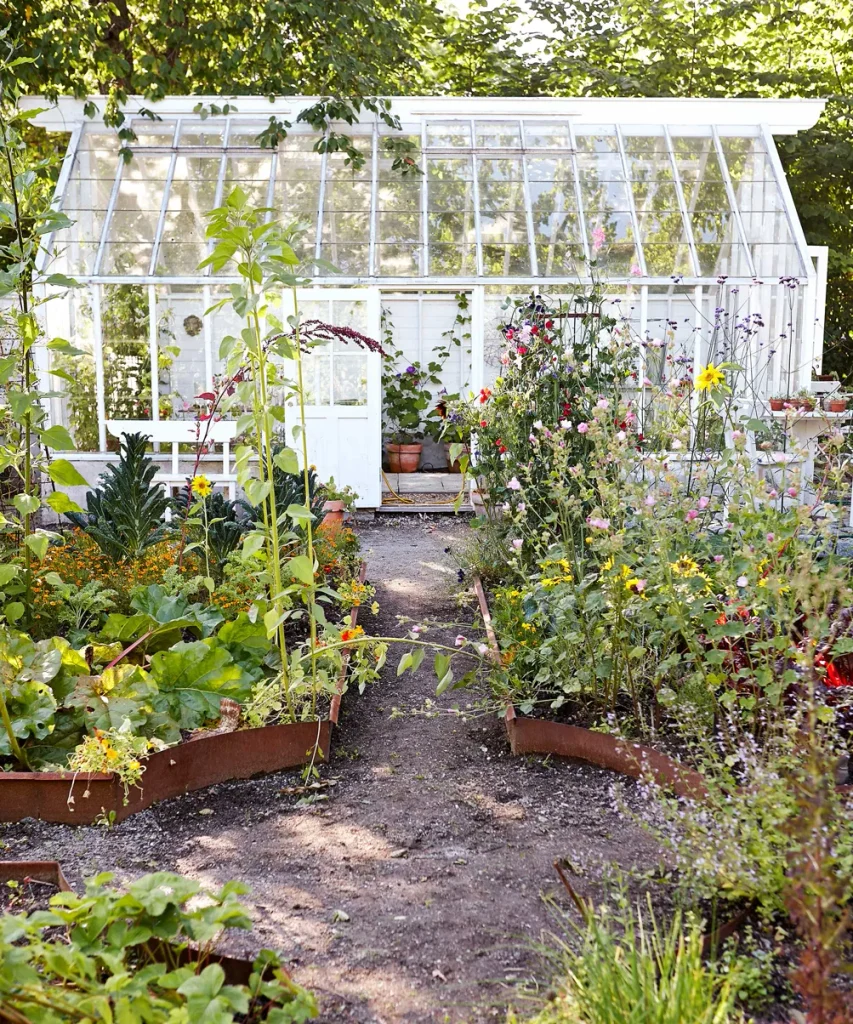
That white glass greenhouse glowing behind a path of kale and sweet peas is basically fall garden goals.
Sunflowers and hollyhocks still going strong this late tell you the soil’s rich and well-fed.
A structure like this extends your season for starts and tender greens both.
Upkeep means clearing spent blooms so energy goes toward what’s still producing.
Rows on Rows, Because Why Not
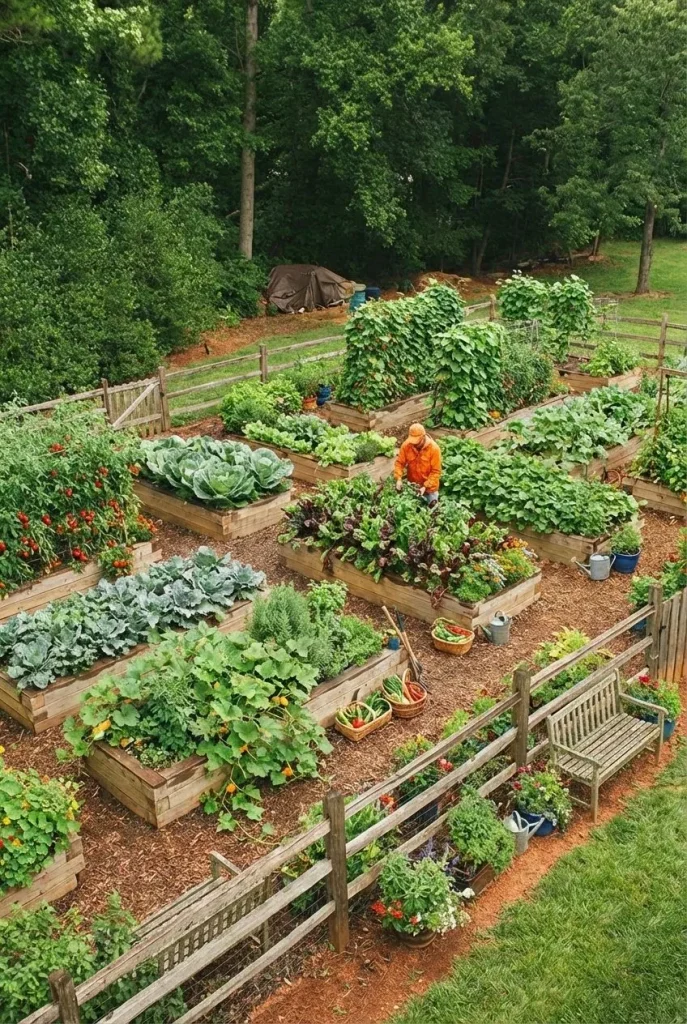
An aerial view of a fully fenced vegetable garden shows what happens when you commit, cabbage, tomatoes, and bean towers all sharing space efficiently.
Split rail fencing keeps critters guessing without blocking airflow.
Fall means swapping spent summer crops for cabbage and greens right away, no bare soil allowed.
Mulched paths cut down on weeding time significantly.
Kneel Down, Get Your Hands Dirty
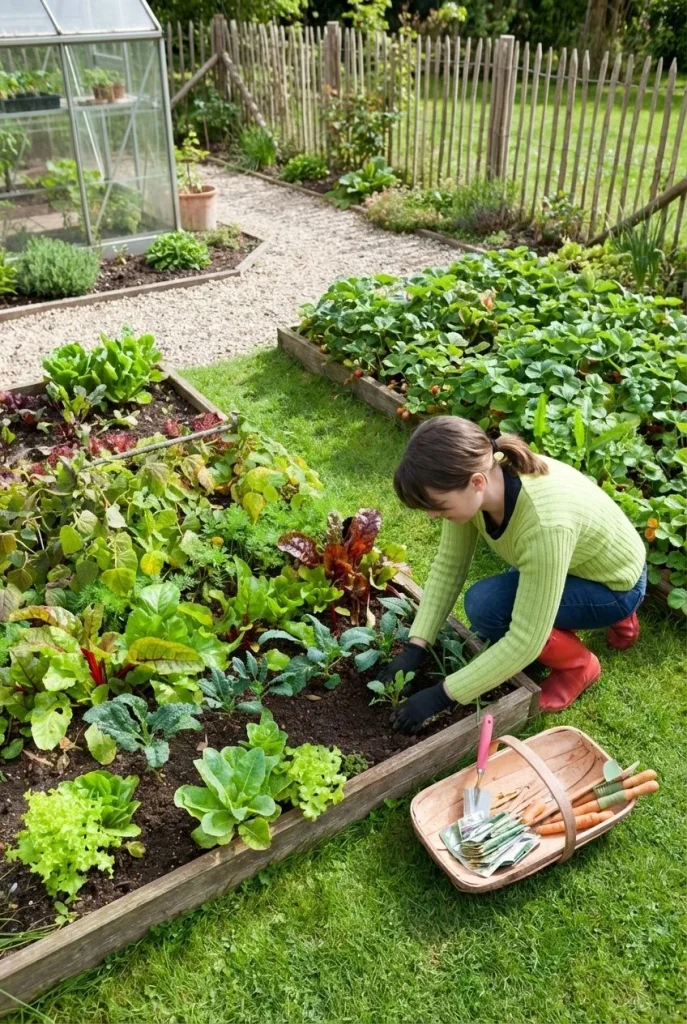
Planting into a raised bed near strawberries and chard, like this gardener’s doing, is basically the most honest kind of fall work.
Strawberries left in place now set up next year’s fruit, so don’t pull them.
Gravel paths keep knees dry even after rain.
Upkeep this time of year is mostly tucking in new starts and mulching around established roots.
Selfie With a Side of Kale
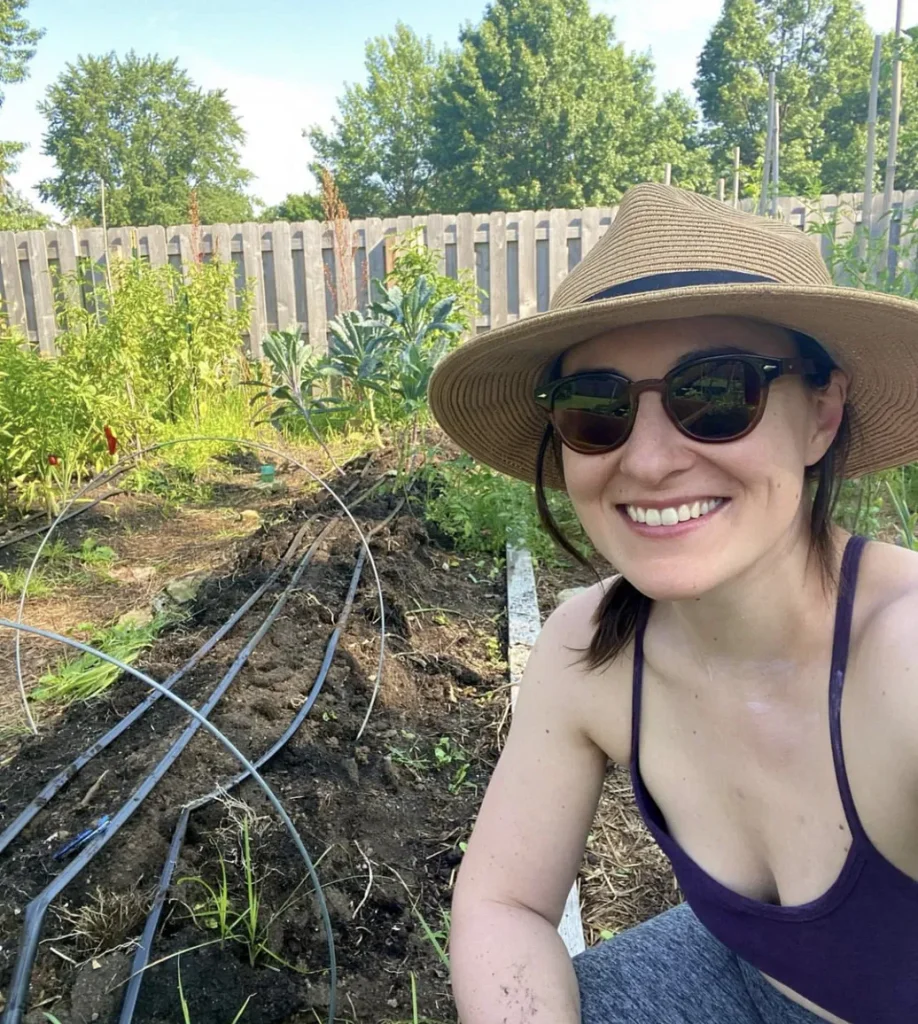
A quick garden selfie next to drip lines and stubborn kale proves you don’t need a perfect setup, just consistent water and decent light.
Peppers and tomatoes staked nearby are finishing their run before frost.
Wood fencing blocks wind without shading the bed too much.
Basically, fall gardening rewards showing up regularly more than any fancy technique.
Chard That Shows Off on Purpose
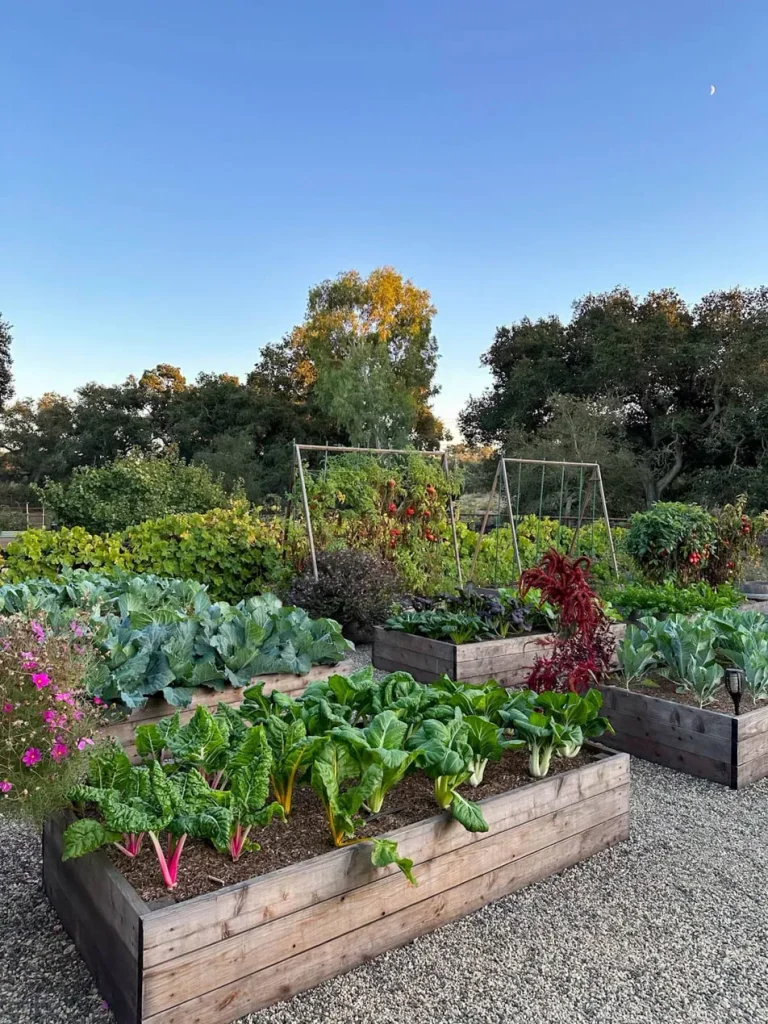
Rainbow chard glowing pink and yellow under an evening sky is honestly one of fall’s best free shows.
Cold nights intensify those stem colors, so don’t rush harvest.
A-frame trellises nearby still support late tomatoes ripening in the gravel bed’s reflected warmth.
Upkeep stays minimal, chard just keeps giving as long as you keep cutting outer leaves.
Snap Peas Don’t Wait for Anyone
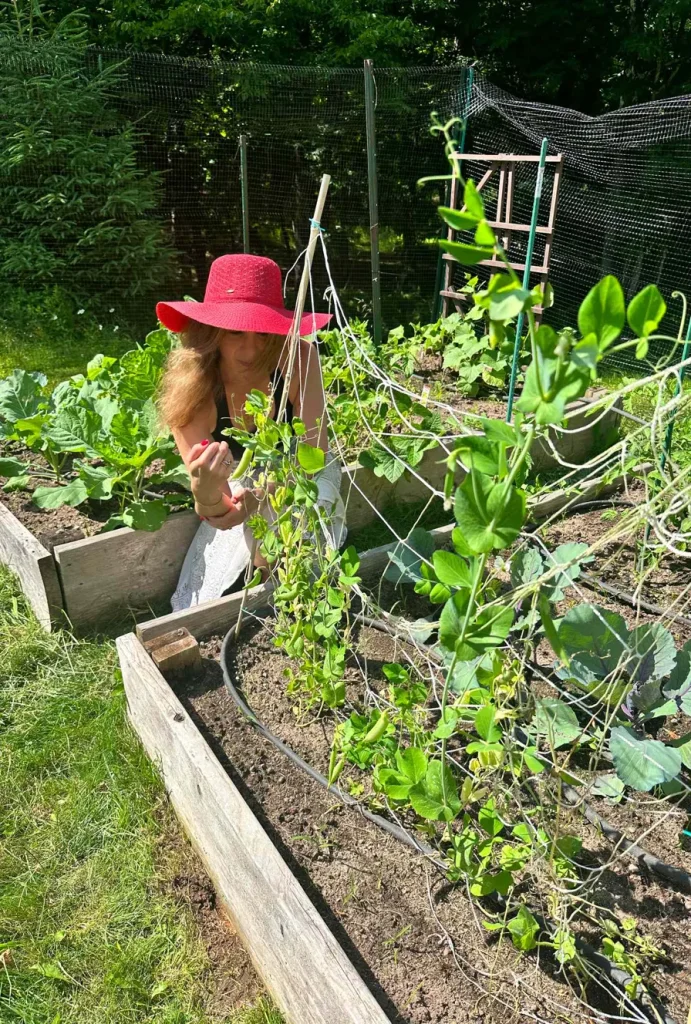
Picking sugar snap peas straight off the trellis under netting is one of fall’s quiet little joys.
Cool weather actually makes peas sweeter and crisper than their summer cousins.
Netting keeps birds out without blocking sun from reaching the vines.
Keep picking daily, seriously, peas left on the vine too long turn starchy fast.
The Bench Is There for a Reason
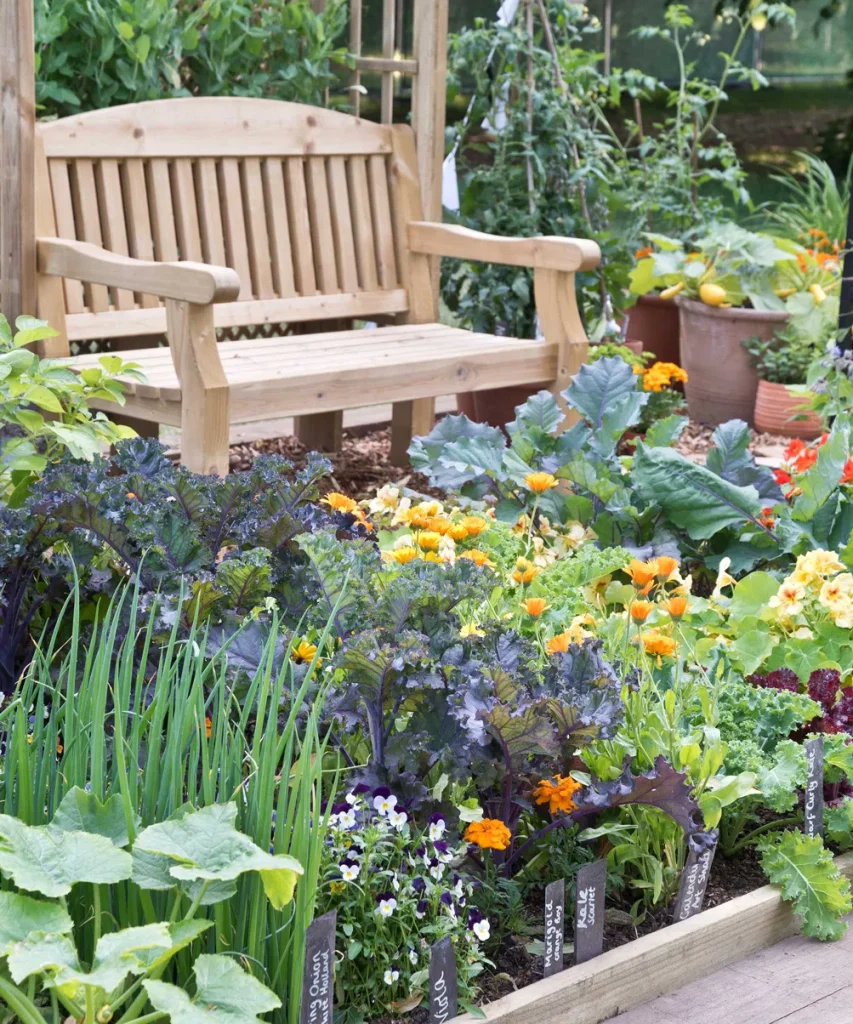
A wooden bench parked right in the middle of purple kale, marigolds, and calendula isn’t decoration, it’s an invitation to actually sit and look at your work.
These flowers keep pests off nearby brassicas while adding color once summer blooms fade.
Labeled beds make fall succession planting way less guesswork.
Upkeep means deadheading calendula regularly to keep the show going.