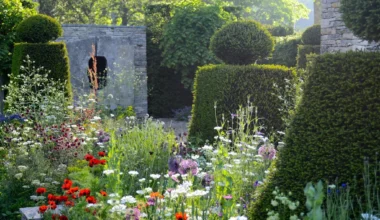
There’s a reason boxwoods show up in basically every dream garden you’ve ever saved.
They’re structured, they’re versatile, and honestly — they just make everything around them look better.
Whether you want clean geometric hedges or something a little more relaxed and cottage-y, boxwood delivers every single time.
This one’s full of ideas to steal.
Go make your neighbours jealous.
Here are all 15 descriptions for your Boxwood Landscaping Ideas article:
When Roses Need a Little Structure in Their Life
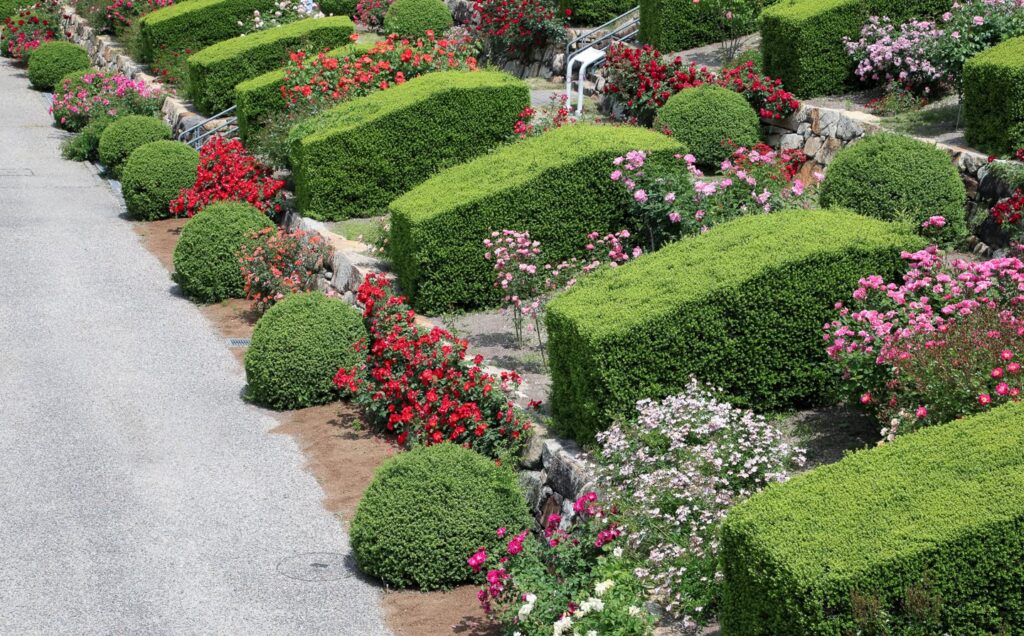
Honestly, clipped boxwood mixed with sprawling roses is one of those combinations that just works every single time.
The structured geometry of boxwood landscaping keeps the whole planting from looking chaotic, even when roses are doing their most dramatic peak bloom thing.
Mix rounded and rectangular forms for variety, and plant red, pink and white roses between them for colour without the mess.
It is basically controlled chaos and it is gorgeous.
Lavender and Boxwood Are Obviously Best Friends
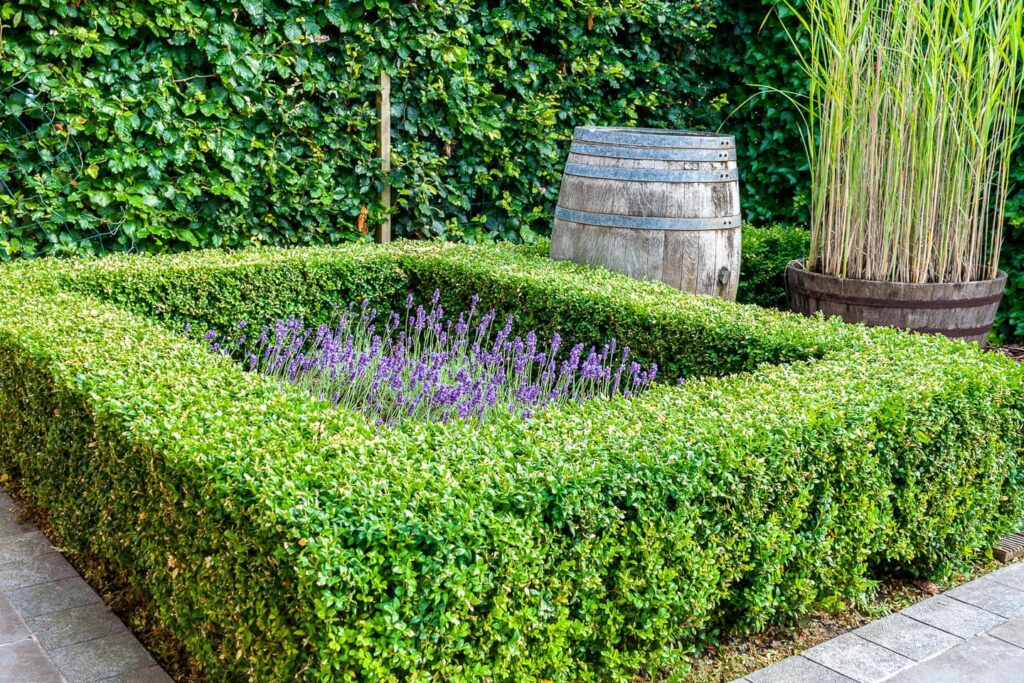
This is the pairing nobody talks about enough and it genuinely deserves more attention.
Low clipped boxwood hedges with lavender erupting from the centre creates a sensory experience that is as beautiful as it is fragrant.
The cool grey green of the lavender against the bright emerald boxwood is stunning.
Add a weathered oak barrel and some ornamental grasses nearby and you have a garden vignette that looks completely effortless.
Hydrangeas Deserve a Proper Frame
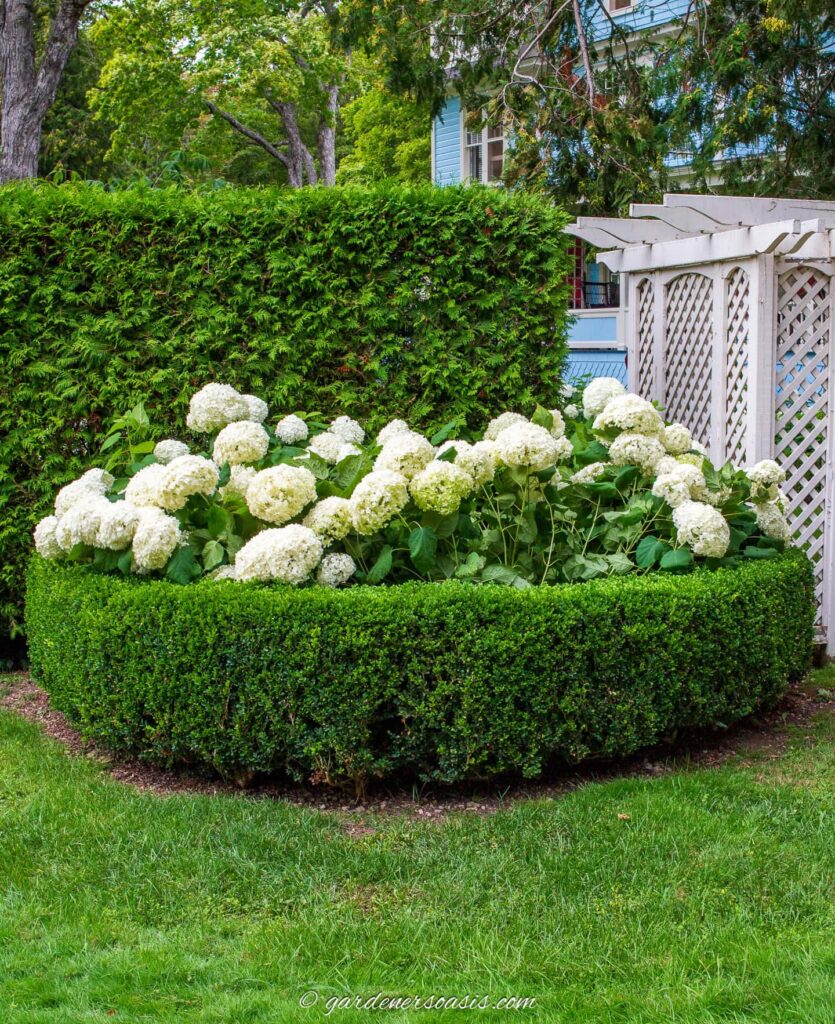
So you want to grow white Annabelle hydrangeas but you also want the garden to look polished rather than just enthusiastic.
Wrapping them in a low curved boxwood border is genuinely the answer.
The dense evergreen base holds the whole composition together even when hydrangeas flop dramatically in summer rain, which they will.
Plant the boxwood at around thirty centimetres high and let the hydrangeas billow freely above.
This Garden Border Refused to Be Boring
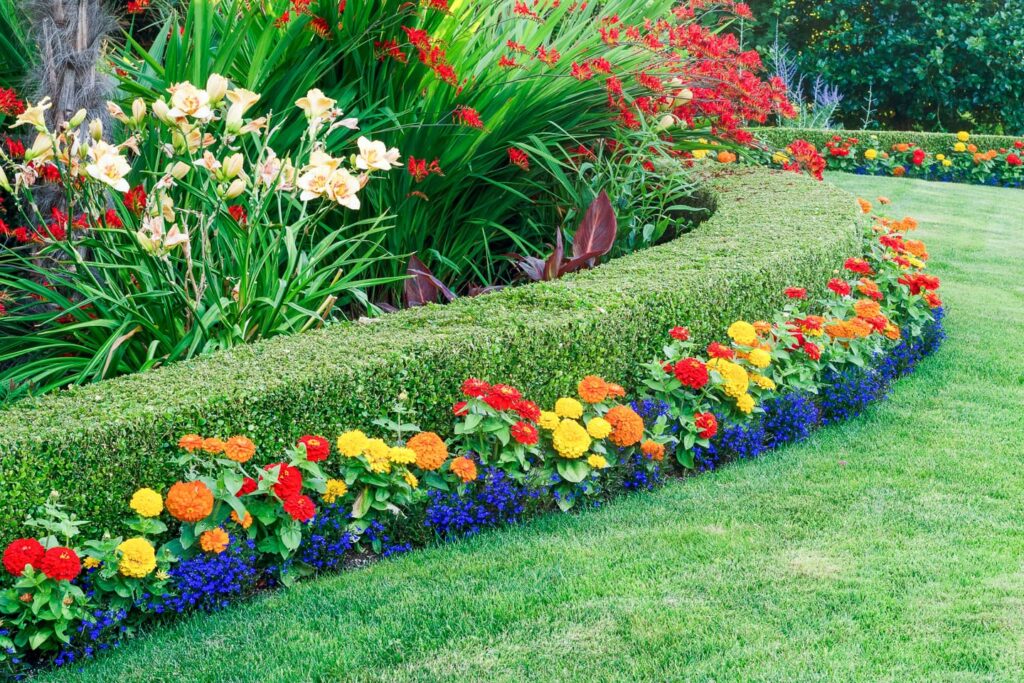
Zinnias, lobelia, crocosmia and daylilies rioting along a gently curved boxwood edging is peak summer border energy.
The low clipped line of boxwood is doing essential work here, keeping all that joyful colour from spilling across the lawn and losing its impact.
Use boxwood as a ribbon border rather than a solid block when your planting palette is this bold.
The contrast between discipline and wildness is the whole point.
Knot Garden Realness, But Make It Achievable
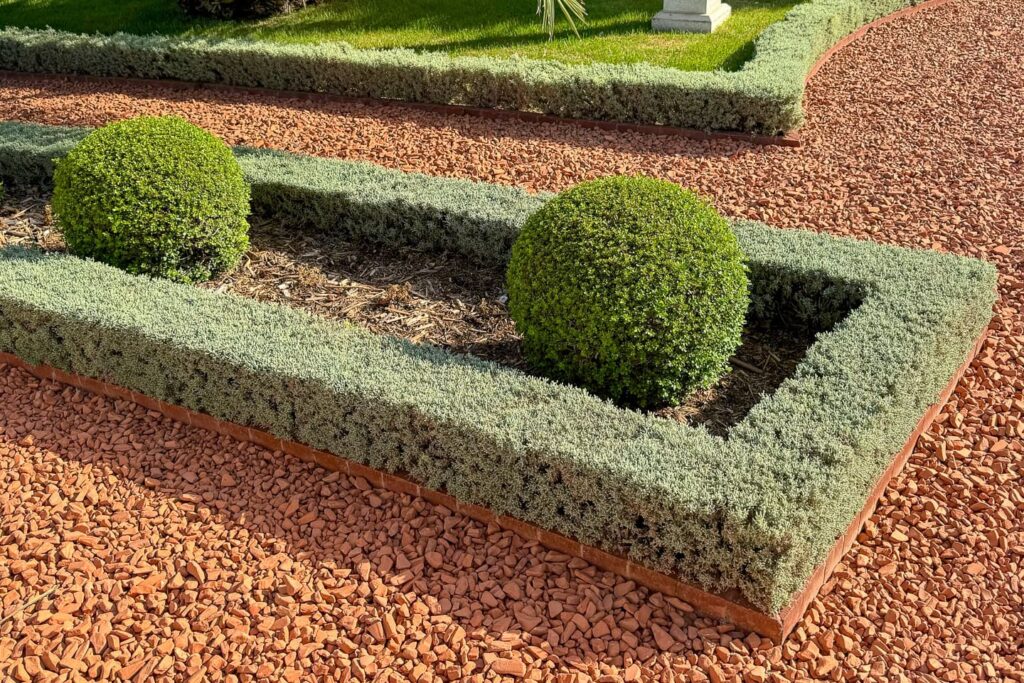
Two different foliage textures side by side in a formal knot pattern with boxwood globes rising from the geometry is genuinely one of the most impressive things you can do with a small garden space.
The warm terracotta gravel base makes every shade of green pop against it.
Boxwood knot gardens look impossibly complex but they basically come down to patient clipping and a good initial layout.
Start simple and add globes as the hedging matures.
Boxwood Balls Under a Cherry Tree? Yes.
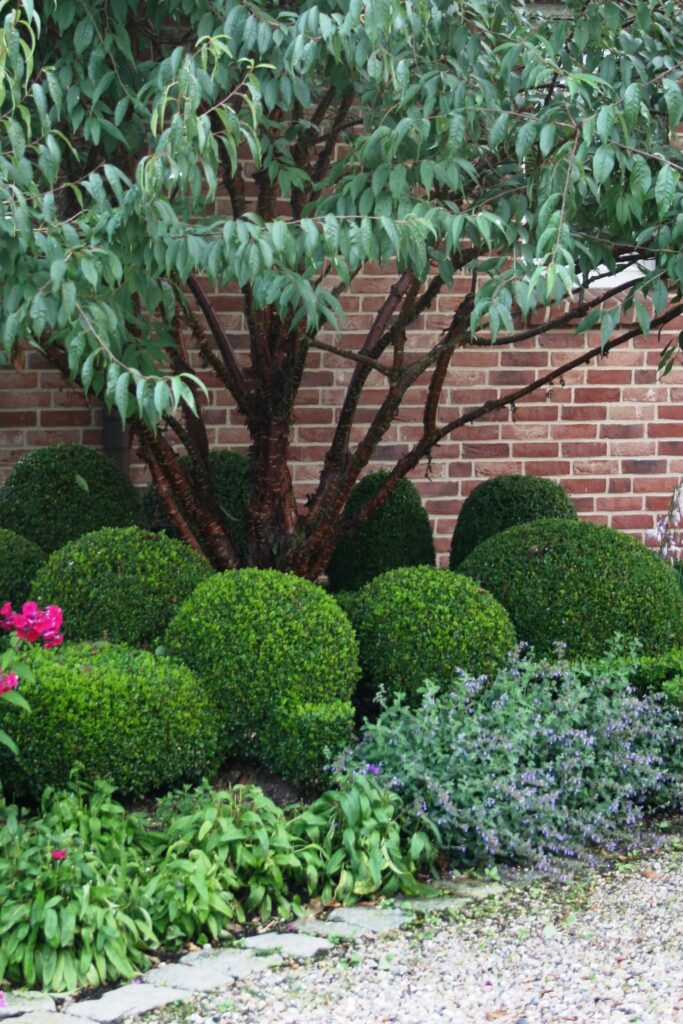
Clustered boxwood balls at the base of a multi stemmed ornamental cherry against a brick wall is such a clever layering move.
The perfectly clipped spheres echo the rounded canopy above while catmint and peonies soften the gravel edges around them.
You do not need a huge garden to pull this off.
A single tree underplanted with three to five boxwood balls and some purple flowering perennials is more than enough to make a corner feel genuinely designed.
The Potted Lineup That Makes Driveways Look Intentional
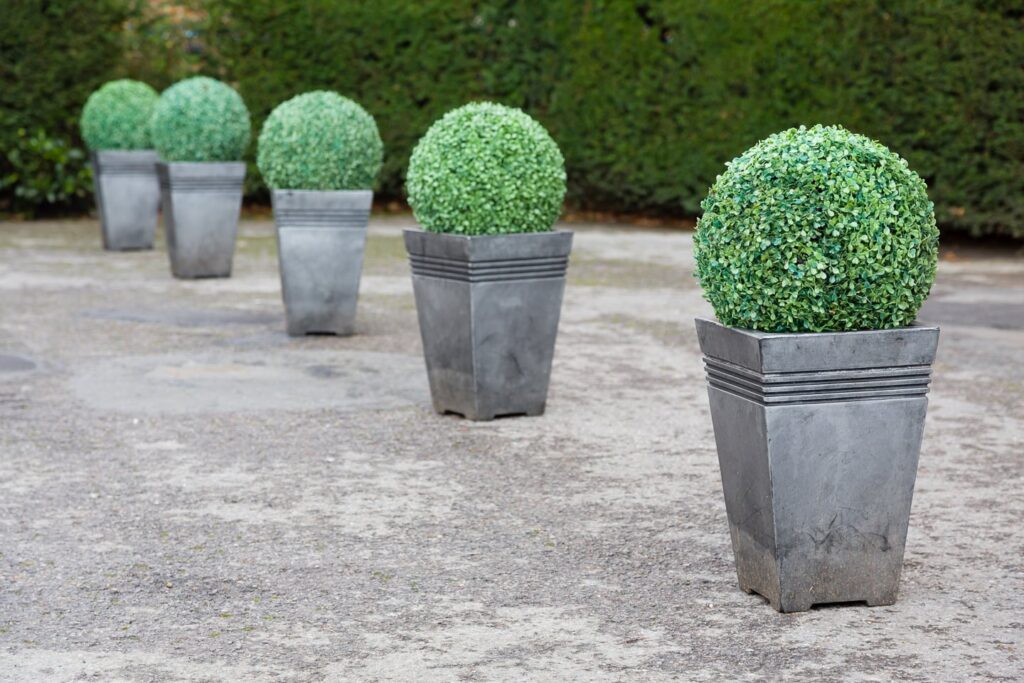
Matching boxwood topiary balls in tall lead effect planters lined up along a gravel path or driveway is one of those simple ideas that looks incredibly expensive for what it actually costs.
Repetition is doing all the heavy lifting here.
Keep the pots identical, keep the clipping tight, and keep the gravel beneath raked clean.
That is literally the whole formula and it works every time without exception.
Old English Garden Done Properly
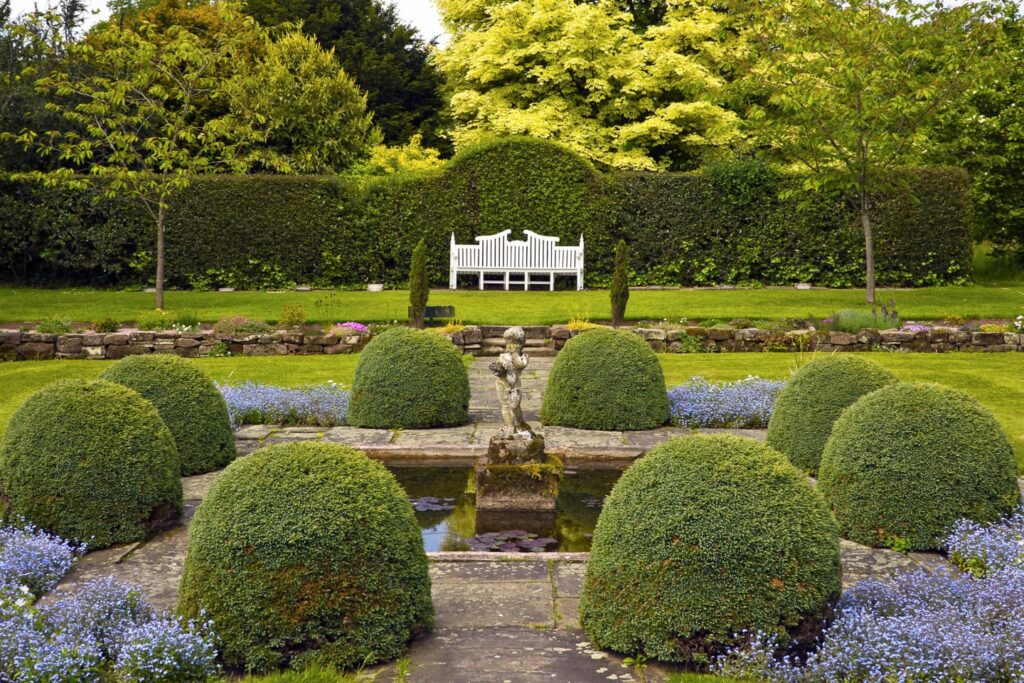
Dome shaped boxwood topiaries arranged around a stone cherub fountain with forget me nots pooling at their feet and a white painted bench nestled into a hedge alcove beyond is the garden equivalent of a Jane Austen novel.
It is formal but never cold.
The forget me not blue softens all that clipped precision beautifully.
If you want this look, anchor it with a central water feature first and build the boxwood structure outward from there.
One Statement Dome, No Further Questions
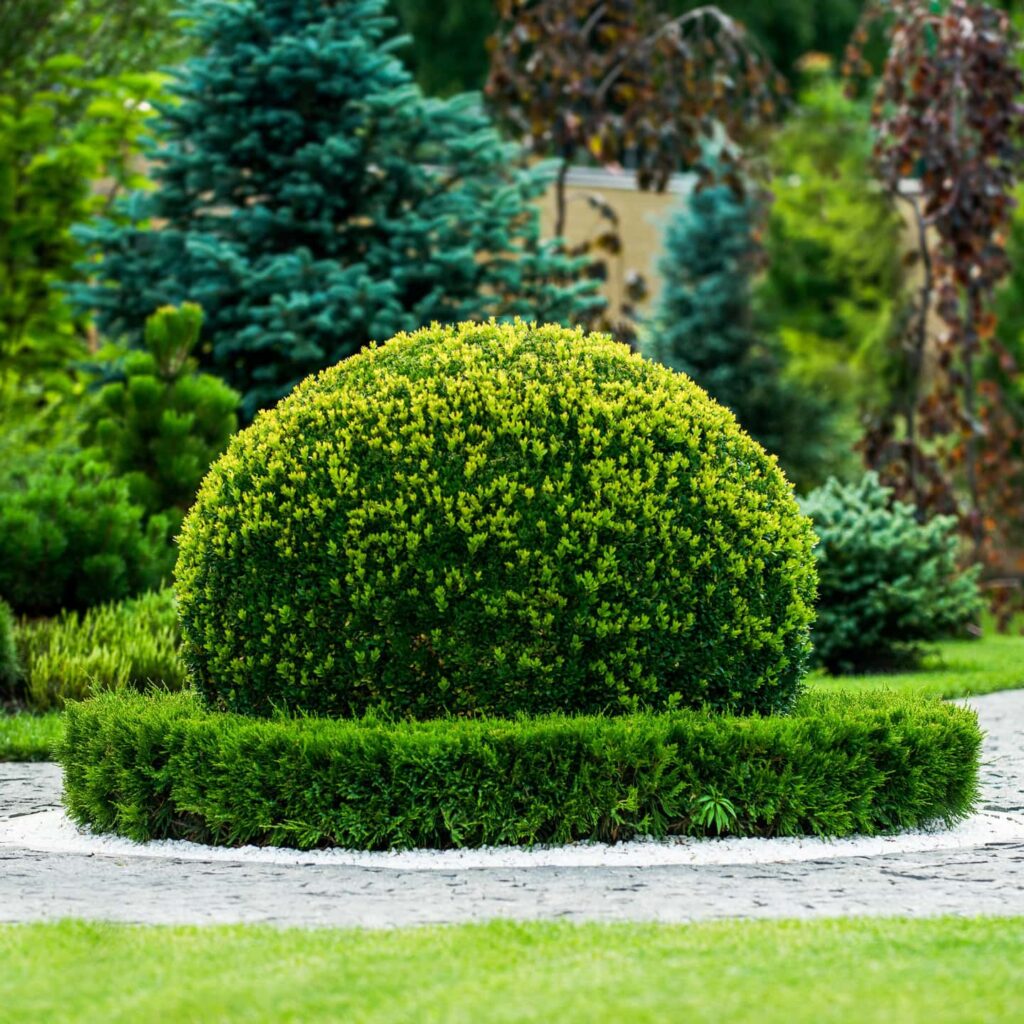
Sometimes restraint is the entire move.
A single oversized boxwood dome rising from a low collar of clipped hedge, surrounded by white gravel and set against a backdrop of mixed conifers, is genuinely all a garden focal point needs to be.
No flowers, no fuss, no explanation required.
The scale and the sculptural confidence of one perfectly maintained mound does more for a garden than an entire bed of competing plants ever could.
Versailles Called and It Wants Its Garden Back
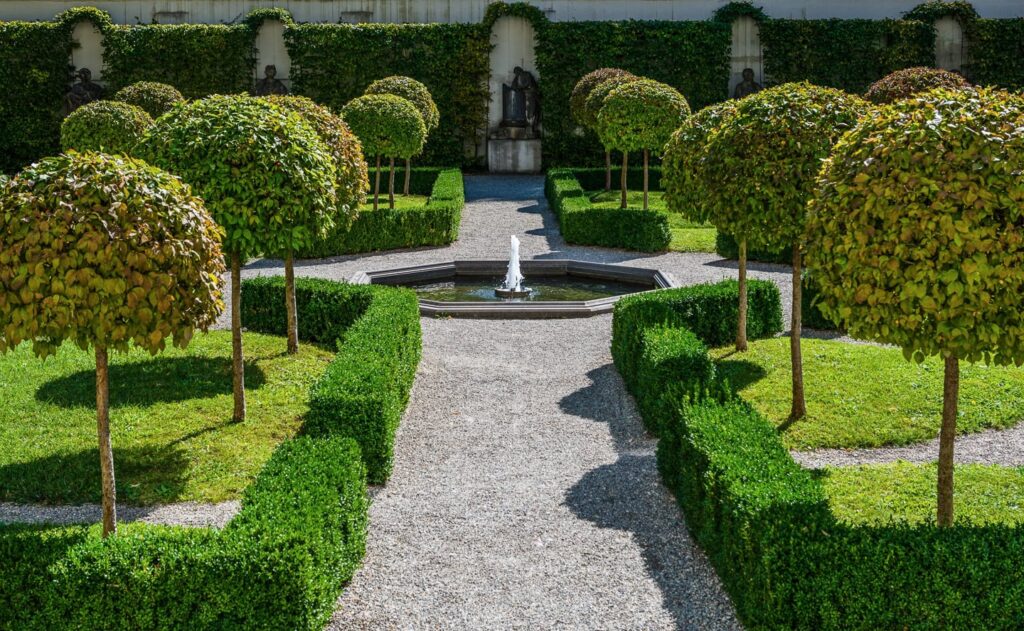
Standard trees with rounded canopies lining a gravel path toward a central octagonal fountain, all bordered by crisp boxwood hedging with classical statuary recessed into the greenery, is giving full French formal garden and we are absolutely here for it.
The key to pulling off a formal boxwood garden at home is symmetry and a strong central axis.
Even a modest version of this structure elevates a garden from nice to genuinely architectural.
The Low Border That Does Everything Right
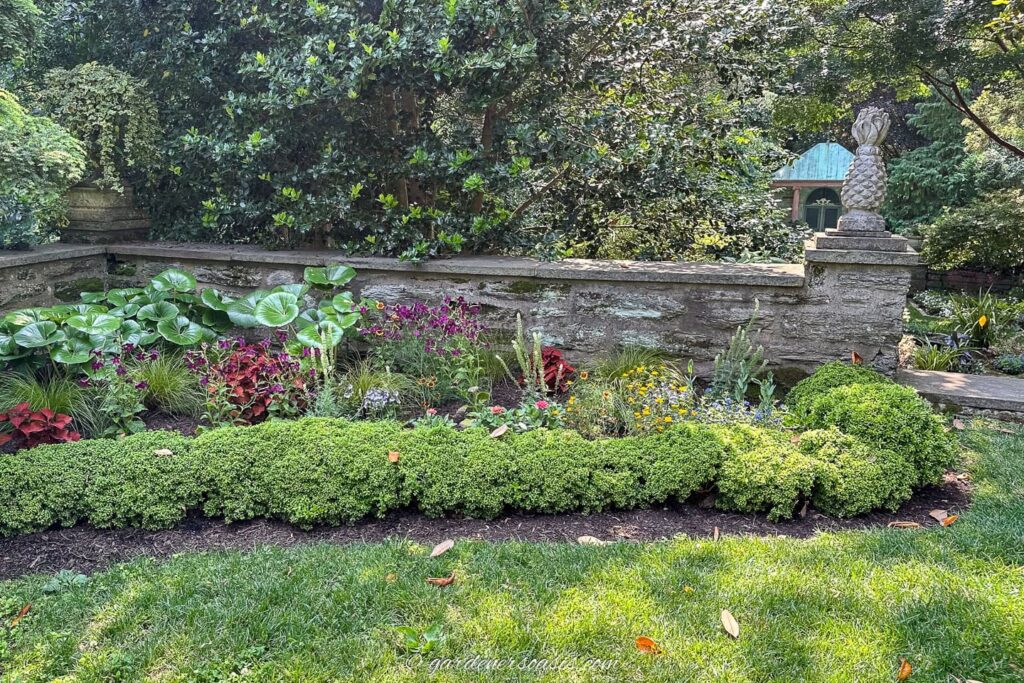
Running a rippling low boxwood edging along the front of a richly planted mixed border against a stone wall keeps the whole composition grounded no matter how wild the planting gets behind it.
Bold leafed ligularia, deep burgundy coleus, foxgloves and zinnias can all do their thing freely when boxwood is holding the front line.
It is the quiet workhorse of garden design and honestly it never gets enough credit.
Countryside Cottage Garden With Actual Structure
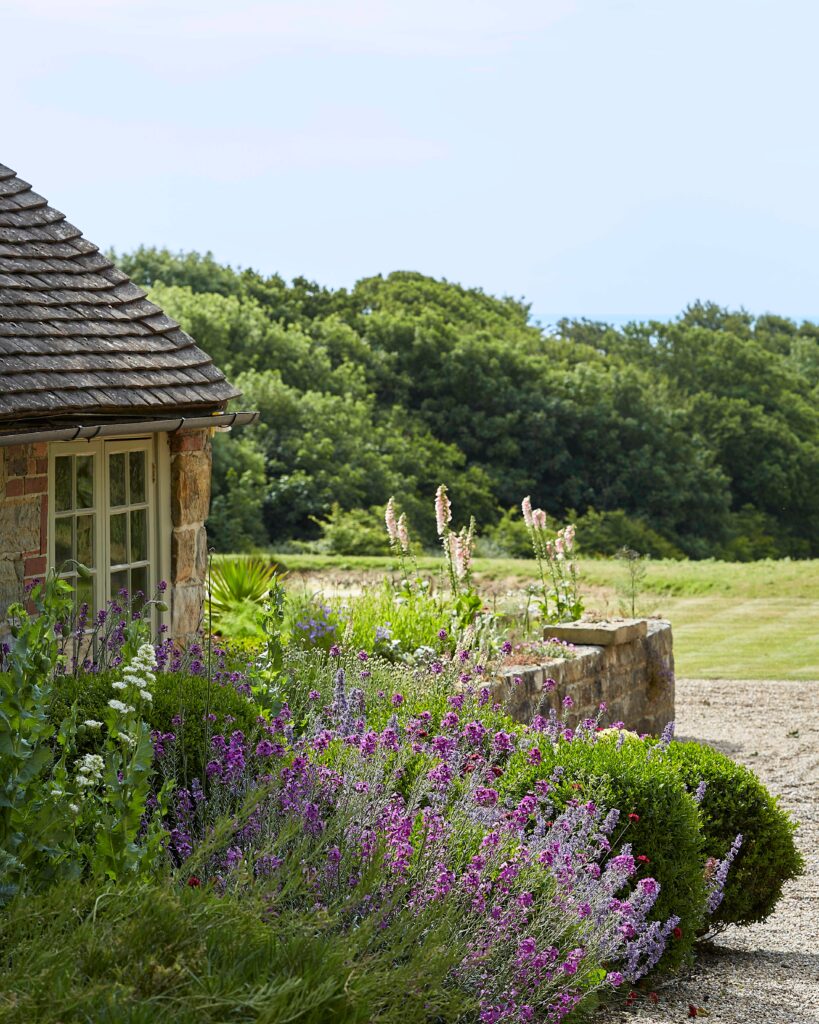
Purple salvia, catmint and foxgloves tumbling alongside clipped boxwood balls at a stone cottage foundation is the kind of planting that looks completely unplanned but is actually very much not.
The boxwood gives the whole relaxed border a backbone it would otherwise lack entirely.
For cottage garden planting that does not eventually look chaotic, tuck a few clipped balls throughout the bed at irregular intervals.
They anchor everything without making it feel stiff.
When a Hedge Becomes an Art Installation
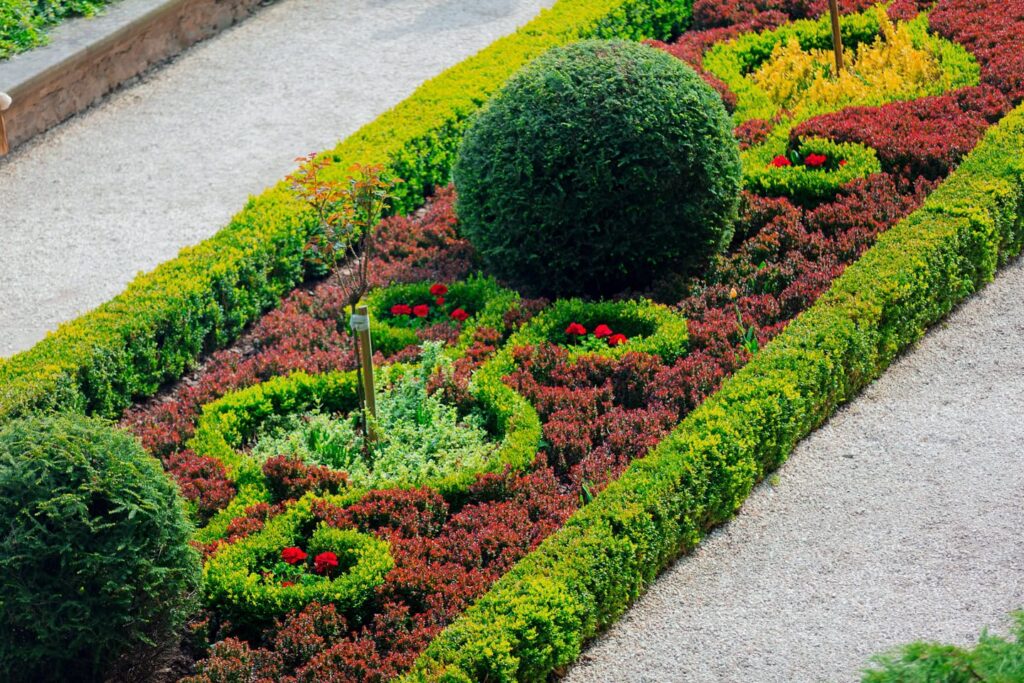
This is what happens when boxwood landscaping stops trying to be subtle and fully commits to being a whole moment.
Deep green boxwood ribbons weaving between ruby red barberry, lime green euonymus and red geranium pops in a formal parterre is basically a living tapestry viewed from above.
The secret is working with at least three shrub varieties in contrasting colours and keeping every edge immaculately clipped.
High maintenance yes, but the impact is completely unmatched.
The Garden Path That Has Absolutely Figured It Out
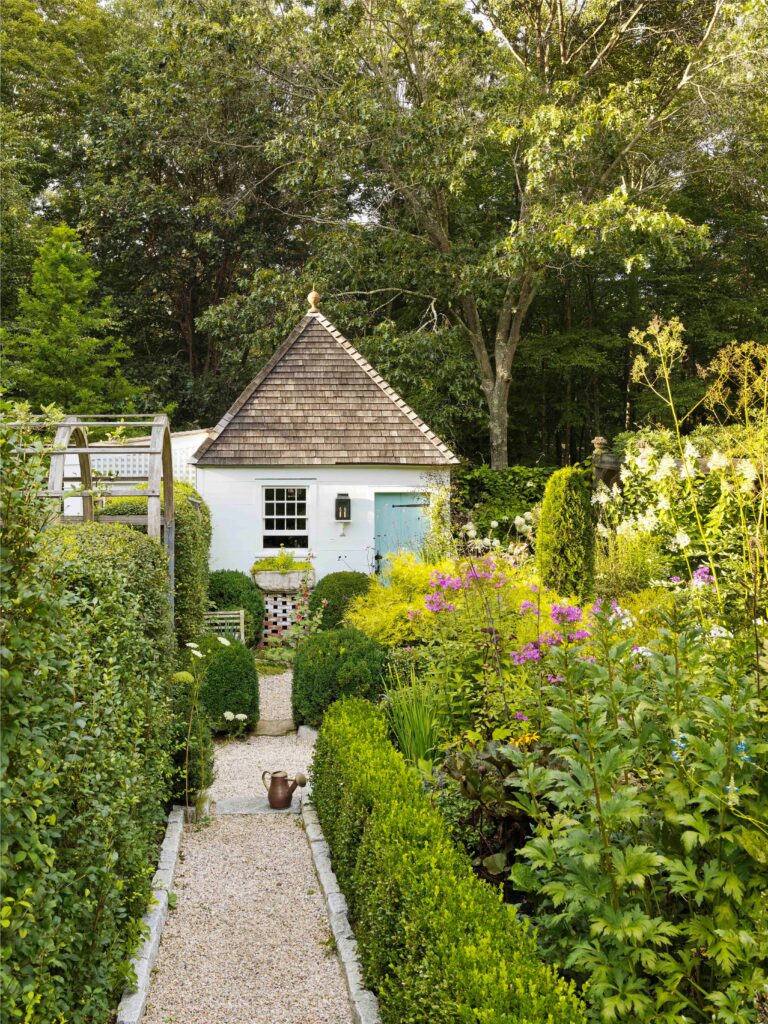
Clipped boxwood balls stepping down a gravel path toward a darling white garden house with a duck egg blue door, surrounded by phlox, rudbeckia and alliums spilling in from every side, is the garden goal that lives rent free in your head forever.
The boxwood provides reliable structure through every season while the perennials carry the colour and romance.
Use gravel paths edged with stone or timber to keep this look crisp rather than muddy.
Crape Myrtles and Boxwood Are an Unexpected Power Couple
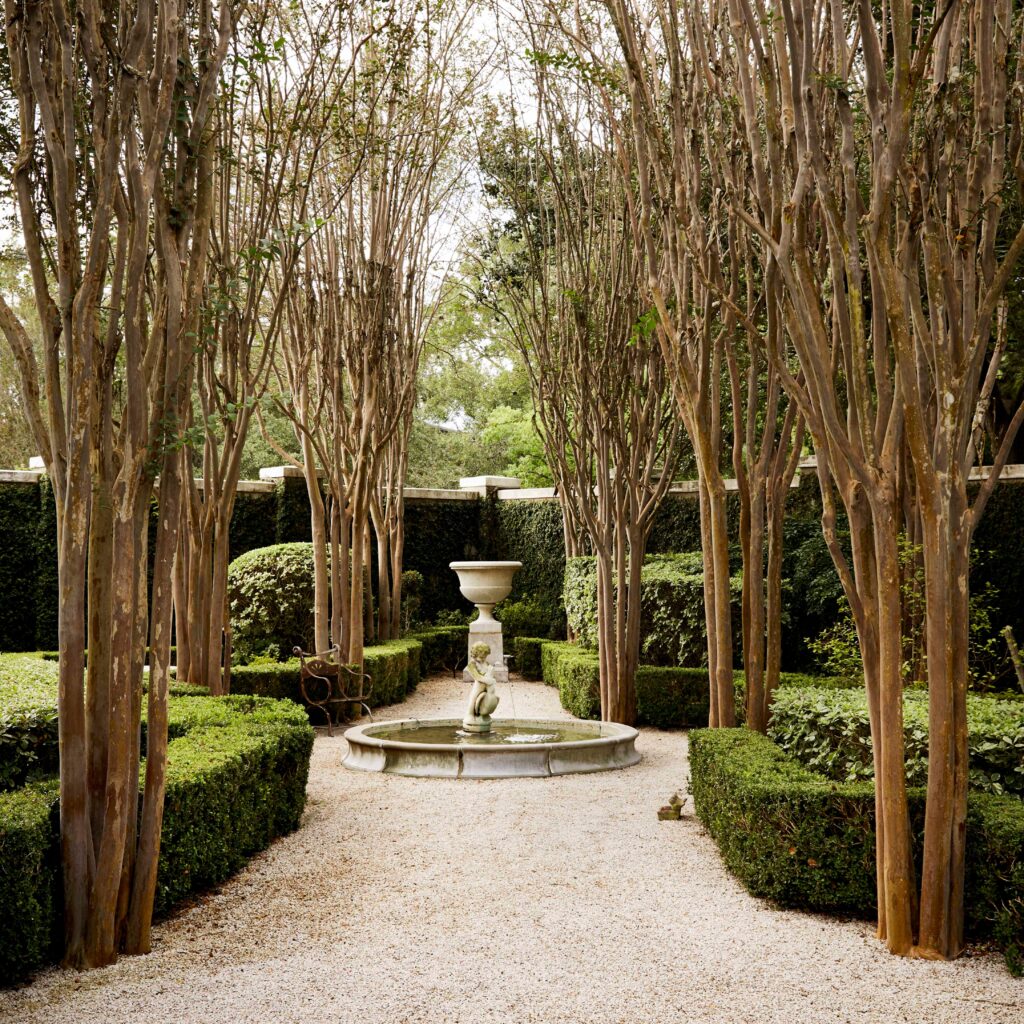
Nobody talks enough about pairing the dramatic bare winter structure of crape myrtle trunks with low formal boxwood hedging beneath them.
The contrast between the sinuous papery bark overhead and the tight green geometry below is genuinely striking in every season.
In spring and summer the boxwood stays evergreen and grounded while the crape myrtles bloom above.
In winter the skeletal branches become the entire show and the clipped hedging below keeps the space looking intentional rather than bare.