Growing your own food isn’t just a hobby anymore, it’s a genuinely smart move.
A survival garden is built for exactly that.
High-yield crops, plants that store well, layouts that squeeze the most out of every square foot.
It’s less about looking pretty and more about being ready.
This one covers plant picks, planning tricks, storage tips, and how to keep it producing season after season.
Some setups start small.
Others go all in fast.
Let’s make it happen.
Nature Already Stocked The Pantry, You Just Forgot
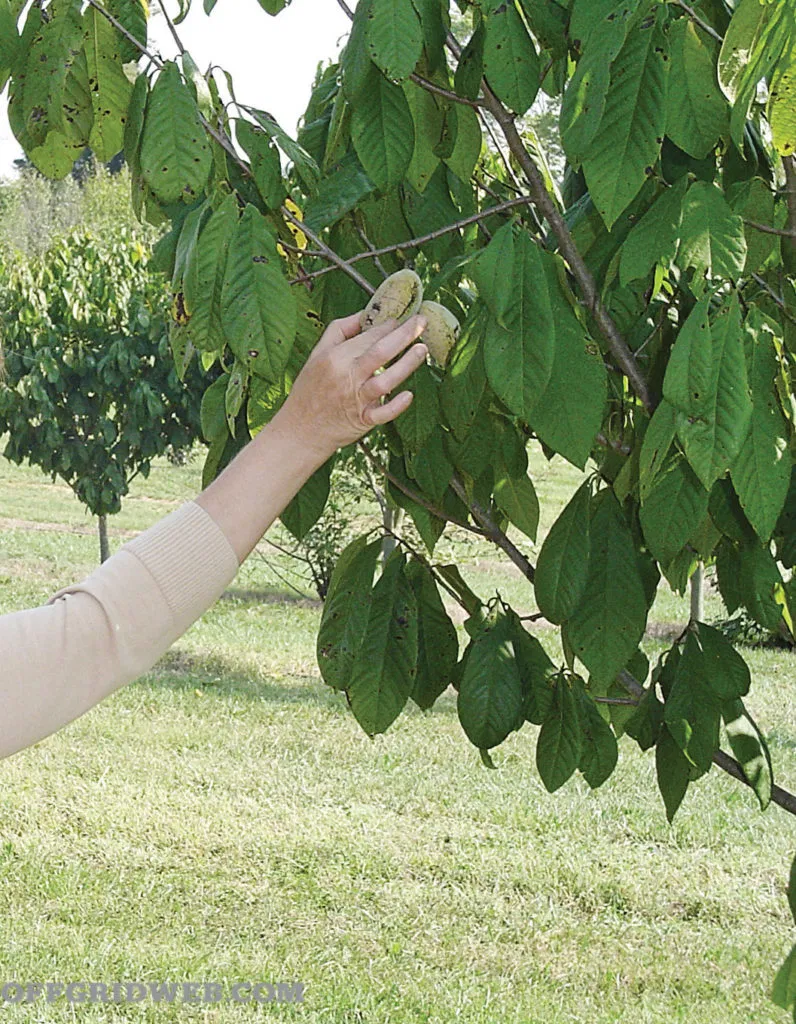
Honestly most people walk past pawpaw trees without knowing they are holding dessert.
This native fruit thrives with zero spraying and handles poor soil like a champ, which makes it a genuinely underused survival crop.
You ought to plant a few if you have partial shade on your property.
Basically free custard once they establish.
The Command Center Of Small Space Self Sufficiency
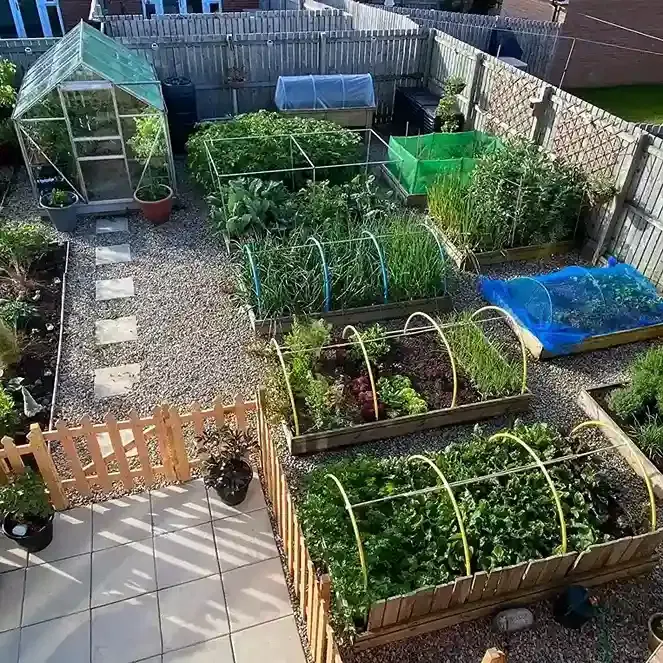
Okayyy this backyard setup is basically a masterclass in maximizing square footage.
Raised beds, a greenhouse, hoop covers and gravel paths all work together so nothing gets wasted.
The clear plastic tunnels extend your growing season significantly, which matters if you are serious about food security.
Although it looks intensive, this scale is doable on a standard suburban lot.
Stumps Make Decent Furniture, Apparently
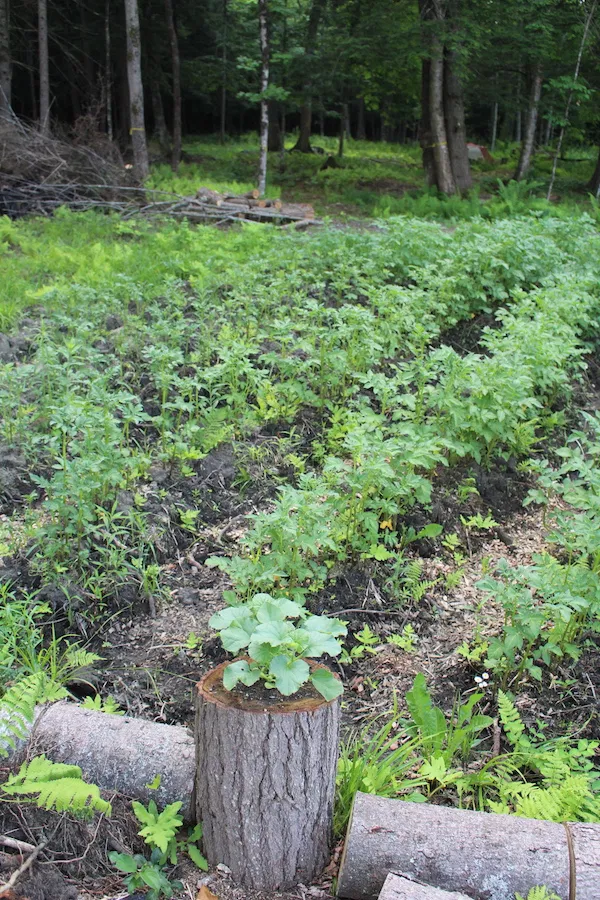
This forest clearing garden proves you do not need pristine soil to start growing food.
Potato rows pushed right up to the tree line, using every inch of cleared ground available.
I mean, that leftover stump even became an accidental planter.
Usually homesteaders undervalue rough terrain like this, but it clearly still produces.
Sweat Equity, Literally
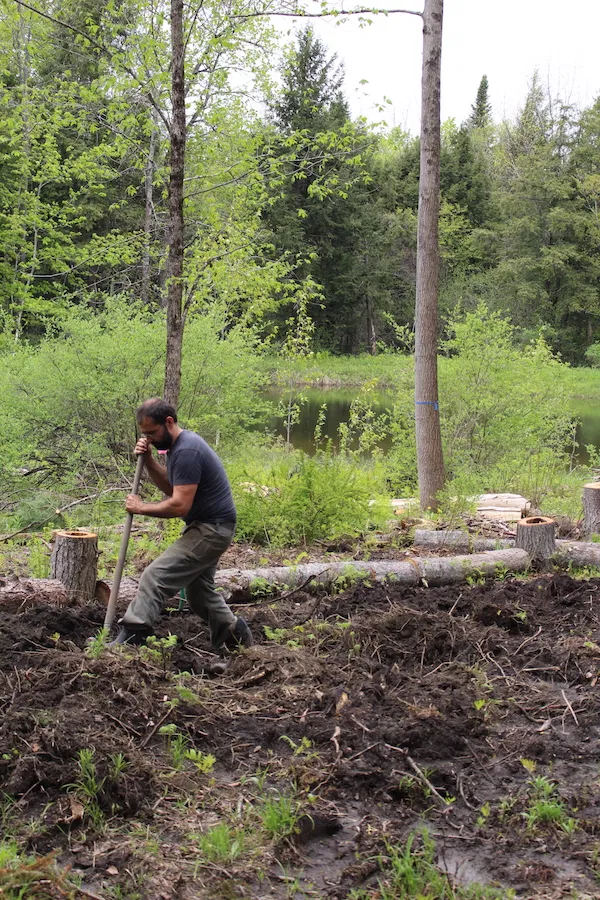
You cannot talk survival gardening without acknowledging the actual labor involved.
This guy turning soil by a pond captures the unglamorous reality behind every thriving harvest.
Clearing land, working compost in, prepping beds before planting season, it all adds up.
Nonetheless, this groundwork is what makes future seasons easier and more productive.
Carrots And Tomatoes, Together At Last
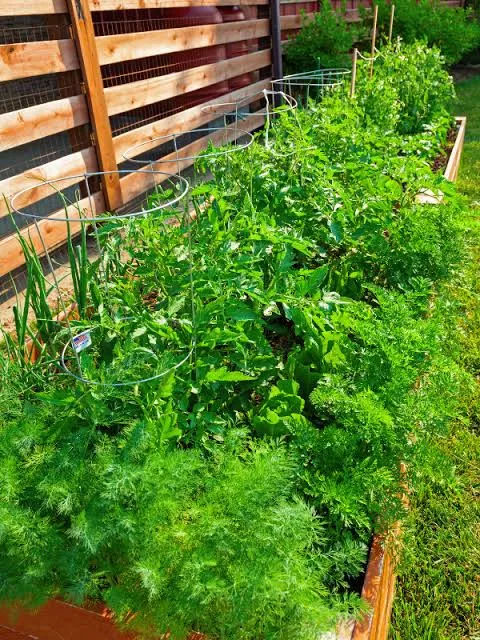
This raised bed shows how efficient interplanting really is for small properties.
Tomato cages rise above a dense carpet of feathery carrot tops below, so you get two harvests from one footprint.
The wood fence backdrop also blocks wind, which tomatoes genuinely appreciate.
Literally a smart layout anyone could copy this season.
Vertical Living, Terracotta Style
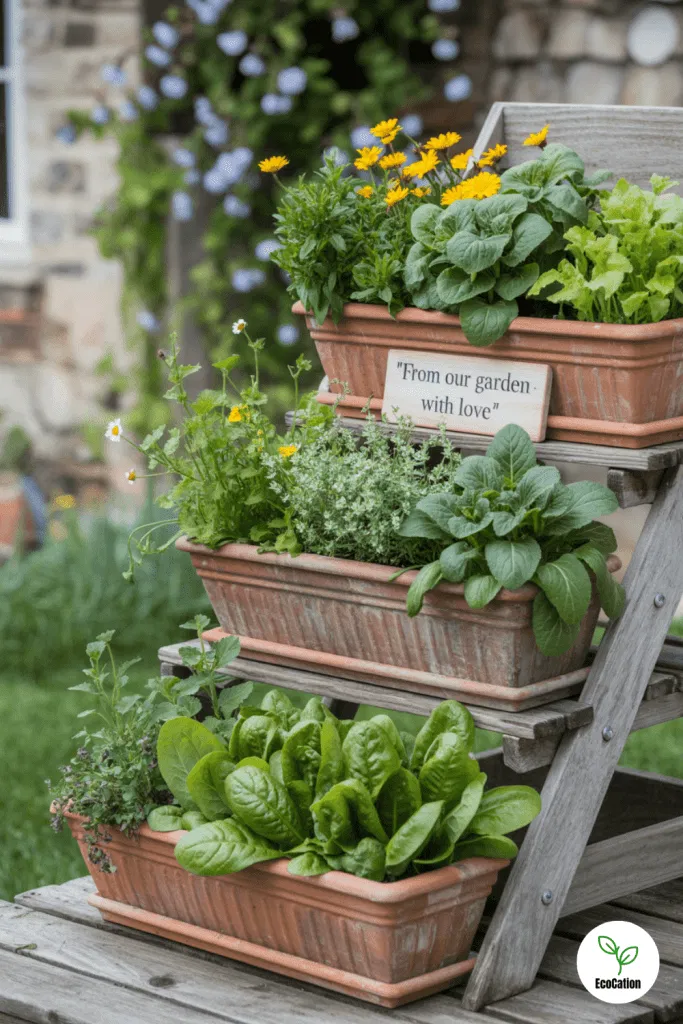
If ground space is not an option, stack it instead.
This tiered planter setup crams lettuce, herbs and greens into a compact footprint that fits any patio or balcony.
Terracotta holds moisture better than plastic too, which cuts down on watering frequency.
However, drainage matters here, so check each tier does not pool water on the one below.
Wild Grapes Do Not Ask For Permission
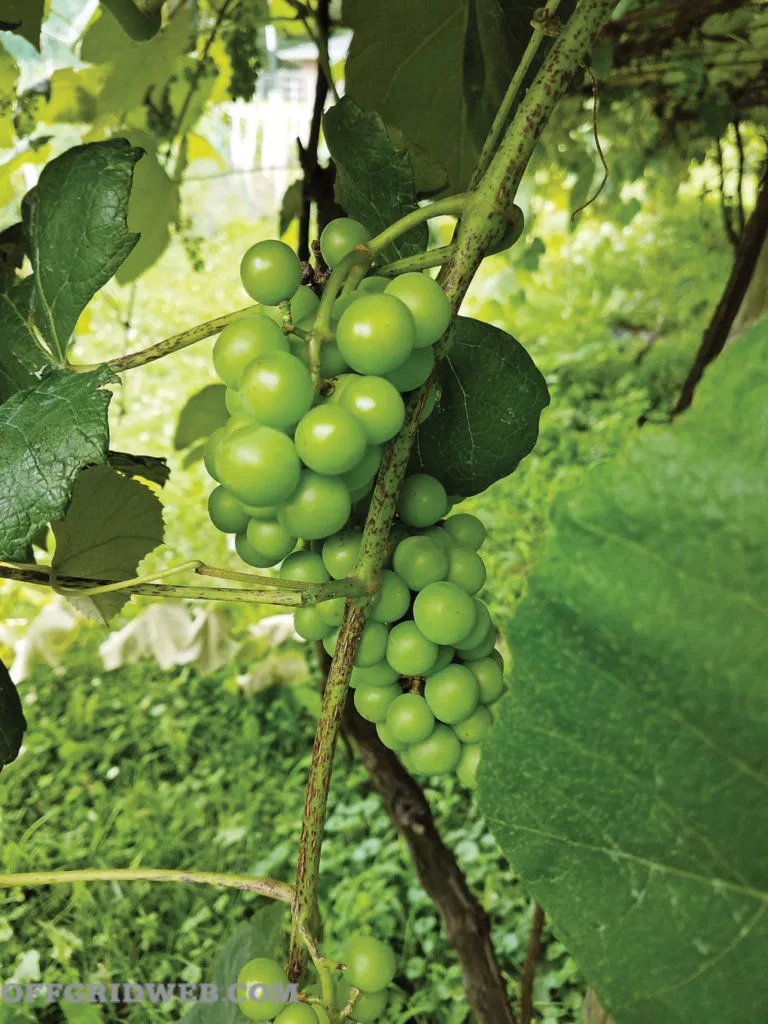
This vine did not need a trellis kit or expert pruning to produce a serious cluster.
Wild and semi wild grapevines are tough, drought tolerant and genuinely productive once established along a fence or shed wall.
You ought to let one climb somewhere in your yard if you have not already.
Basically a low effort perennial snack machine.
The Harvest Flex Heard Round Instagram
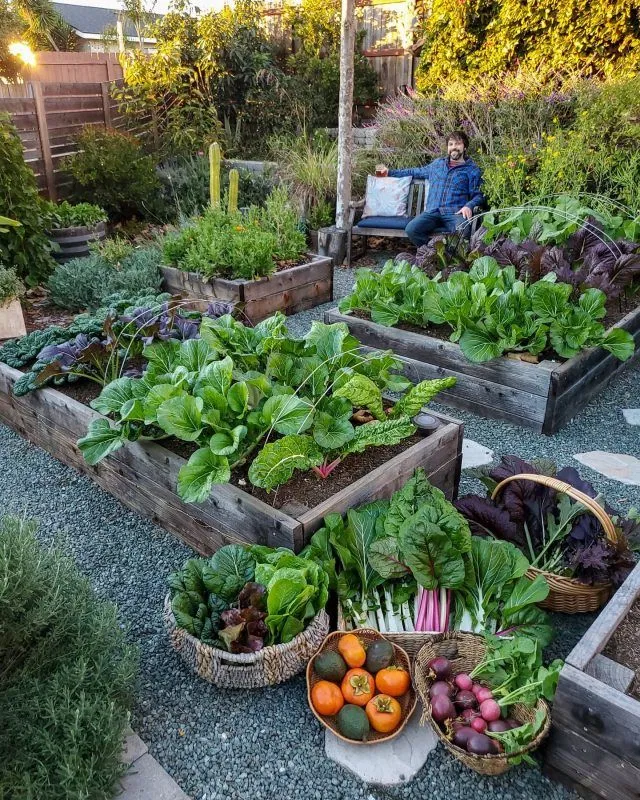
Okayyy this is what peak season success actually looks like.
Multiple raised beds packed with chard, kale and bok choy, plus baskets overflowing with radishes, persimmons and avocados.
The gravel pathways keep beds accessible year round without mud tracking everywhere.
Although this setup took seasons to build, it shows exactly what consistent effort produces.
Galvanized And Ready For Business
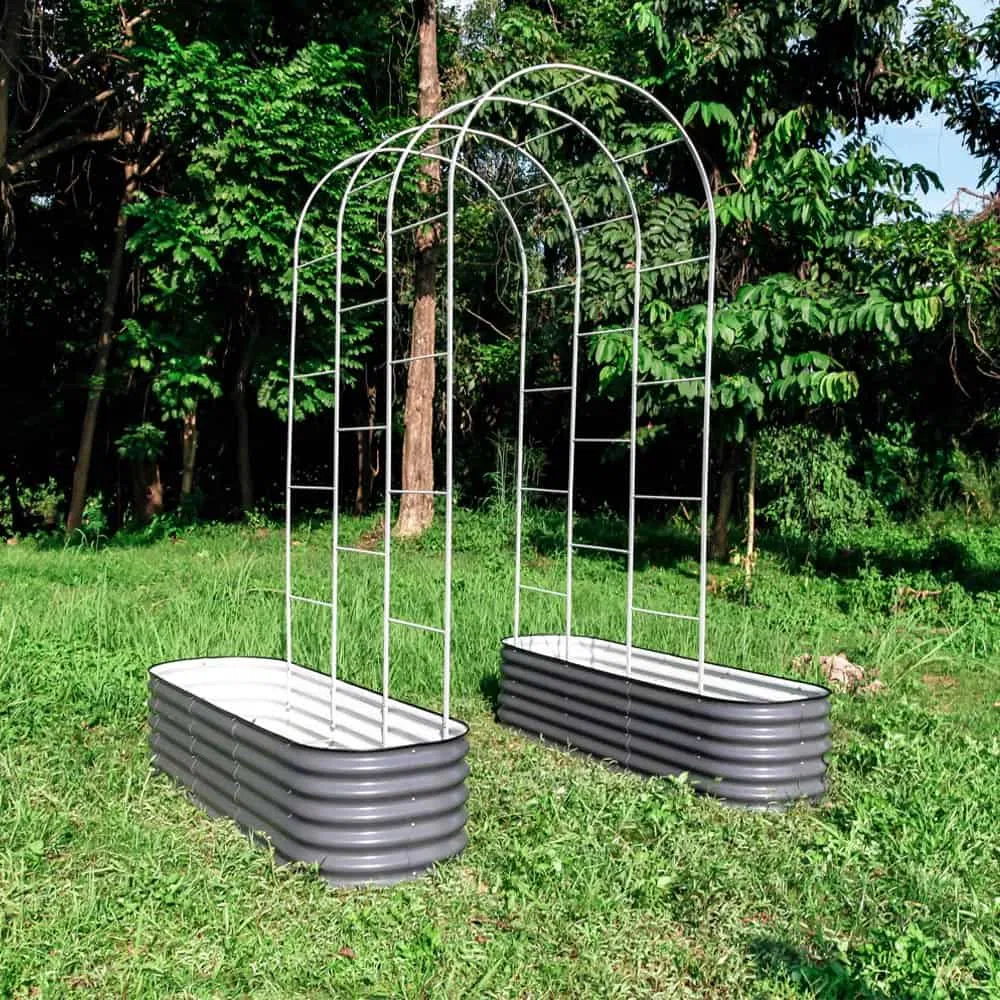
These oval steel beds with built in arch trellises basically solve two problems at once, planting depth and vertical growing space.
Metal beds heat up faster in spring, which extends your growing window in colder climates.
The attached arches mean climbing beans or cucumbers get support without extra hardware.
Usually a setup like this pays for itself within one or two seasons.
Even The Scarecrow Is Working Overtime
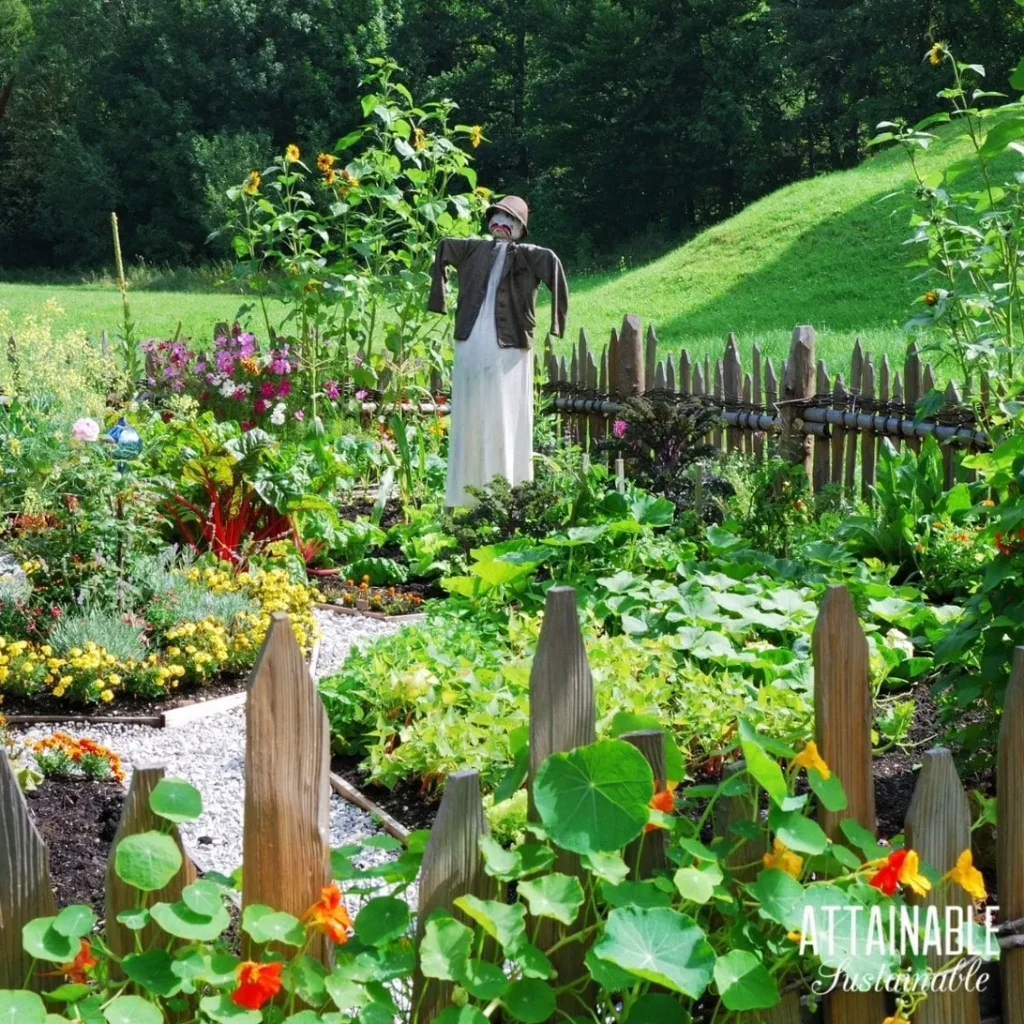
This dense, layered garden looks chaotic at first glance but honestly, that is the point.
Companion planting nasturtiums, marigolds and vegetables together confuses pests naturally, cutting down on losses.
The gravel path keeps foot traffic contained despite how wild the beds get.
I mean, a proper scarecrow never hurts either.
Backyard Chaos, Fully Intentional
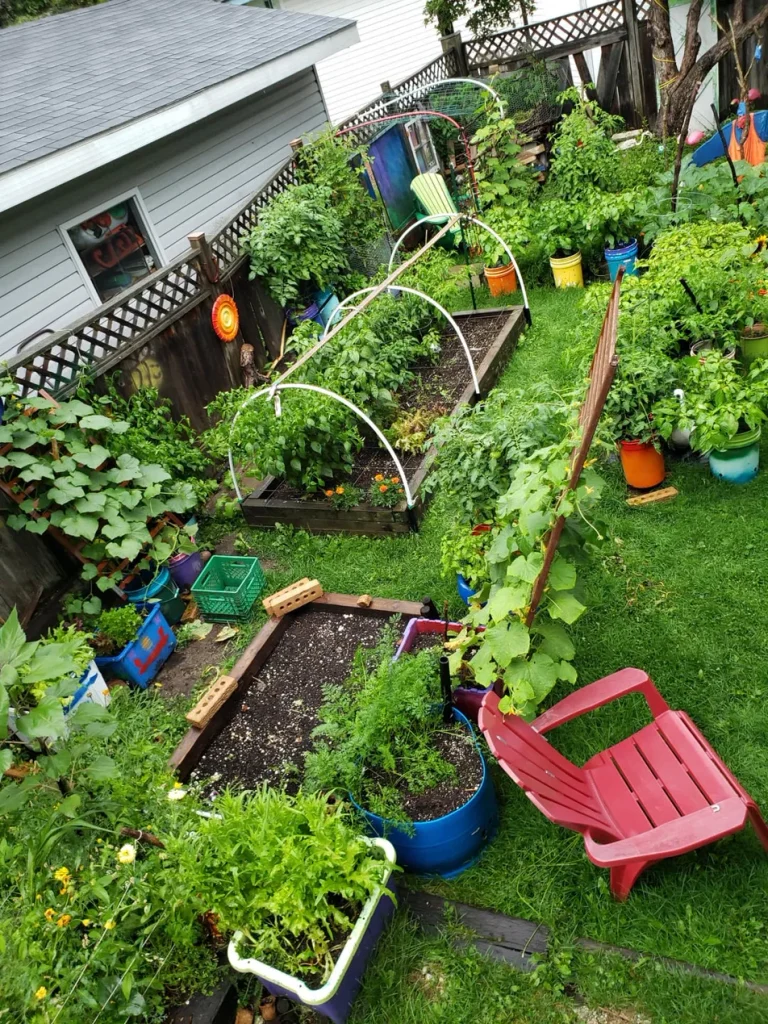
This yard basically laughs at the idea of matching planters.
Milk crates, paint buckets and a blue barrel all get repurposed into growing containers, while hoop covered beds protect young seedlings from late frosts.
A red lawn chair plopped mid garden says the owner treats this space as much as a hangout as a food source.
Usually the messiest gardens produce the most, and honestly, this one backs that up.
Trellis Walls For The Overachievers
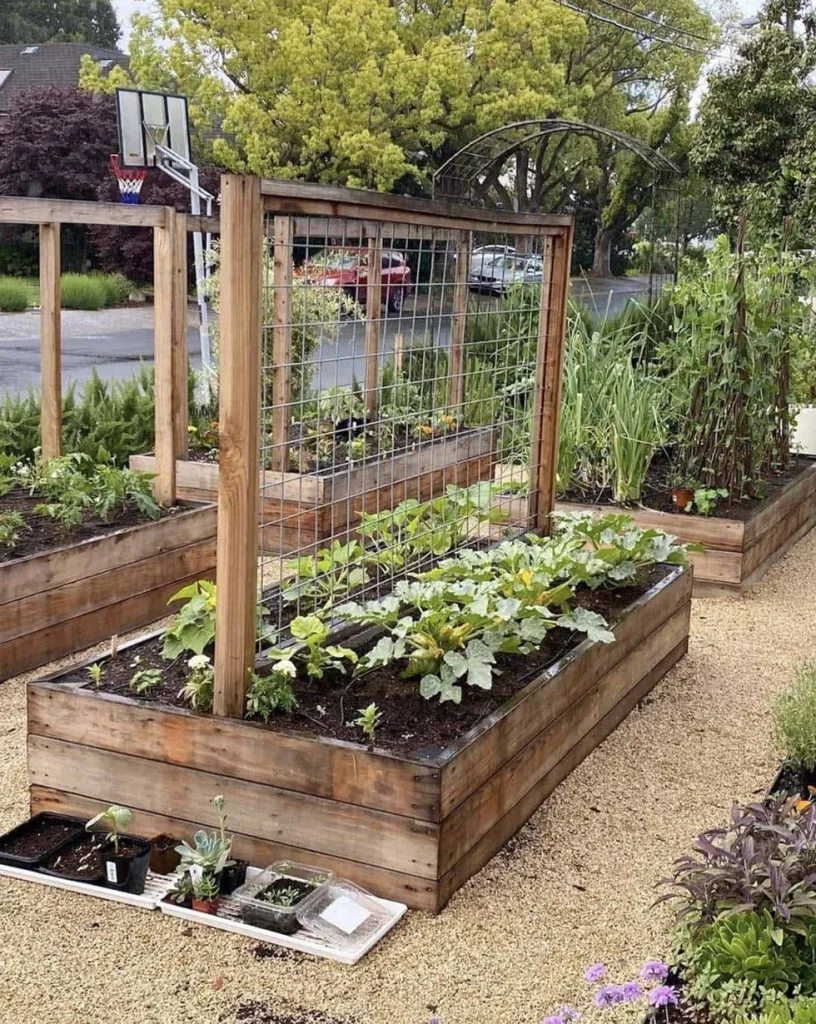
This wire mesh trellis panel does double duty as a privacy screen and a climbing structure for squash and beans.
Building height into your garden means more yield without expanding your footprint.
The gravel base between beds keeps weeds down and drainage solid.
Nonetheless, secure these panels well, since a loaded squash vine gets surprisingly heavy.
The Tool Shed That Actually Gets Used
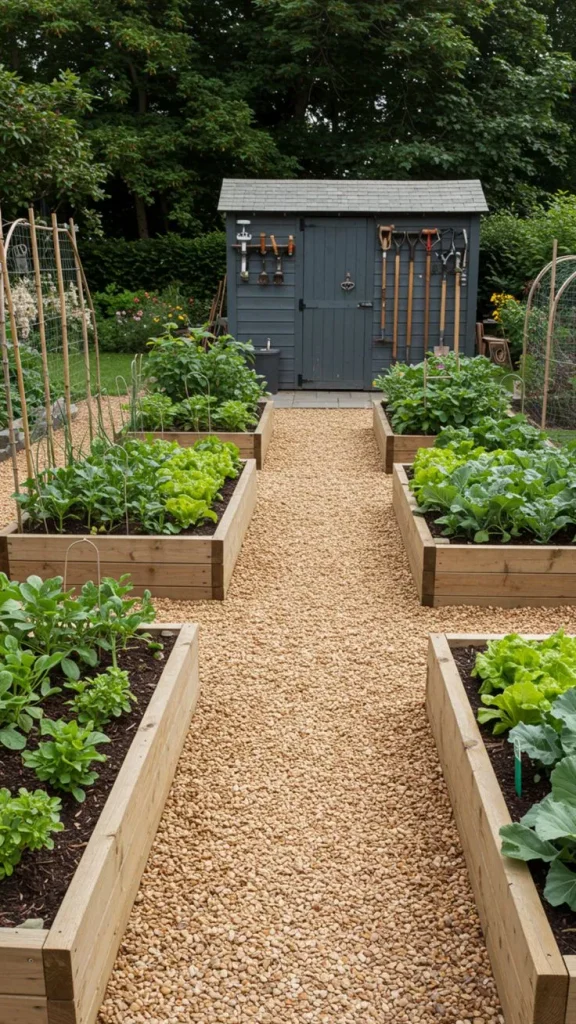
This is basically the dream layout, symmetrical raised beds framing a direct path straight to your tools.
Having everything within arm’s reach genuinely cuts down on wasted trips mid task.
The pea gravel path stays mud free even after heavy watering.
You ought to hang tools outside like this, it saves so much shed digging.
Tires, Buckets And Zero Excuses
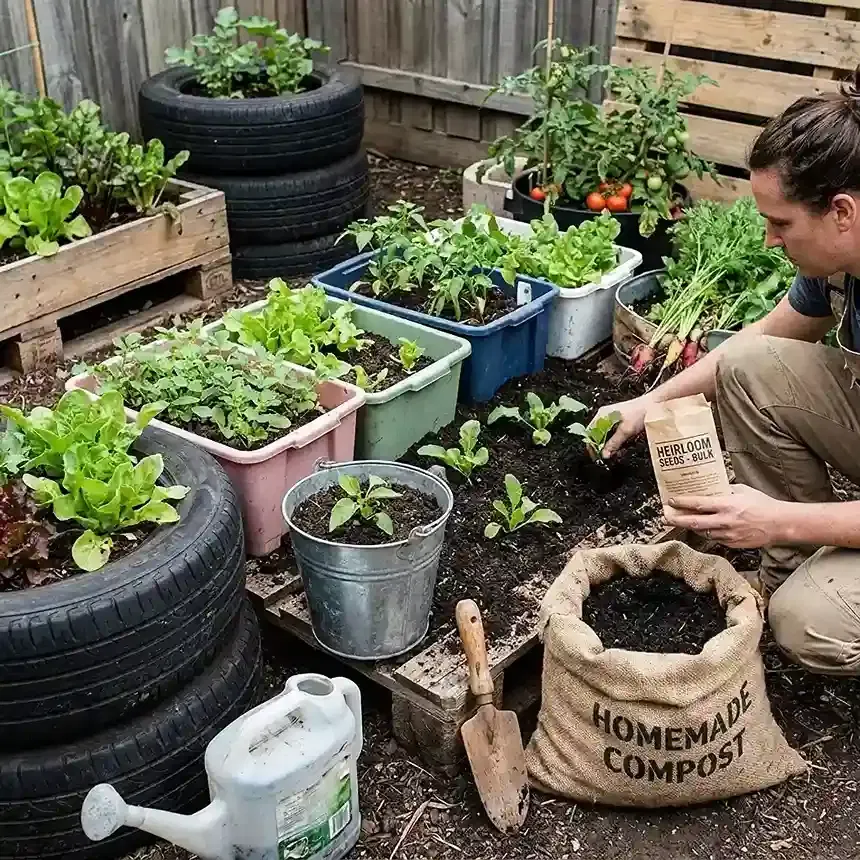
This yard proves survival gardening does not require fancy materials or a big budget.
Stacked tires, plastic totes and a burlap sack of homemade compost all get repurposed into growing containers.
It is resourceful, cheap and honestly more sustainable than buying new raised bed kits.
Basically the ultimate lesson in using what you already have.
Fort Knox For Your Lettuce
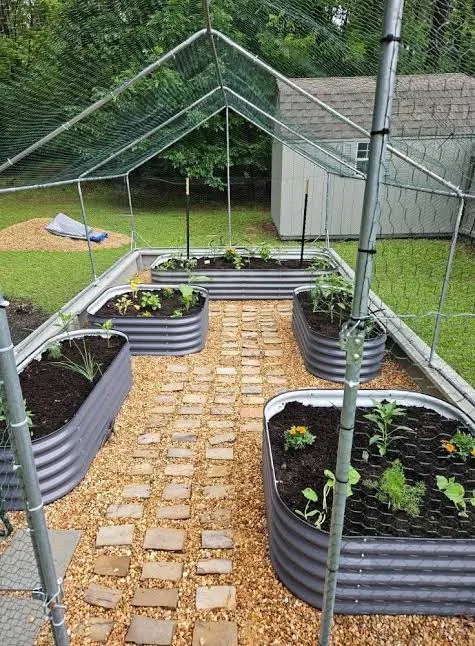
This fully netted enclosure keeps birds and rabbits from undoing months of work in one afternoon.
Metal raised beds paired with brick stepping stones make the whole space feel intentional, not just functional.
The tent style netting frame is honestly easier to install than most people expect.
Although it looks like overkill, anyone who has lost a crop to birds will understand immediately.
The Coop And The Crop, Working Together
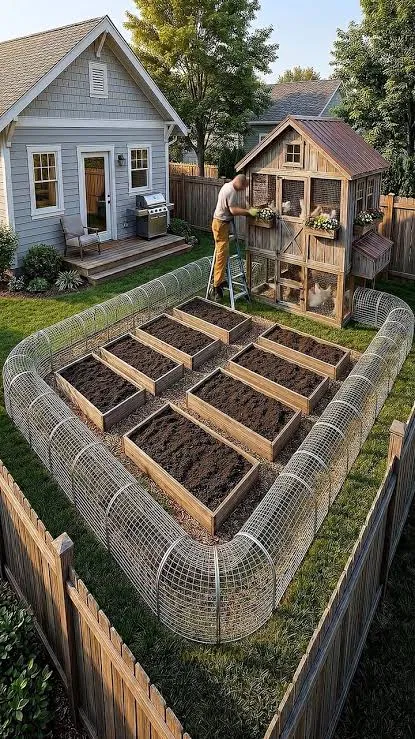
This layout pairs a raised chicken coop with a fully caged vegetable garden, letting both systems support each other.
Chicken manure composts beautifully for next season’s beds, while the wire fencing keeps hens from raiding your harvest early.
It is a closed loop system, basically permaculture without the jargon.
However, plan access points carefully so daily coop chores stay simple.
One Trellis, Endless Cucumbers
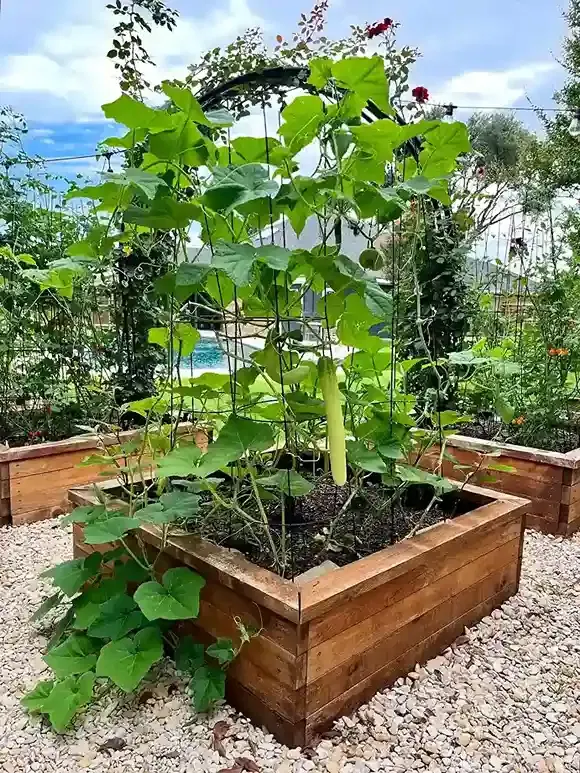
This single raised bed shows what happens when you let a trellis do the heavy lifting.
Vertical growing means better airflow, fewer fungal issues, and cucumbers that are actually easy to spot and pick.
The gravel surround keeps this bed tidy despite how sprawling cucumber vines usually get.
I mean, that is a lot of yield from one small square.
Kale That Means Business
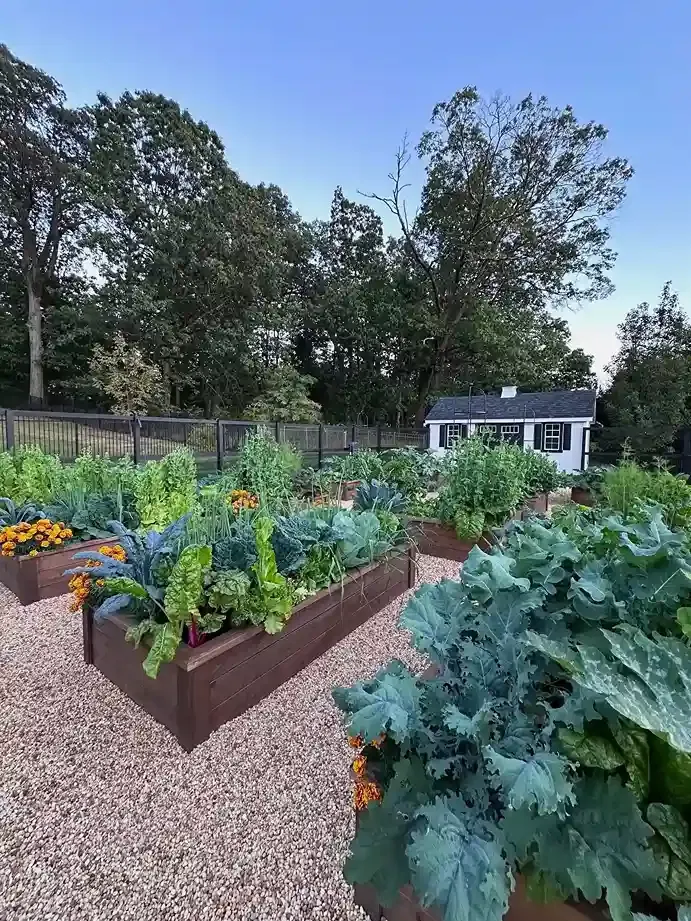
This late season shot shows raised beds absolutely thriving with marigolds tucked in as natural pest deterrents.
Dark stained wood beds hold up better against weather than untreated lumber, which matters for long term builds.
The white shed in the background adds a nice visual anchor to the whole layout.
Usually gardens this lush mean someone stayed consistent all season long.
A Tomato Tower With Actual Ambition
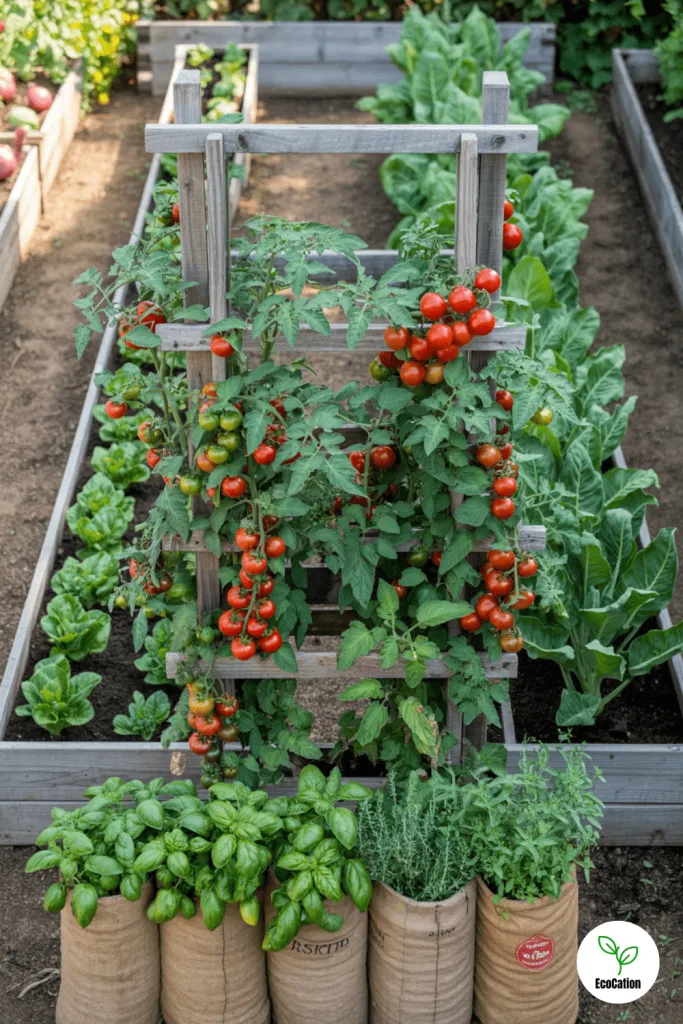
This wooden A frame trellis lets tomato vines climb high while basil and herbs grow in burlap sacks below.
Stacking growing zones like this means way more food per square foot than a flat bed ever manages.
The burlap sacks also drain well and keep herb roots cool.
Nonetheless, a structure like this needs solid anchoring once the vines fill in and get heavy.
Small Balcony, Serious Intentions
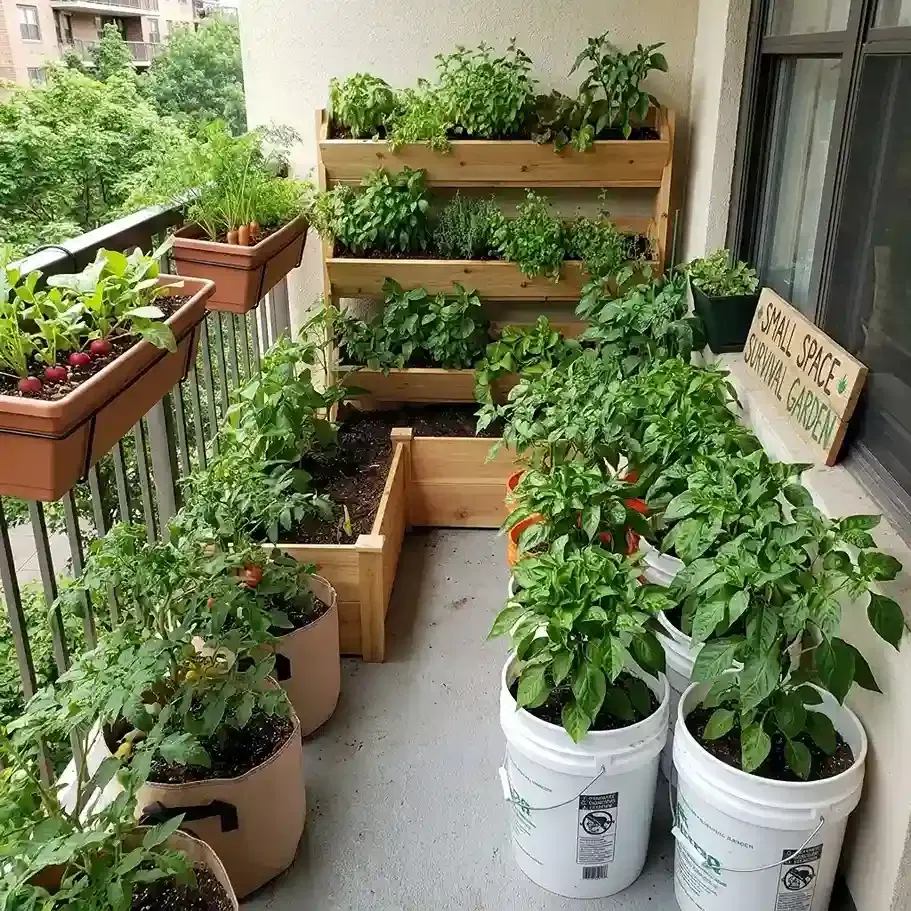
That handmade sign says it all, this is survival gardening for people without a yard at all.
Five gallon buckets, hanging planters and a tiered wooden shelf turn a narrow balcony into a genuine food source.
Peppers, tomatoes and radishes all thrive here despite the tight footprint.
Basically proof that excuses about space do not really hold up anymore.