A homestead garden isn’t just pretty — it’s supposed to pull its weight.
Every bed, every path, every corner needs a reason to exist.
Get the layout wrong and you’re fighting your own garden all season — awkward spacing, wasted soil, crops that should never have been neighbors.
Get it right though?
Everything flows, the harvests stack up, and the whole thing starts feeling less like work and more like a system that runs itself.
That’s exactly what we’re breaking down here.
Let’s make it happen.
Raised Beds? Yes, Please — Your Back Will Thank You
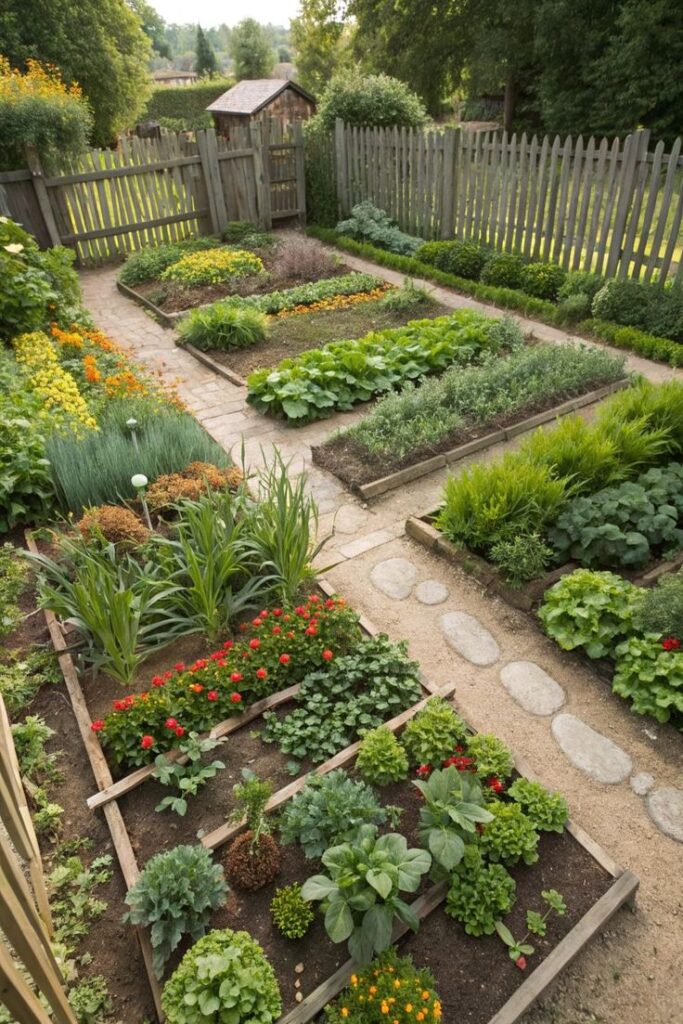
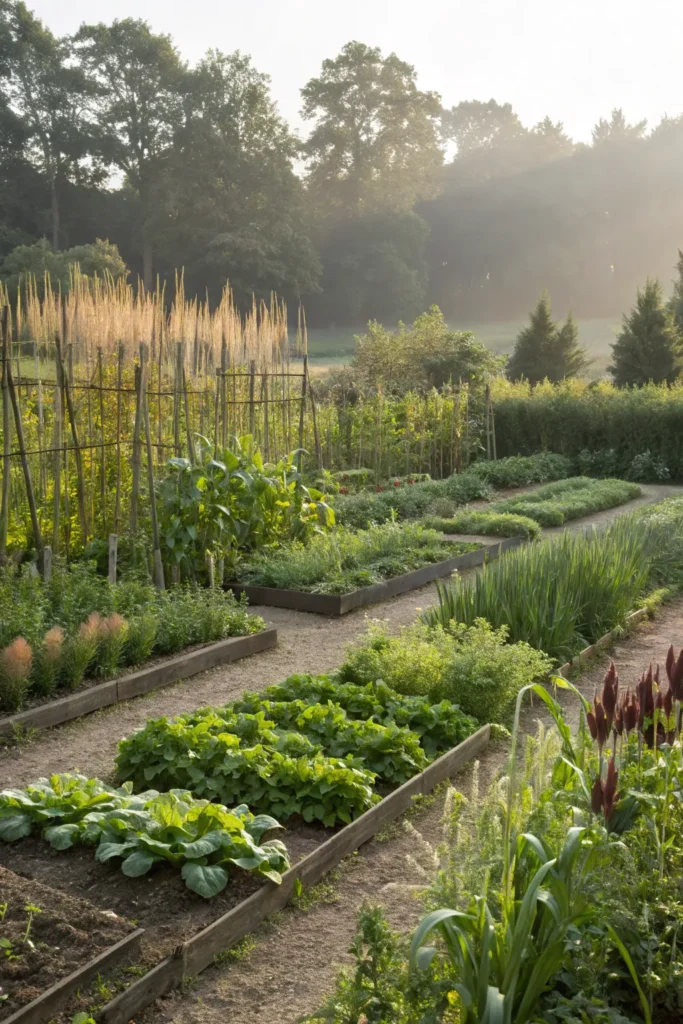
That golden hour light hitting neat rows of raised beds is honestly everything.
Each bed works as its own little ecosystem so you can rotate crops, amend soil individually, and basically never have a bad harvest season.
Build yours from untreated cedar, keep them no wider than four feet so you can reach the centre without stepping in, and you are already winning.
Fill with a mix of topsoil, compost, and a little grit for drainage.
So satisfying and so worth it.
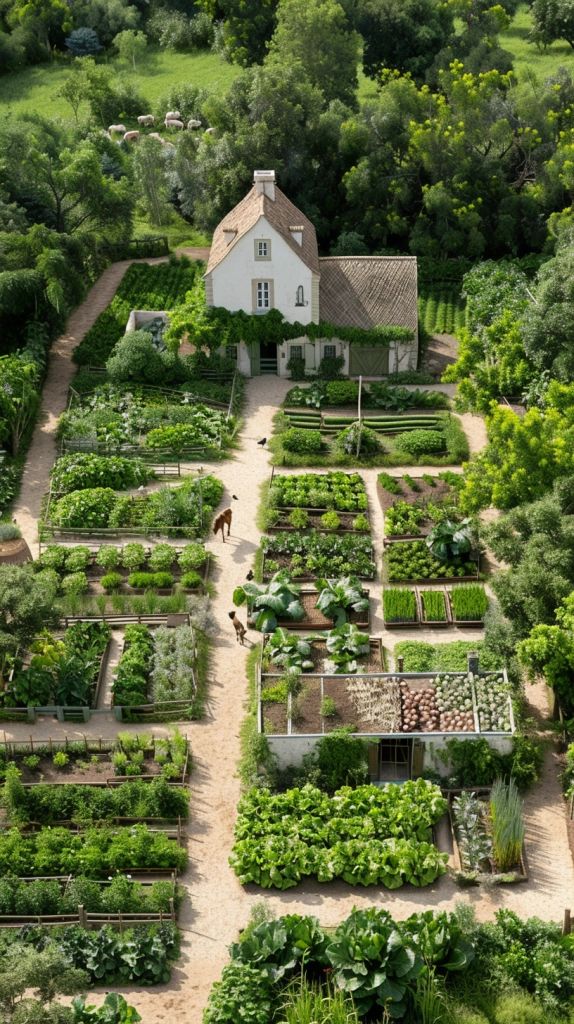
The Layout That Literally Makes Sense From Above
You know a garden layout is working when it looks this intentional from a bird’s eye view.
Separate zones for herbs, vegetables, leafy greens, and flowers mean nothing competes and everything thrives.
Sandy gravel paths between each section keep mud off your boots and make harvest mornings genuinely pleasant.
I mean, this is basically the homesteading dream mapped out in real time.
Plan your zones before you plant a single seed.
Honestly, Marigolds and Tomatoes Are Relationship Goals
This companion planting pairing is not just pretty, it is doing serious work.
Those blazing marigolds naturally deter nematodes and aphids, which means your tomatoes get to just focus on being delicious.
Plant a marigold every third space along your raised bed edge and watch how few pest problems you actually deal with.
It is basically free pest control that also happens to look incredible.
So yeah, you ought to try this immediately.
That Edible Landscape Glow Up Nobody Talks About Enough
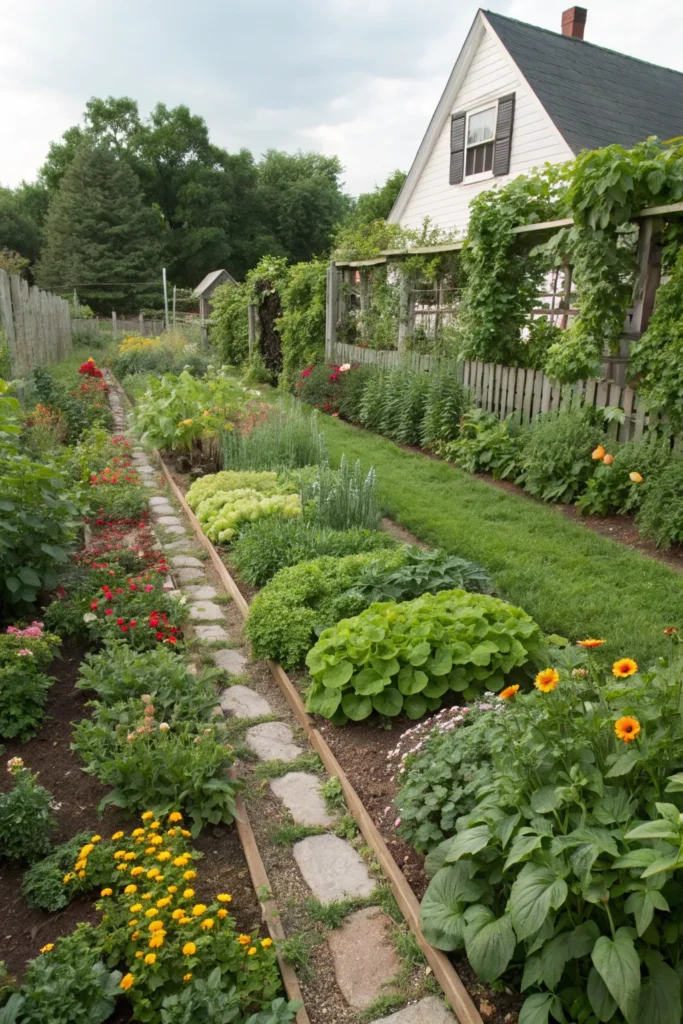
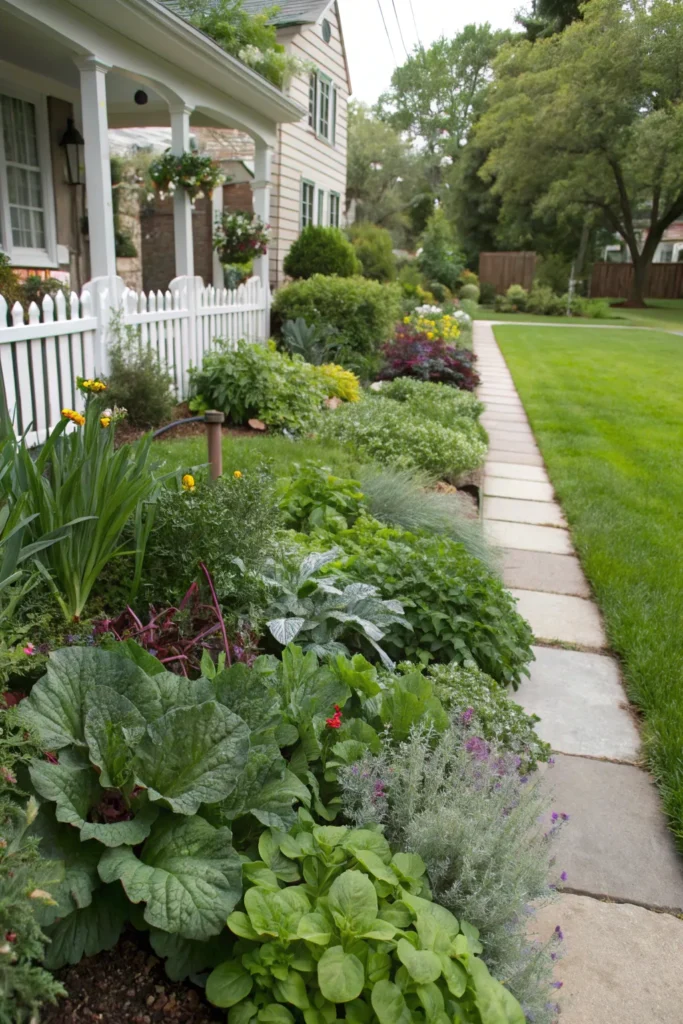
Imagine your front garden doing double duty as a productive food garden and a neighbourhood showstopper.
Mixing leafy brassicas, silvery herbs, and flowering edibles alongside a clean stone path creates a look that is lush, layered, and completely intentional.
The trick is varying leaf shape and height so the whole bed reads as designed rather than accidental.
Basically, nobody needs to know it is also feeding your family three nights a week.
The Pathway That Slows You Down (In a Good Way)
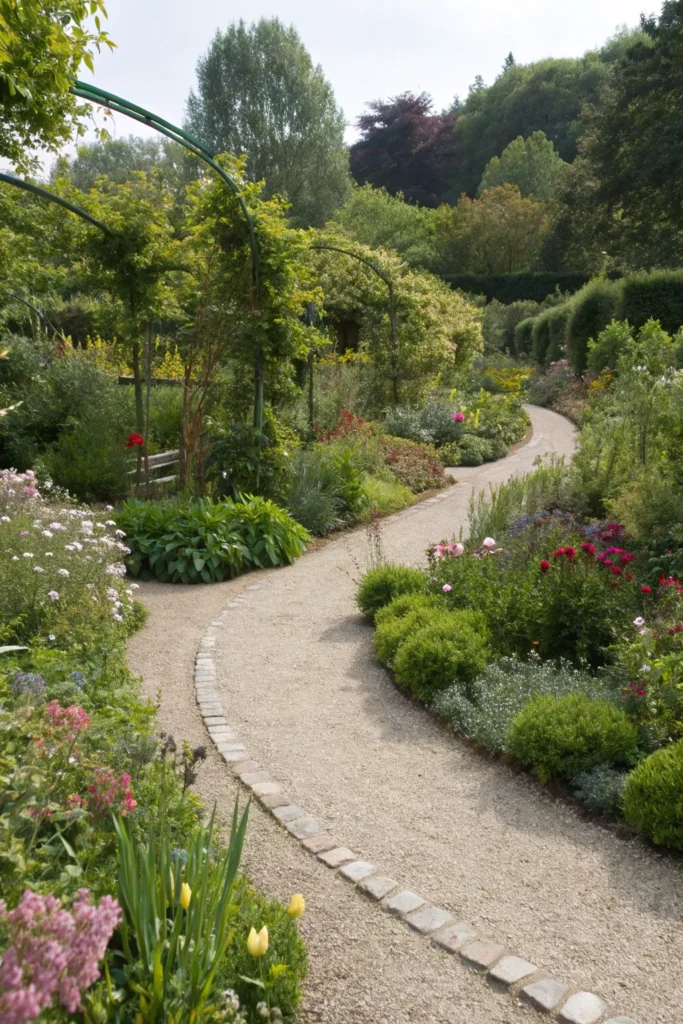
Winding gravel paths edged in neat stone cobbles are doing a lot here, and honestly I am obsessed.
They slow your pace through the garden, which means you actually notice what needs harvesting, what needs water, what needs love.
Use compacted gravel for the surface and line each edge with a single row of reclaimed brick or stone to keep things looking tidy.
Arch frames overhead with climbing beans or roses and you have yourself a proper homestead moment.
Aesthetic Borders That Actually Pull Their Weight
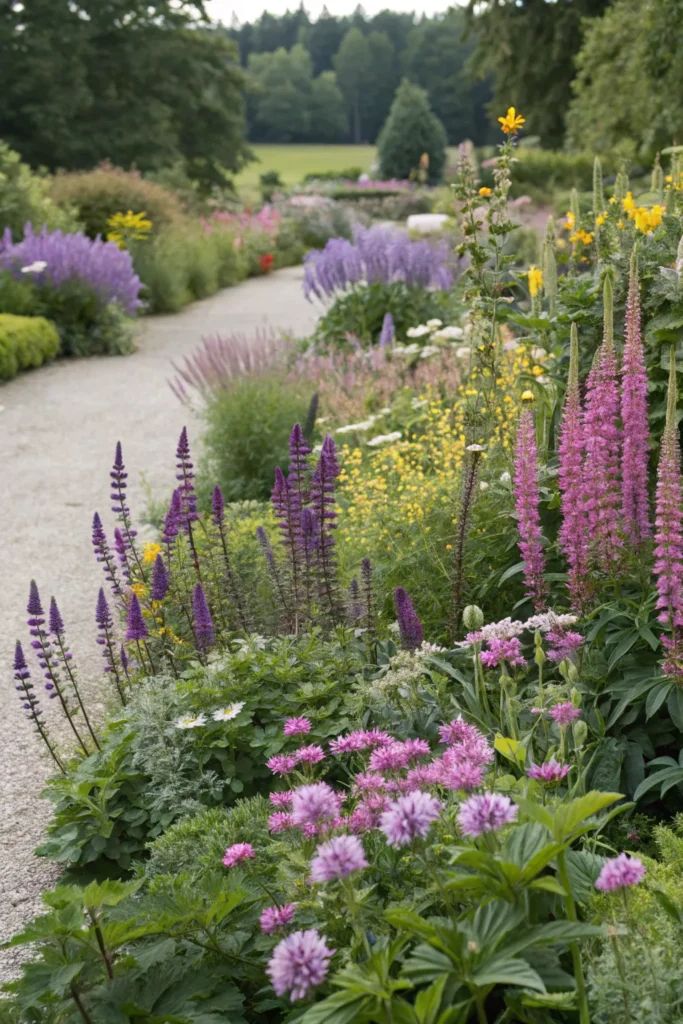
Purple salvia, pink astilbe, yellow foxglove spires, all growing in one gloriously unruly border alongside a gravel path.
This is for the homesteader who refuses to choose between beauty and productivity.
Weave in medicinal herbs like echinacea and borage between the showier blooms and you have a border that feeds pollinators, looks incredible, and stocks your apothecary shelf.
Layer tall spires at the back, mounding shapes in the middle, low ground covers at the front.
Done.
Stone Walls Are the Unsung Heroes of Any Homestead Garden
There is something so deeply satisfying about a dry stone wall containing an overflowing flower border.
Beyond the obvious charm, these walls actually create microclimates that warm the soil and extend your growing season by weeks.
Tuck alpine strawberries and thyme into the gaps where stones meet, and you get bonus harvests from what is essentially structural garden architecture.
This look suits anyone who wants their homestead to feel rooted and intentional rather than just functional.
Okay So Your Garden Needs a Sprinkler System and That Is Fine
Let’s talk watering because honestly it is the least glamorous but most important part of any productive homestead layout.
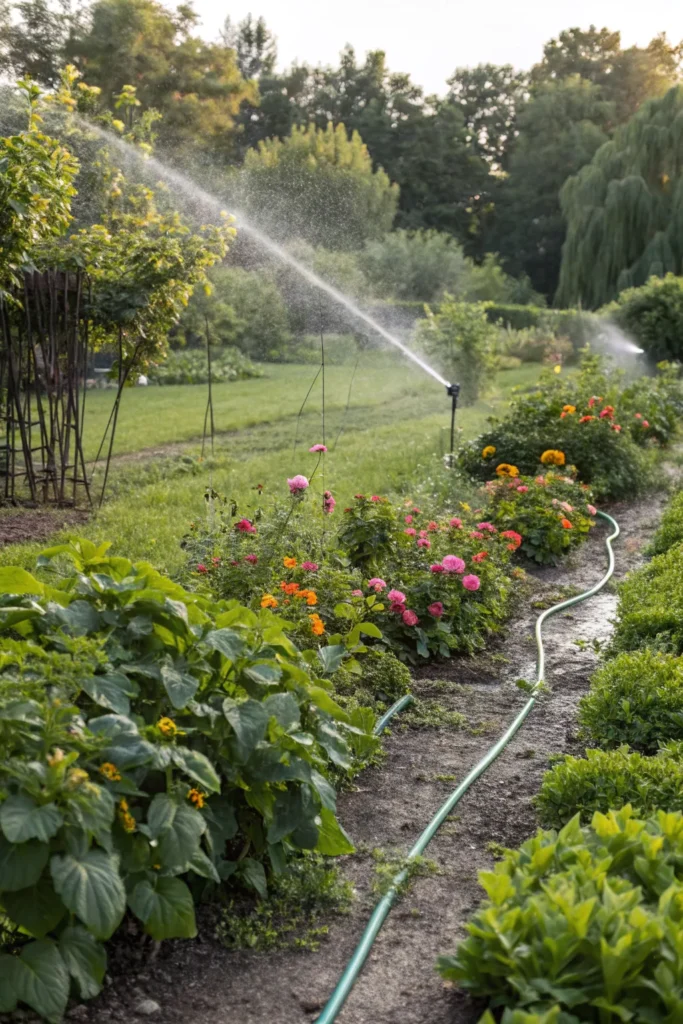
Setting up an automatic sprinkler zone alongside your beds means nothing dries out during a hot week when you are busy elsewhere.
Keep a soaker hose snaking along the base of taller crops for deep root watering, and use overhead sprinklers only for lawns and open beds.
Water in the early morning always, never midday.
The Functional Space That Finally Has It All Together
So this layout gets it so right it is almost annoying.
A rustic garden shed anchors the whole space, giving you tool storage and a potting station within arm’s reach of every bed.
Surrounding raised beds are grouped by crop type, which makes rotation straightforward and harvest efficient.
Plant corn and climbing beans toward the back where their height will not shade out lower crops, and keep salad greens nearest the kitchen door for those last minute dinner grabs.
Vertical Gardening for People Who Refuse to Give Up on Space
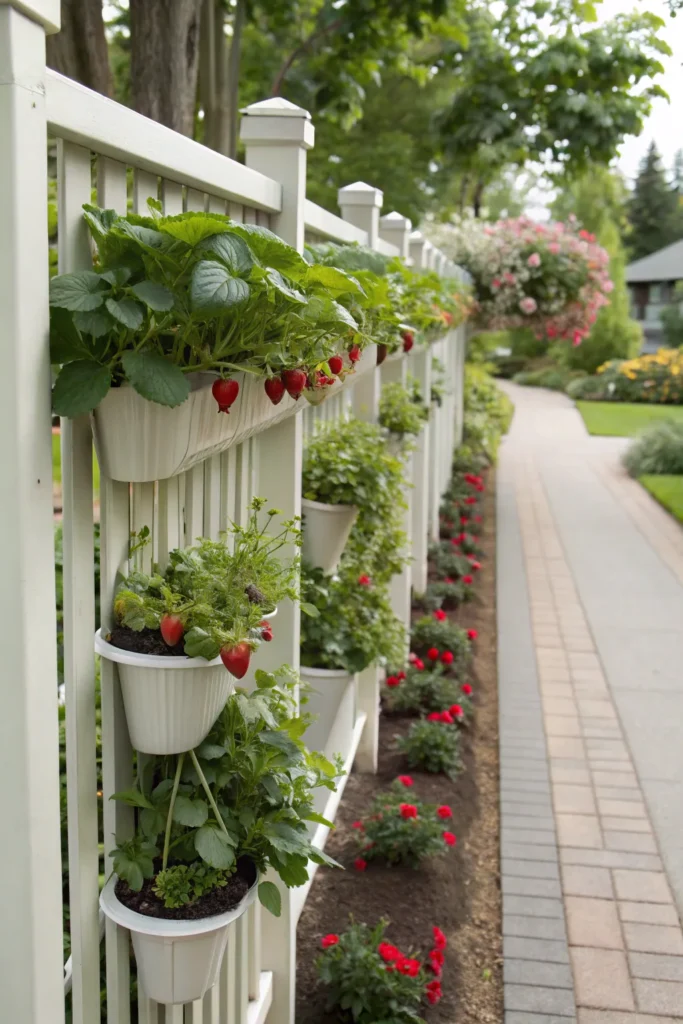
Strawberries spilling from stacked fence planters down a white picket fence, I mean, come on.
This is the vertical gardening idea that actually works without requiring a complicated trellis system or special equipment.
Simply hang deep planters at staggered heights along any existing fence and fill with strawberries, trailing herbs, or even cherry tomatoes.
You reclaim metres of growing space without touching a single square foot of ground.
So clever.
Companion Planting Magic Is Real and This Proves It
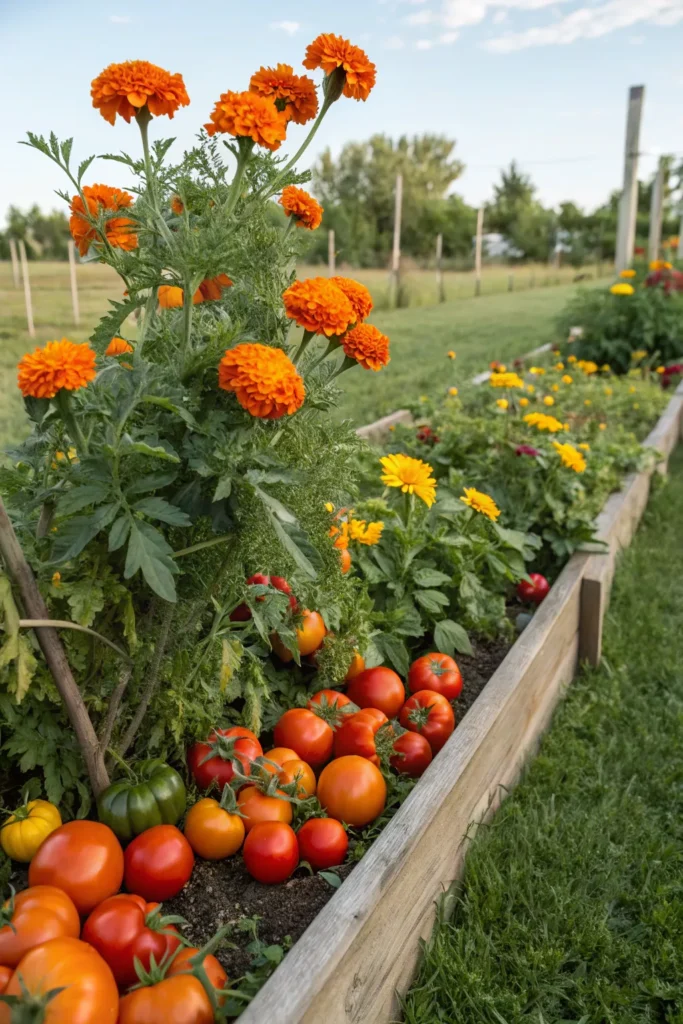
Marigolds doing security duty while tomatoes focus on producing.
The bold orange blooms here are not just decoration, they are genuinely creating a healthier soil environment and confusing pests with their strong scent.
Pair with basil nearby because tomatoes produce more flavour when basil grows close, and that is basically kitchen garden science you can eat.
Try this combination in any raised bed and watch the difference by midsummer.
Sustainable Practices That Make You Feel Like You Have Got It Figured Out
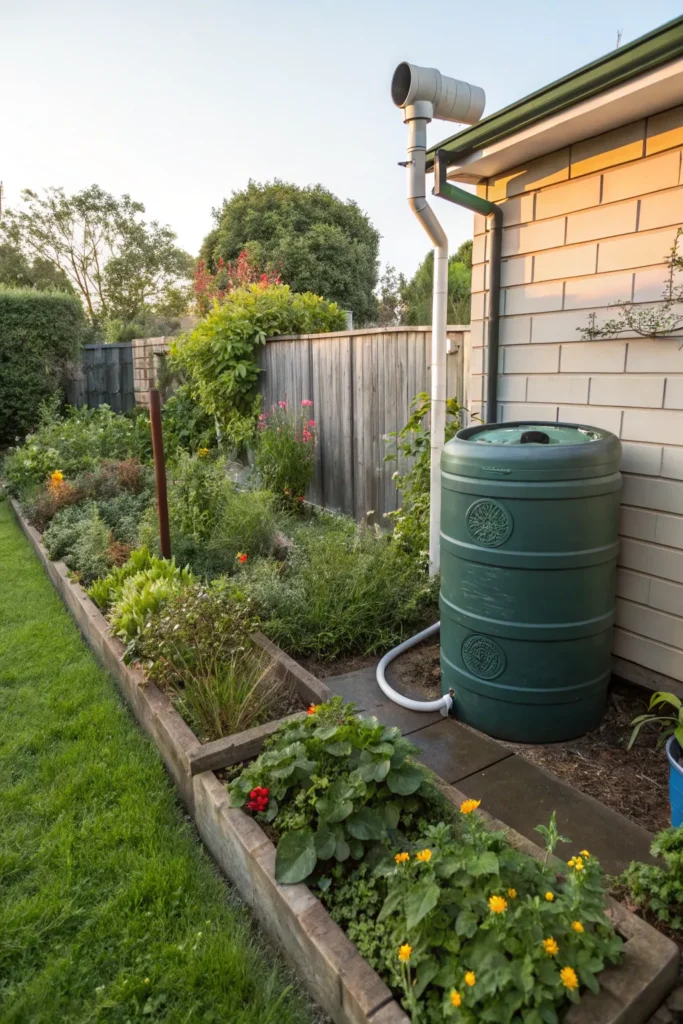
Honestly, a rain barrel connected directly to the guttering is one of those changes you cannot believe you put off.
It collects and stores rainwater passively so you are never relying on mains supply during dry spells, which matters a lot if you are growing any real volume of food.
Position it close to your most water hungry beds, like tomatoes and courgettes, so you are not lugging cans across the garden.
Pair it with mulched timber beds to lock in moisture at ground level.
Zoning For Variety Because Your Garden Should Do Many Things
Rows of leafy greens, herbs, climbing plants on the fence, flowers for pollinators, and a shaded corner with vines overhead.
This garden is genuinely doing everything.
The key to making a zoned layout like this work is clear path access between each section so you can move through without disturbing what is growing.
Use flat stepping stones rather than bark chips if your soil is heavy, because they stay cleaner and let you get in fast during wet weather.
Fruit Tree Espalier: Clever, Space Saving, and Slightly Smug
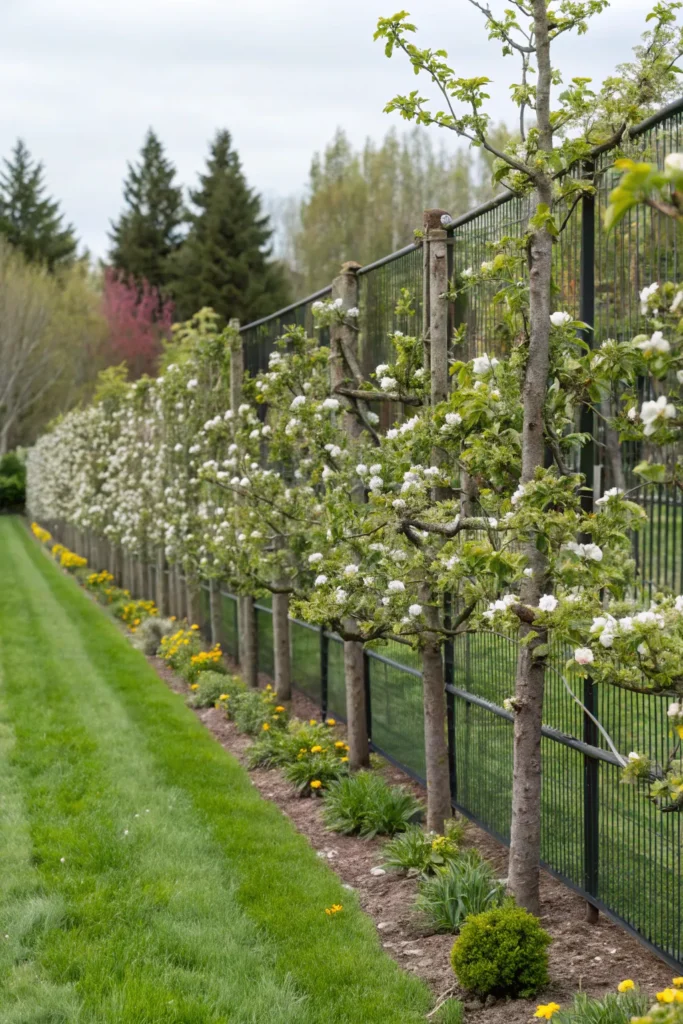
Training fruit trees flat against a fence like this is one of those techniques that feels very advanced until you actually try it.
Espalier basically means you guide young branches horizontally along wire or panels, creating a living productive wall that takes almost no depth at all.
Apples and pears are easiest to start with.
Underplant with marigolds and low herbs to use every inch of that border, and you have a genuinely impressive system that most people walk past and quietly wish they had thought of.
The Seating Nook That Makes You Actually Want to Be Outside
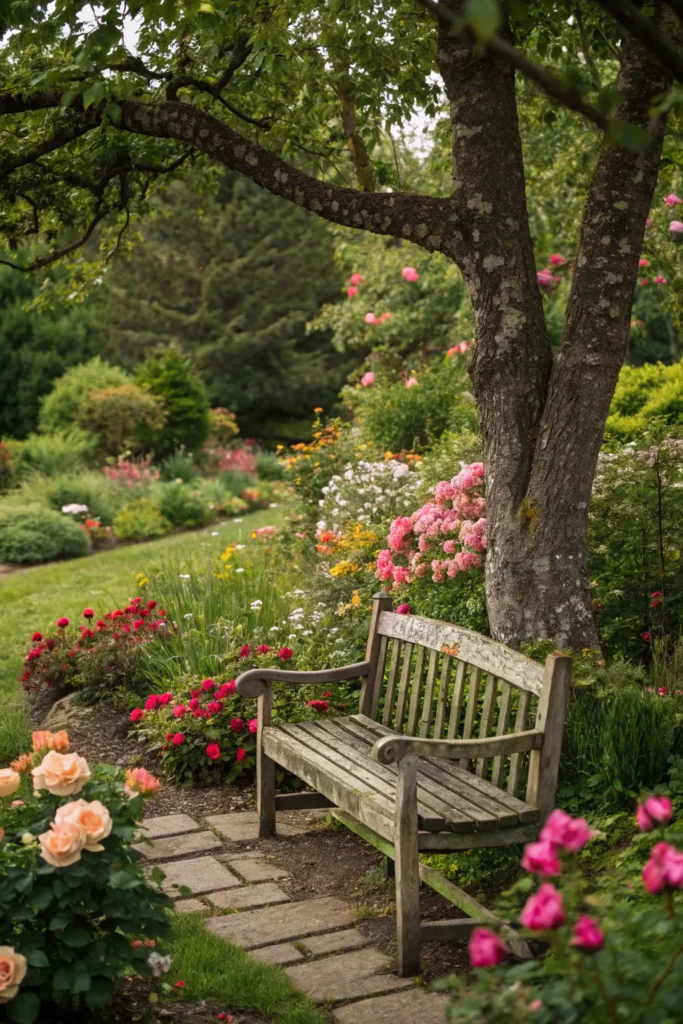
Every productive homestead garden needs one place that is just for sitting.
A weathered timber bench tucked under a gnarled old tree, surrounded by climbing roses in deep pink and peach, is so simply done and so completely right.
The trick is positioning it so you have a view of your main growing area, because then sitting there actually feels purposeful rather than lazy.
Plant low maintenance perennial flowers around the base so it stays looking beautiful season after season without extra effort.
Mixing Textures and Colors Without It Looking Like a Mess
The secret is grouping rather than scattering.
Bold broad leaved crops like squash and kale anchored together create a strong visual mass, while feathery herbs and upright grasses add contrast without chaos.
This early morning light makes everything feel soft and cinematic but the structure holds year round because the planting is deliberate, not random.
Repeat one or two colours throughout the bed rather than introducing every shade you own and it will always look cohesive.
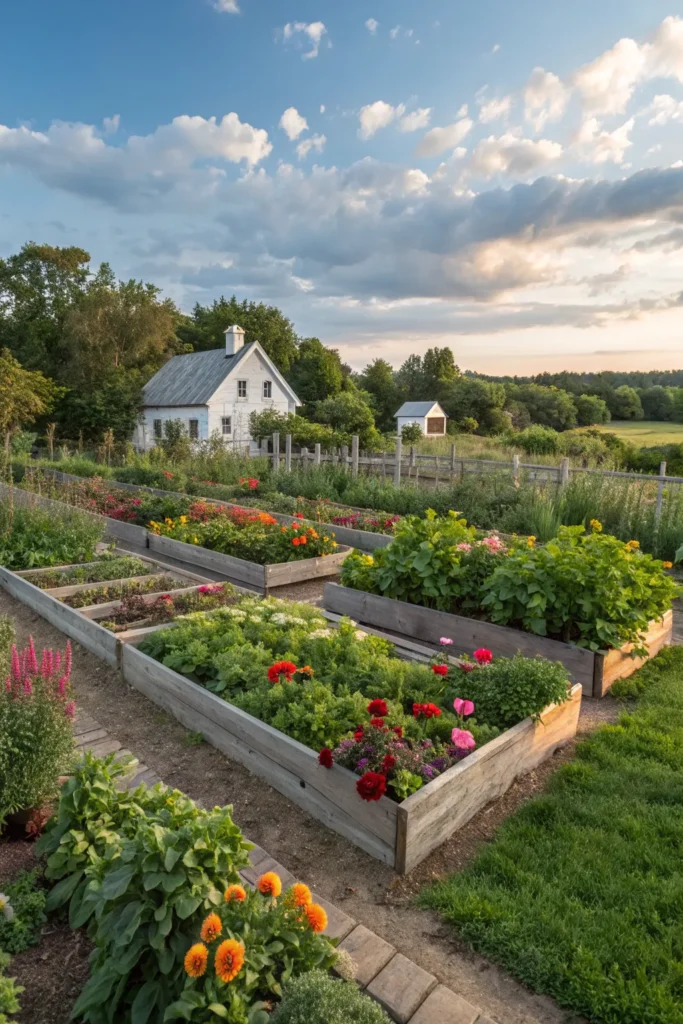
Raised Bed Marvels at Golden Hour Because Wow
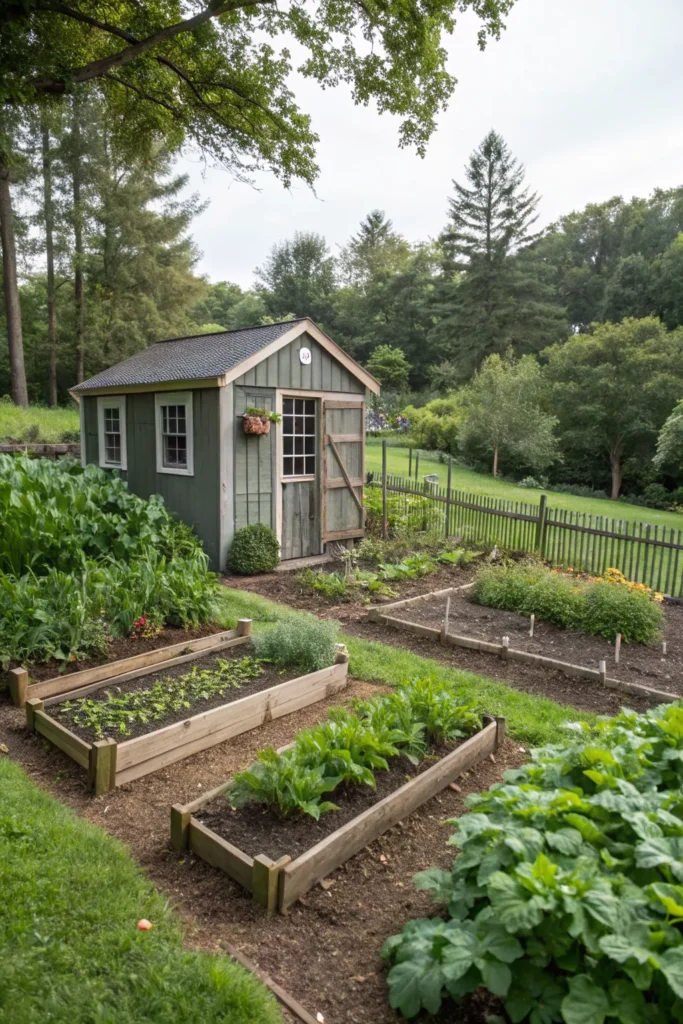
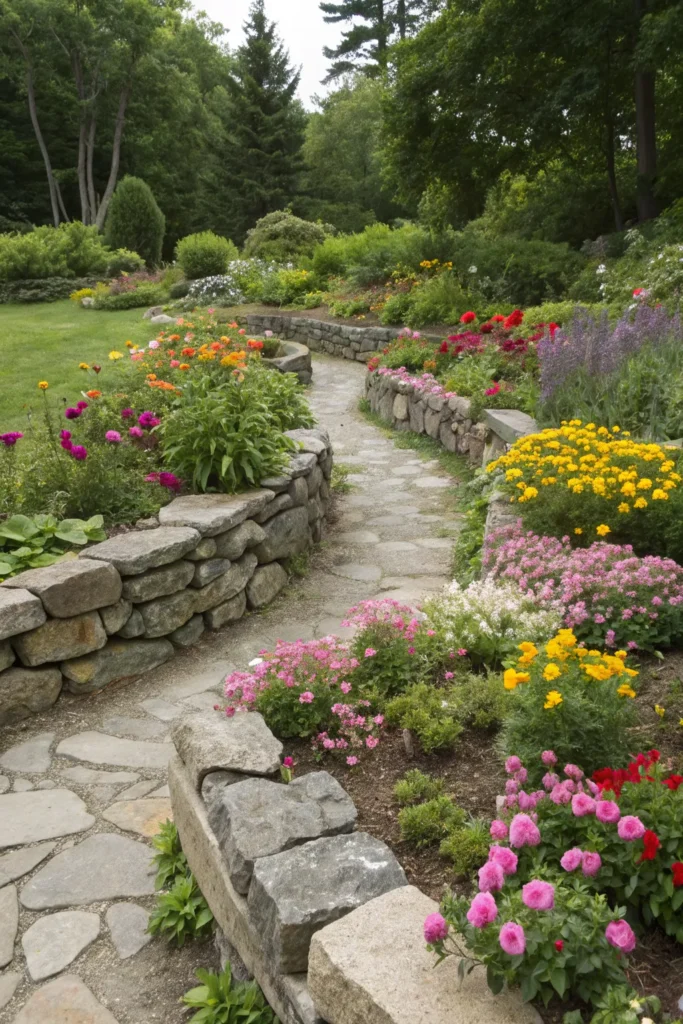
There is nothing quite like looking out over a full homestead garden layout at dusk with the light doing all of that.
Weathered wood beds packed with flowers and vegetables sit against an open landscape, and the whole thing feels less like a garden and more like a way of living.
Group your taller crops in back beds so they do not shade shorter ones, and always leave at least sixty centimetres between beds for comfortable kneeling access.
This is the layout that makes all the work feel worth it.
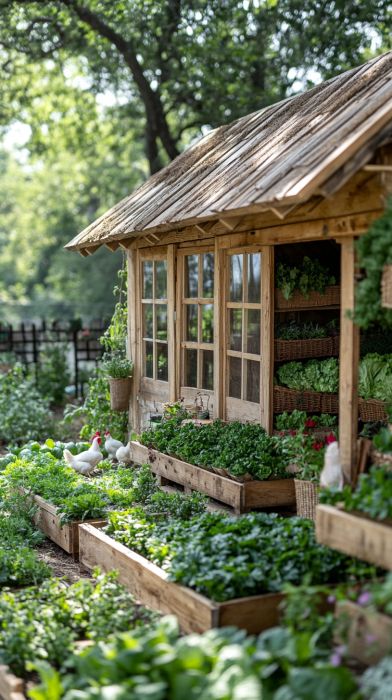
When Your Garden Shed Is Basically a Vibe
Okay so this is the homestead aesthetic fully realised and I am not even exaggerating.
A wooden glasshouse style shed with proper storage shelves full of greens, chickens wandering the beds, and tidy rectangular planters packed with herbs and salad leaves all around it.
Chickens are basically free fertiliser machines if you rotate them through spent beds between growing seasons.
Keep their roaming area separate from active beds with simple wire fencing and let them do the hard work of clearing and fertilising.
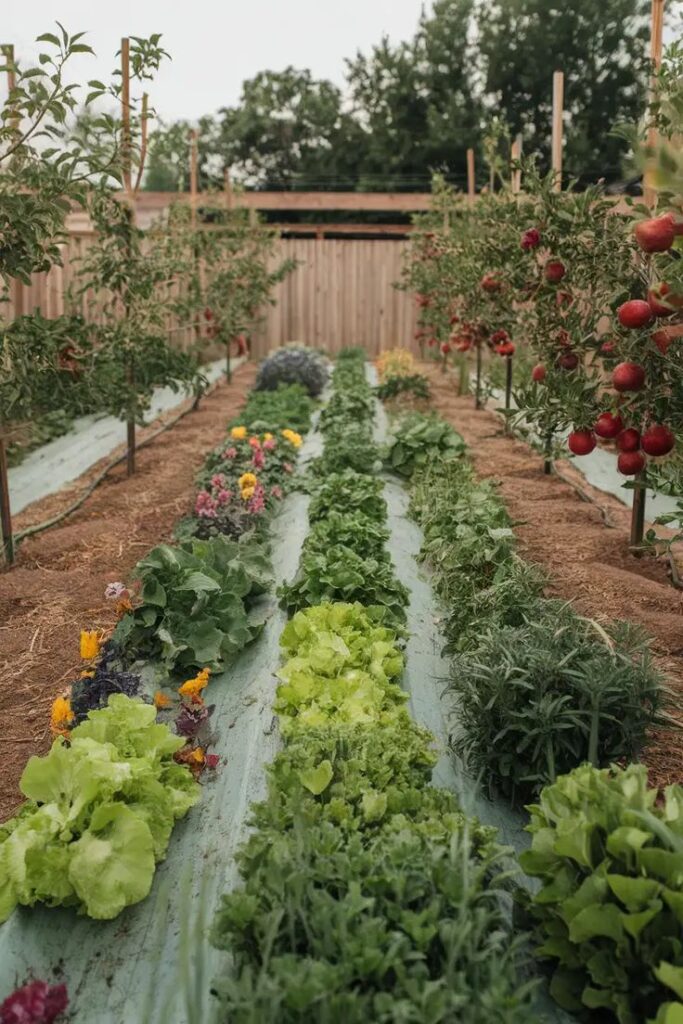
Strategic Crop Arrangement That Actually Saves You Time
Lettuces, herbs, kale and edible flowers in clean organised rows with fruit trees and pomegranate framing the whole space.
This layout works because taller permanent plants live at the outer edges and never move, while annual crops in the centre rows rotate each season without disturbing the structure.
Mulch between every row with straw to suppress weeds and feed the soil slowly over time.
It looks intentional because it is, and that planning pays off every single season.
Incorporating Art and Sculptures Because Your Garden Deserves Personality
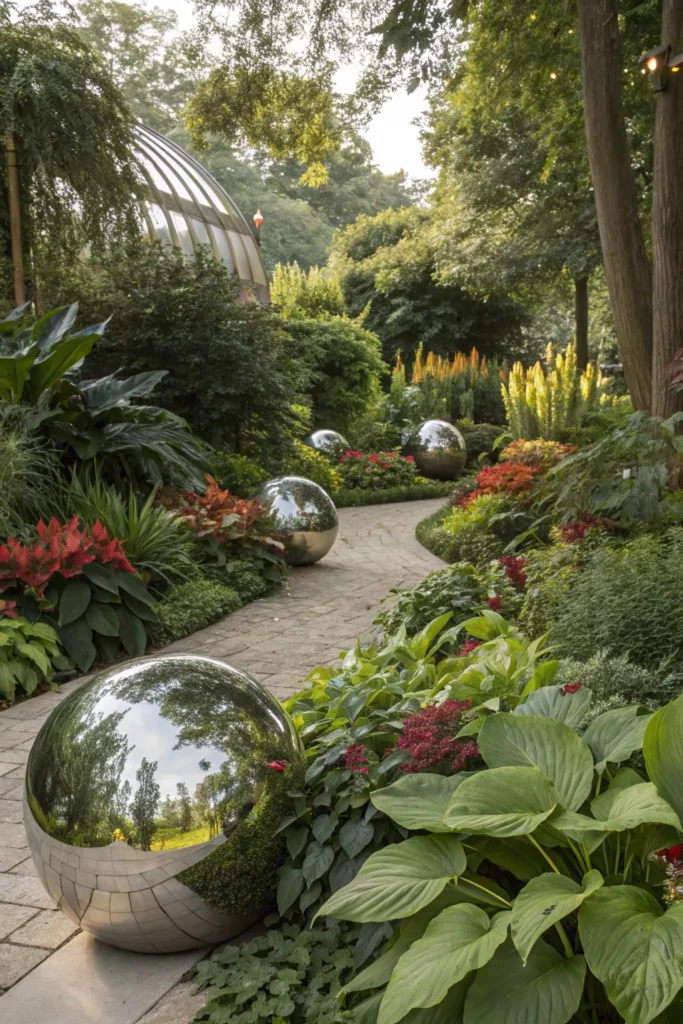
Those mirrored steel spheres nestled among hostas and celosias along a brick path are genuinely the most unexpected thing in a homestead garden and they work perfectly.
Art makes a productive garden feel cared for rather than just utilitarian, and that matters for how much time you actually want to spend there.
You do not need expensive sculptures. Handmade ceramic pieces, salvaged metal objects, or even a beautifully painted stone will do the same job.
Place art at path junctions or bed corners where the eye naturally pauses.